Concrete Step Settling in Central Iowa: Why Clay Soil Sinks Your Steps and How to Fix Them
A sunken front step is not a cosmetic problem. It is a fall waiting to happen, especially if you have grandkids running to the door or your own balance is not what it used to be. Concrete step settling in central Iowa comes down mostly to one thing: the expansive clay soil under your home. That clay swells when it is wet, shrinks when it is dry, and washes out when downspouts dump water next to the steps. This guide walks you through how to assess the problem, decide whether it is a quick leveling job or something bigger, and get your sunken front step repair handled before someone gets hurt.
Step 1: Treat the Step as a Fall Hazard, Not an Eyesore
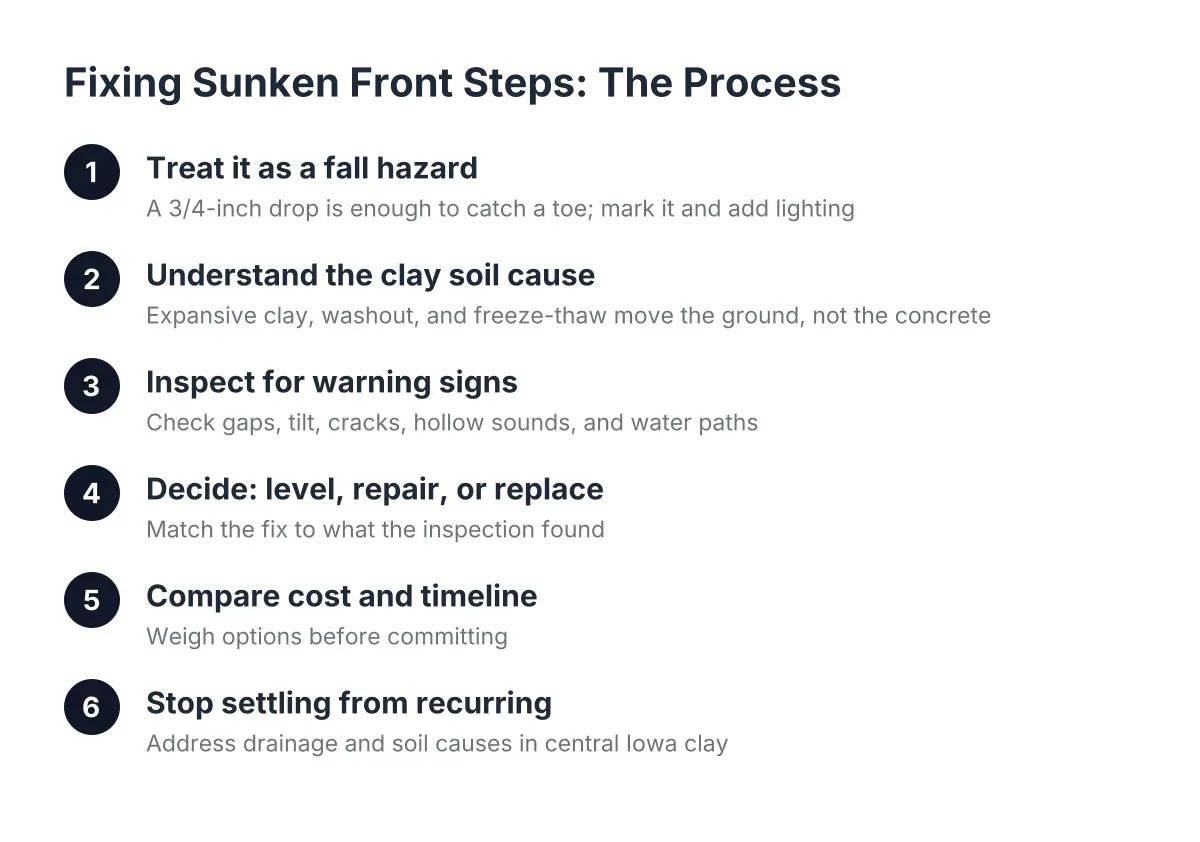
First, take the safety risk seriously. A step that has dropped even three quarters of an inch changes where your foot expects to land. That is enough to catch a toe, and for anyone with limited mobility, it is a genuine fall risk.
Look at how the step gets used before you look at the concrete itself. Does the mail carrier use it daily? Do grandkids sprint down it? Does anyone in the house use a cane or walker? The more traffic and the more vulnerable the people using it, the faster this should move up your to-do list.
In the meantime, mark the hazard. A strip of bright tape on the uneven edge, better porch lighting, and a solid handrail all reduce risk while you sort out the repair. None of that fixes the concrete, but it buys you time safely.
Step 2: Understand Why Steps Settle in Central Iowa Clay
Concrete step settling in central Iowa is driven by expansive clay soil, water, and our freeze-thaw winters. Clay swells when saturated and shrinks hard during dry summers, so the ground under your steps moves every year. Add water washing soil out from under the slab, and the steps sink, tilt, or pull away from the house.
Here is what that looks like in practice. Most settling traces back to a few soil problems:
- Washout. A downspout or gutter overflow pours water beside the steps, and it carries soil out from underneath a little at a time.
- Poor compaction. When the house was built, the soil around the foundation was backfilled loosely. It compacts over years, and the steps ride down with it.
- Drought shrinkage. In a dry central Iowa summer, clay soil shrinks and pulls away, leaving a gap the steps settle into.
- Freeze-thaw movement. Water under the slab freezes, heaves the concrete, then thaws and drops it, rarely back to the same spot.
Notice that none of these are problems with the concrete itself. The step is usually fine. The ground under it is not. That distinction matters, because it tells you whether you need to lift the existing steps or pour new ones.
One more thing to know: settling gets worse if you ignore it. A half-inch drop this fall tends to be a one-inch drop after another winter, because the same water keeps finding the same path under the slab.
Step 3: Inspect the Steps and Read the Warning Signs
Next, take ten minutes and look closely. You are checking for three things: how far the steps have moved, which direction they moved, and whether the cause is still active.
Walk around the steps and note:
- The gap at the house. If the steps are pulling away from the foundation, measure the gap. A gap that grows season to season means the soil is still moving.
- Tilt direction. Steps that tilt toward the house send rainwater at your foundation. Steps that tilt sideways usually point to washout on one side.
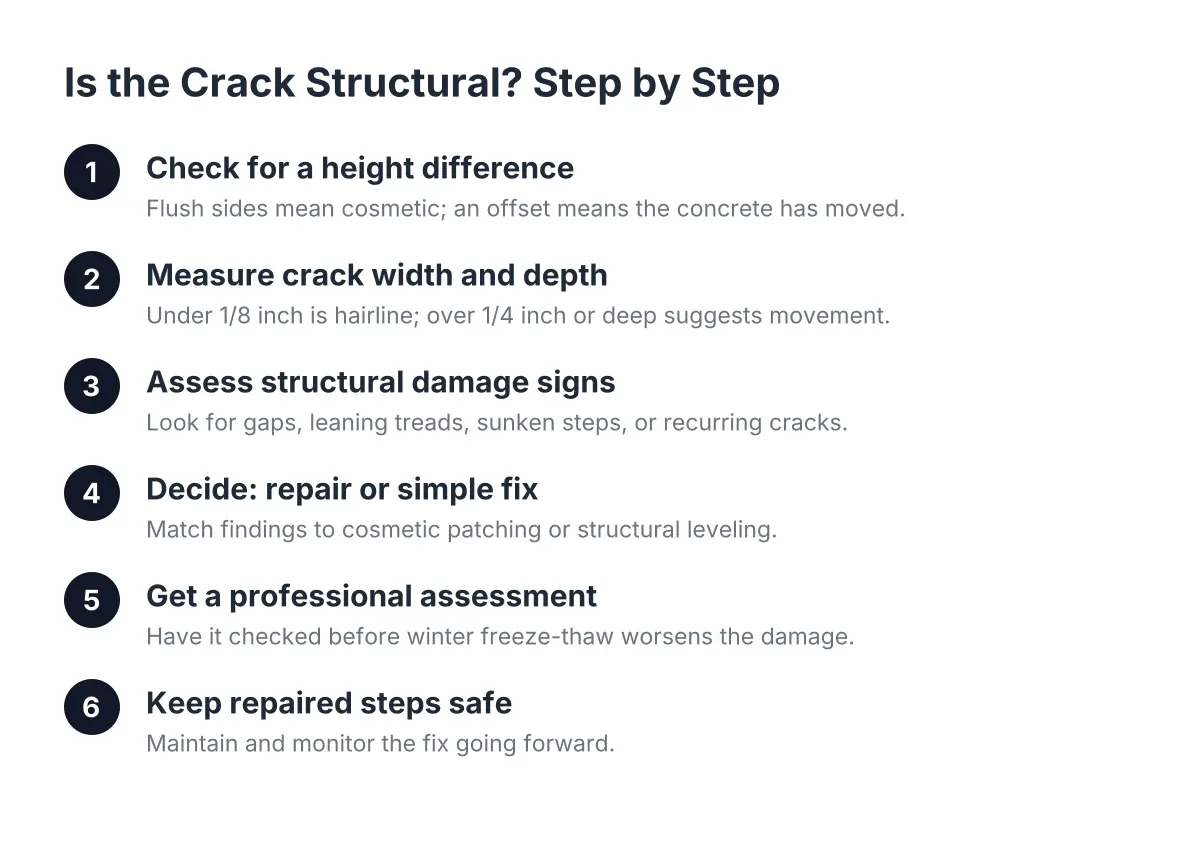
- Cracks. Hairline cracks are common and usually fine to fix with crack filling. Wide, stepped, or growing cracks suggest the slab is breaking, not just sinking.
- Hollow sound. Tap the steps with a broom handle. A hollow sound means a void underneath, which is the classic sign of washed-out soil.
- Water paths. Check where downspouts discharge and whether the ground slopes toward the steps. If water pools there after rain, you have found your cause.
Take photos with a tape measure in the frame. If you are prepping the house for sale, those photos also help you show a buyer or inspector exactly what was wrong and what was fixed.
Step 4: Decide Between Leveling, Repair, and Replacement
Now match the fix to what you found. This is where homeowners exploring options for sunken front step repair get overwhelmed, so keep it simple. There are three realistic paths.
Solutions for Sunken Front Step Repair and Leveling
Leveling fits when the steps are solid but sunken. According to Wikipedia, concrete leveling works by drilling small holes in the sunken slab, pumping a lifting material underneath to raise and stabilize it, then patching the holes to blend with the surface. For steps, that lifting material is either a cement slurry (mudjacking) or polyurethane foam.
Mudjacking uses a heavier slurry and works well for solid step units on soil that needs filling. Polyurethane foam cures fast, adds less weight to weak soil, and needs smaller holes. A concrete leveling specialist can tell you which fits your steps based on their condition, weight, and how soon you need to use them. Either way, concrete leveling is done in hours, not days, with no demolition and no torn-up yard. For a grandparent who does not want a construction project, that matters.
When Crack Repair or Resurfacing Is Enough
Sometimes the steps have not sunk much but look rough. Crack filling seals hairline cracks so water cannot get in and freeze. Resurfacing puts a fresh wear layer over pitted or flaking treads. These are finish fixes; they do not lift anything, so use them alone only when the steps are still level and stable.
When Replacement Makes More Sense
Replacement is the answer when the concrete itself has failed: crumbling edges, wide cracks through the full slab, or steps broken into pieces. Be aware of the trade-off, though. New steps poured over the same untreated soil will settle again, because replacement does not fix the ground that caused the sinking. If you replace, the soil and drainage issues still need attention.
Step 5: Compare Cost and Timeline Before You Commit
Cost is a fair worry, especially on a fixed income or with a listing date approaching. Leveling is generally the budget-friendly path. According to Angi and HomeAdvisor data, the national average concrete leveling cost is $1,174, with a typical range of $630 to $1,723. Steps are small, so many jobs land at the lower end, though Angi notes small jobs may carry a minimum charge of about $500.
However, do not judge on price alone. According to HomeAdvisor, mudjacking runs $3 to $6 per square foot and costs 25% to 50% less than full slab replacement. If you are selling, there is another number worth knowing: Angi reports concrete leveling projects can recoup 70% to 90% of their cost in added home value. A level, safe entry is one of the first things a buyer and an inspector see.
Concrete stair repair costs climb when the job gets complicated. Obstacles like fences, buried drainage pipes, previously repoured concrete, or adjoining slabs that also settled can add time and material. Get that spelled out in the estimate before work starts.
For timeline, suppose a homeowner in Beaverdale has her house listing in three weeks and the inspector flagged a sunken front step. In that scenario, a typical leveling crew handles the lift in a morning. Foam-lifted steps can usually take foot traffic the same day; mudjacked steps may need a day or so before heavy use. Either beats the week-plus of demo, forms, pour, and cure that replacement requires.
Step 6: Stop the Central Iowa Settling from Coming Back
Finally, fix the water problem, or the concrete step settling central Iowa clay is known for will start over. Leveling raises the steps; drainage keeps them up.
After the repair, do these within the same month:
- Extend downspouts at least four to six feet away from the steps and foundation.
- Regrade soil beside the steps so water runs away from the house, not toward it.
- Seal the joint where the steps meet the foundation so runoff cannot slip underneath.
- Fill any new hairline cracks each spring before freeze-thaw widens them.
Be honest with yourself about the limits, too. Even a proper repair with the causes addressed cannot promise the ground will never move again; clay soil shifts for reasons no one can see. In addition, if the steps are attached to a porch or foundation that is also moving, or if a crack keeps growing after repair, bring in a professional to evaluate the structure before spending more on the surface.
The bottom line for a safety-first homeowner: a sunken step in central Iowa is usually a soil problem with a same-day fix. Assess it honestly, level it if the concrete is sound, redirect the water, and the walk to your front door stops being the most dangerous part of a family visit.
If you need concrete leveling, Des Moines Concrete Leveling Pros can help.
Related guide: concrete step leveling — Complete Guide
Prefer to talk it through? Call +15155828701 — a quick call is usually the fastest way to get a straight answer for your situation.