Concrete Step Leveling Terms Explained: A Plain-English Glossary
If you're getting quotes to fix sunken or uneven concrete steps, the jargon piles up fast. This concrete step leveling glossary breaks down the terms Des Moines homeowners meet in estimates, contractor conversations, and online research. Each entry gives you a plain definition first, then explains why it matters when you're comparing quotes or deciding what your steps actually need. Read it once and you'll know what the contractor is talking about before they finish the sentence.
- Concrete Leveling: raising sunken concrete back to level
- Slab Jacking: lifting a slab from underneath
- Mudjacking: pumping a sand-cement slurry under concrete
- Polyurethane Foam Injection: lifting concrete with expanding foam
- Self-Leveling Concrete: a pourable mix that flattens itself
- Settling: soil sinking and taking concrete with it
- Expansive Clay Soil: soil that swells wet and shrinks dry
- Frost Heave: freezing ground pushing concrete up
- Void: an empty gap under a slab or step
- Injection Port: the small drilled hole used for lifting
- Cure Time: how long before you can use the concrete
- Crack Filling: sealing cracks to keep water out
- Resurfacing: a new thin layer over worn concrete
- Tripping Hazard: an uneven edge you can catch a toe on
- Spalling: flaking or chipping on the concrete surface
- Riser: the vertical face of a step
- Mobilization Fee: the base cost to bring a crew out
How Concrete Gets Lifted
These are the methods you'll see named on quotes. Most of the confusion in this concrete step leveling glossary starts here, because several of these terms describe the same basic idea with different materials.
Concrete Leveling Methods and Steps
Concrete leveling is the general term for raising sunken concrete back to its original position instead of tearing it out and pouring new. It covers several methods, including mudjacking and foam injection. For steps, leveling usually costs less and takes far less time than replacement. If a quote says "leveling" without naming a method, ask which one, because the material used affects cure time and cost.
Slab Jacking and Step Lifting
Slab jacking means lifting a concrete slab from underneath by pumping material through small drilled holes. It's the umbrella term that covers both mudjacking and polyurethane foam injection. Contractors sometimes use "slab jacking," "concrete lifting," and "concrete leveling" interchangeably. What matters to you is the material going under the slab, not which name lands on the estimate.
Mudjacking
Mudjacking is a leveling method that pumps a slurry of sand, cement, and water under sunken concrete to push it back up. It's the older of the two common methods, and the slurry is heavy, which suits large solid slabs. The drilled holes are larger than foam injection holes, and the material takes longer to cure. If your steps sit on soft soil, ask whether the added weight of the slurry could cause more settling later.
Polyurethane Foam Injection
Polyurethane foam injection is a leveling method that pumps expanding foam through small holes to lift sunken concrete. The foam expands in seconds, fills voids, and hardens fast, so you can often walk on the concrete the same day. It's lighter than mudjacking slurry, which helps when the soil below is already weak. Foam typically costs more per job, so expect a provider to explain the tradeoff between the two.
Self-Leveling Concrete
Self-leveling concrete is a pourable cement mix that spreads out and flattens on its own, used to smooth an uneven surface. It fixes the top of the concrete, not what's underneath, so it won't help steps that sank because the soil gave way. It's a fit when the surface is rough or slightly dished but the structure sits where it should. If a provider suggests it for steps that visibly tilted, ask why they think the settling has stopped.
Why Steps Sink in the First Place
Understanding the cause helps you judge whether a fix will hold. Central Iowa soil does most of the damage here.
Settling
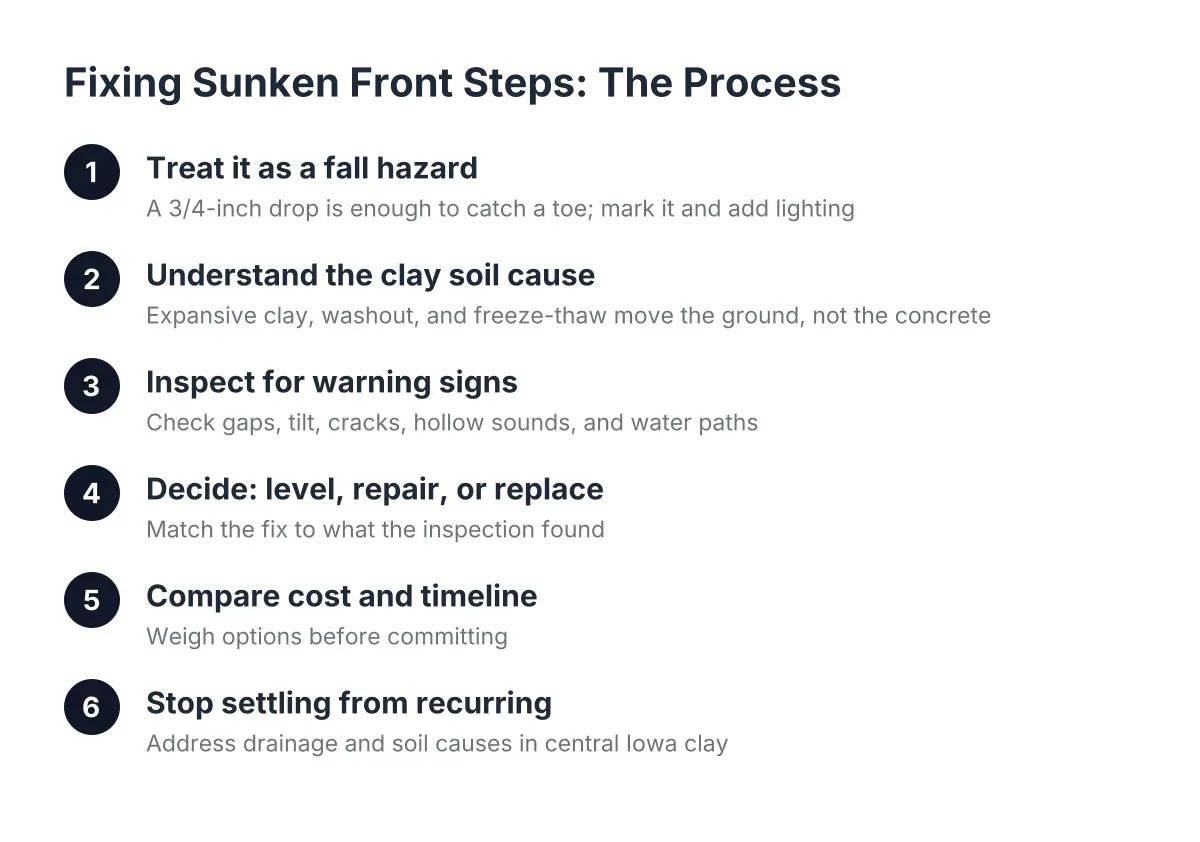
Settling means the soil under concrete compresses or washes away, letting the concrete sink. Steps often settle because the backfill around a foundation was never packed tight, so it compacts over years. Settling is the root problem that concrete step leveling fixes, and a good provider will talk about the soil, not just the slab. If they only quote the lift without asking why the steps sank, keep asking questions.
Expansive Clay Soil
Expansive clay soil is soil that swells when it gets wet and shrinks when it dries out. Much of the Des Moines metro sits on this kind of clay, and the constant swell-and-shrink cycle moves concrete around season after season. It's a big reason steps and walkways here sink or tilt even when they were poured well. A local provider should be able to explain how clay behaves under your specific steps.
Frost Heave
Frost heave is the upward push on concrete when water in the ground freezes and expands. Iowa winters give the ground plenty of freeze-thaw cycles, so a step or sidewalk section can rise in winter and drop again in spring. Repeated heave cracks concrete and opens gaps where water gets in and makes things worse. Good drainage and sealed cracks reduce how much heave your steps see.
Void
A void is an empty space under a slab or set of steps where soil used to be. Water washing soil away is the usual cause, often from a downspout dumping next to the steps. Concrete over a void can look fine for years, then crack or drop suddenly under weight. Filling voids is a core part of any lifting job, and it's worth asking how the provider confirms a void is fully filled.
What Happens During the Job
These terms show up when a provider describes the work itself.
Injection Port
An injection port is the small hole drilled through concrete so lifting material can be pumped underneath. Foam injection ports are about the size of a dime; mudjacking holes run larger. After the lift, the provider patches the holes with fresh cement. Ask how many holes the job needs and how visible the patches will be on your steps.
Cure Time
Cure time is how long you need to wait before using the concrete after a repair. Polyurethane foam hardens within minutes to hours, while mudjacking slurry can need a day or more before it takes full load. For front steps, cure time matters because it decides how long your main entry is out of service. A clear quote states when you can walk on the steps again.
Crack Filling
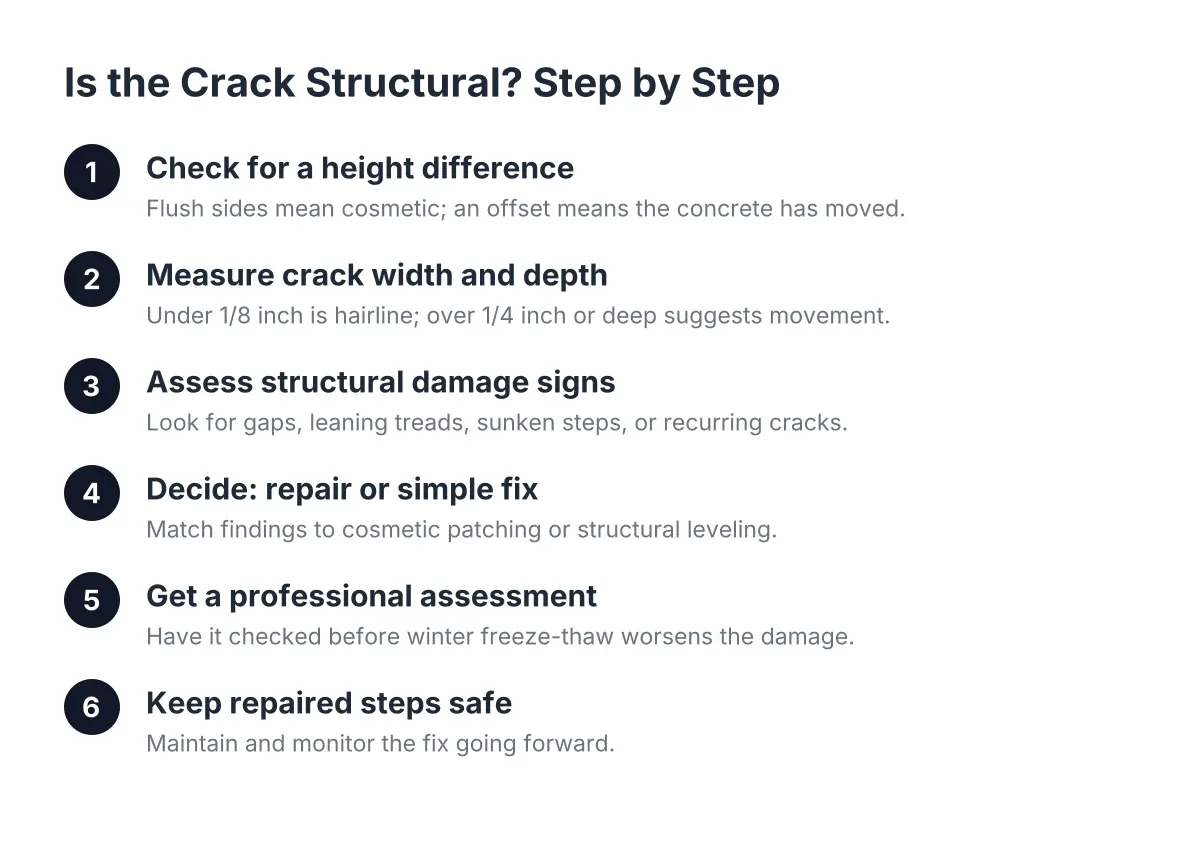
Crack filling means sealing cracks in concrete with a flexible or cement-based material to keep water out. It matters because water in a crack freezes, expands, and widens the crack every winter. On steps, crack filling often pairs with leveling, since lifting closes the gap but the crack still needs sealing. Crack repair on its own won't fix sunken concrete; it protects concrete that already sits where it should.
Resurfacing
Resurfacing means applying a thin new layer of cement-based material over worn or flaked concrete to give it a fresh face. It's a cosmetic and protective fix, not a structural one, so it won't raise sunken steps. Providers often suggest resurfacing after leveling when the old surface looks rough. If your steps are level but ugly, resurfacing may be all you need.
Reading a Quote
A few terms show up on paperwork more than on the job site. Knowing them helps you compare estimates fairly, and the cost guide for step leveling walks through what drives the numbers.
Tripping Hazard
A tripping hazard is any raised or sunken edge in a walking surface that can catch a person's foot. Cities often flag sidewalk edges offset by a small fraction of an inch, and steps with uneven rises are a common fall risk. If a provider calls your steps a tripping hazard, they're describing a safety and liability issue, not padding the quote. Fixing the hazard is usually the strongest reason to level steps sooner rather than later.
Spalling
Spalling is the flaking, chipping, or pitting of a concrete surface, usually caused by freeze-thaw cycles or de-icing salt. Spalled steps look worn but may still be structurally sound. Leveling won't fix spalling; that's a job for resurfacing or patching. A quote that addresses both lifting and surface repair should list them as separate line items so you can see what each costs.
Riser
A riser is the vertical face of a step, the part your toe hits if the step heights are uneven. When steps settle, riser heights change, and even a small difference between steps is enough to trip people. Building practice calls for consistent riser heights, which is why a provider measures each step before and after a lift. If you're comparing quotes for step leveling and repair, ask how the provider will get riser heights back to even.
Mobilization Fee
A mobilization fee is the base charge for bringing a crew and equipment to your property, regardless of job size. Small jobs like a single set of steps often carry this minimum, which is why tiny repairs can look pricey per square foot. It's standard in the trade, not a hidden markup. If your quote seems high for a small job, ask whether bundling a walkway or driveway section into the same visit spreads that base cost.
Using These Terms
That's what this concrete step leveling glossary gives you: the ability to read a quote line by line and know what each item means. You can now ask a provider why they chose foam over mudjacking, whether a void needs filling, and when you can use your steps again. Sharper questions get you straighter answers, and straighter answers get your steps fixed right.
If you need concrete leveling, Des Moines Concrete Leveling Pros can help.
Prefer to talk it through? Call +15155828701 — a quick call is usually the fastest way to get a straight answer for your situation.