Cracked Uneven Sidewalk Repair Before You Sell: Level or Replace?
If your inspection report flagged a sunken walkway, or your realtor told you the front sidewalk is hurting curb appeal, you need a plan fast. Sidewalk repair before selling comes down to one decision: level the slabs you have, or tear them out and replace them. For most Des Moines sellers, leveling is the faster and cheaper path, and it addresses the thing buyers and inspectors care about most, the trip hazard. This guide walks you through the decision step by step, including the liability angle on public sidewalks, so you can get it fixed before closing without overspending on a house you're leaving.
Step 1: Treat the Trip Hazard as a Safety and Liability Problem First
Before you think about looks, think about falls. A sidewalk panel that sits even half an inch higher than its neighbor is a tripping hazard. An inspector will note it. A buyer's agent will point it out during the walkthrough. And if someone falls on it before you close, that's your problem, not the next owner's.
In Des Moines, like many cities, homeowners often bear responsibility for maintaining the public sidewalk that borders their property. The city can require repairs, and a letter from the city during your listing period is the last thing you want. So treat this as a safety fix first and a cosmetic fix second. That framing also matters at the negotiating table; a buyer who sees a documented safety repair is less likely to demand a credit than one staring at a raised lip in the walkway.
Walk your property and flag every spot where concrete has settled or heaved:
- The concrete walkway to the front door, since every buyer walks it twice
- The public sidewalk along the street
- Steps and stoops that have pulled away or tilted
- Driveway slabs that have sunk at the garage or the street
Make this list now. Inspectors rarely flag just one slab, and fixing everything in one visit costs less than two separate trips.
Step 2: Deciding on Sidewalk Repair Before Selling Your Home
A sunken but solid slab can usually be lifted back into place. A shattered slab cannot. Walk each flagged section and sort it into one of two buckets. Here's the plain-language test.
The slab is a candidate for leveling if:
- It has sunk, tilted, or settled, but the concrete itself is in one or a few large pieces
- Cracks are hairline or clean breaks, not a web of fragments
- The surface is sound, not crumbling or flaking apart
The slab likely needs replacement if:
- It's broken into many small pieces that move independently
- The surface is badly spalled or deteriorated
- A large tree root has lifted it, since the root keeps pushing; the lasting fix there is usually to cut the root zone and replace that panel
Most settled sidewalks in central Iowa fall in the first bucket. Our expansive clay soils shrink in dry summers and swell with moisture, and freeze-thaw cycles push slabs around. The concrete itself is usually fine; the ground under it moved. That's exactly what concrete leveling fixes, and it's why full replacement is overkill for a slab that's merely sunken. When planning to sell, addressing settled concrete through leveling offers a practical approach to sidewalk repair before selling.
One honest caveat: if the settling comes from a major drainage failure or a collapsing buried structure, leveling alone won't hold. A reputable concrete leveling contractor will tell you that on site rather than lift a slab that's going to sink again.
Step 3: Compare the Cost and Timeline of Leveling vs. Replacement
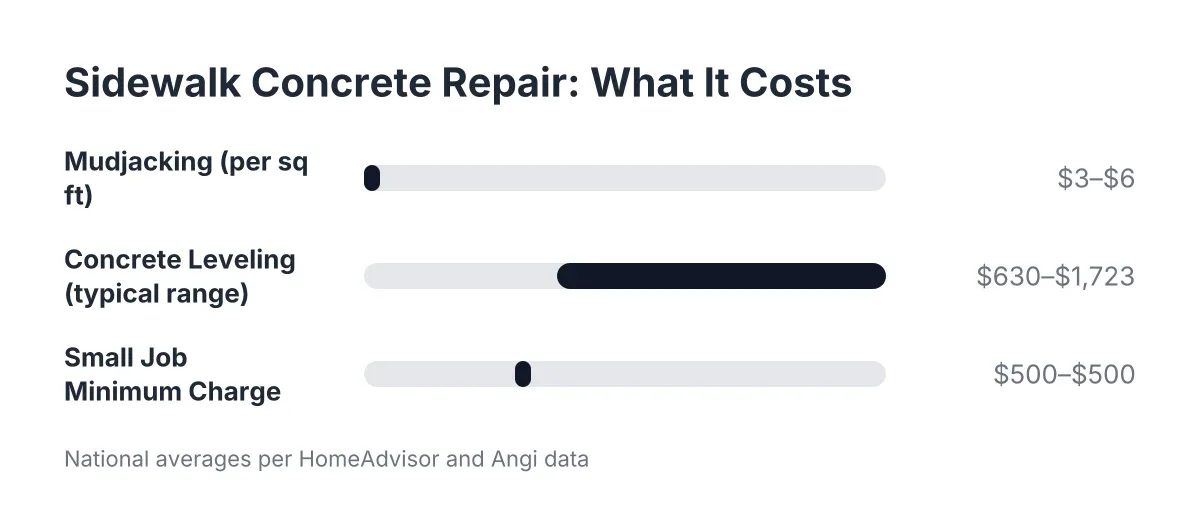
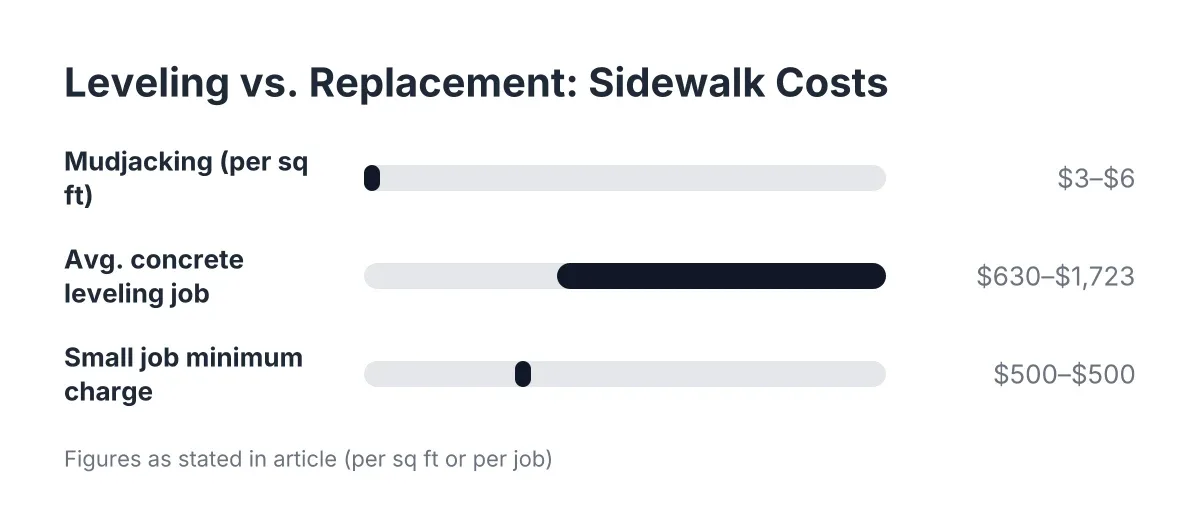
For a seller on a deadline, this step usually settles the question. Mudjacking runs $3 to $6 per square foot and costs 25% to 50% less than replacing the slab entirely, according to HomeAdvisor. Nationally, the average concrete leveling job runs $1,174, with a typical range of $630 to $1,723, according to Angi and HomeAdvisor data. Small jobs may carry a minimum charge of around $500 even under 100 square feet, according to Angi, so bundling your sidewalk, steps, and driveway into one visit stretches your dollar.
The timeline difference is bigger than the price difference. Replacement means demolition, hauling, forming, pouring, and days of cure time before anyone can walk on it, plus weather delays. Leveling is typically done in hours. The crew drills small holes in the sunken slab, pumps lifting material underneath to raise and stabilize it, then patches the holes to closely match the original surface, as Wikipedia describes the process. Mudjacking slabs usually take traffic quickly; polyurethane foam cures even faster. A good local company will explain plainly which method fits your slab's condition, load, and schedule.
There's also a resale math angle. Concrete leveling projects can recoup 70% to 90% of their cost in added home value, according to Angi. For a pre-listing seller, that's the difference between a repair and an investment in closing on schedule.
Suppose a homeowner in Beaverdale has a closing date six weeks out, a front walkway with two sunken panels, and a driveway slab that dropped an inch at the garage. In that scenario, replacement could run several thousand dollars and eat two weeks of schedule. Leveling the same concrete might land in the low four figures as a rough estimate and be done in a single morning, with the walkway usable the same day.
Step 4: Schedule Your Sidewalk Repair Before Selling Closes
Book the work as soon as you've sorted your slabs, not the week before closing. Spring and fall are busy seasons for sidewalk and walkway leveling in Des Moines, because that's when clay soil movement and freeze-thaw damage show up. If your inspection already happened, share the report with the contractor so the repair addresses every flagged item, not just the obvious one.
Two scheduling details matter for sellers:
- Ask the contractor to quote all the concrete at once, including driveway leveling if the inspector flagged it. Searching separately for driveway leveling near me and sidewalk help means paying two minimum charges instead of one.
- Ask how the repair will be documented. A written invoice describing what was lifted and how helps your agent answer buyer questions and gives the next inspector something concrete to review.
Expect the lift to extend beyond the panel you noticed. Leveling only the visibly sunken slab can leave a new lip where the raised section meets its neighbor. A careful crew lifts adjoining panels as needed so the whole run sits flush. If a quote covers only one square, ask how the transitions will be handled.
Step 5: Finish the Job with Crack Filling, Not Just Lifting
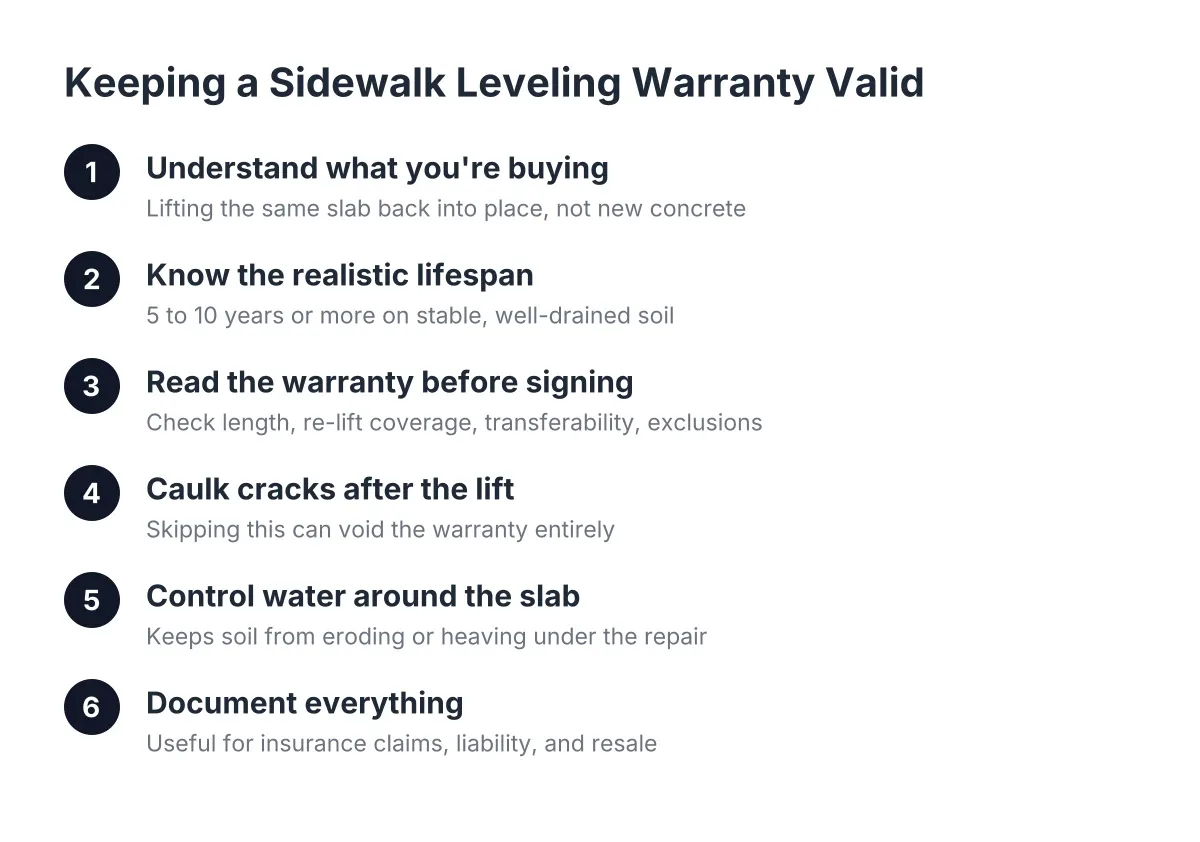
Lifting fixes the height; crack filling protects the repair. Open cracks and unsealed joints let water run under the slab, and water under a slab in an Iowa winter means more settling. After leveling, the cracks and joints should be caulked or filled so the repair holds through freeze-thaw season. Skipping this step is a common mistake, and many providers won't stand behind a leveling repair without it.
While you're at it, handle the water sources that caused the settling:
- Point downspouts away from the walkway and driveway
- Fix gutters that overflow onto the concrete
- Grade soil and mulch so water drains away from slabs, not under them
These are cheap, same-weekend tasks, and they're exactly the kind of maintenance detail that reassures a cautious buyer.
Step 6: Skip the DIY Shortcuts That Fail Inspection
The ranking search results for cracked uneven sidewalk repair are full of DIY patch videos, and for a seller they're a trap. Troweling a sloped patch or pouring self-leveling concrete over a raised edge looks fine in October and chips off by March, because the original slab keeps expanding and contracting through freeze-thaw cycles. A buyer's inspector who spots a fresh patch over a settled slab may flag it as a cover-up, which is worse than the original crack.
Self-leveling products also have real prep requirements. Manufacturer instructions typically call for mechanically profiling the concrete surface before applying the compound, according to the Lowe's Self-Leveler Plus installation guide, and the dry powder is hazardous to breathe, so a respirator is required during mixing, according to Sakrete. Those products are designed mainly for interior floors anyway, like a garage floor before new coatings. Grinding down a raised lip is another option, but it leaves a visibly ground stripe that draws a buyer's eye to the exact problem you're trying to make disappear.
For a slab that has sunk, the fix that holds up outdoors, reads as a real repair to an inspector, and gets done before your open house is leveling the slab itself. Sort your concrete, get one quote for everything, seal the cracks, and move on to the rest of your listing checklist.
If you need concrete leveling, Des Moines Concrete Leveling Pros can help.
Prefer to talk it through? Call +15155828701 — a quick call is usually the fastest way to get a straight answer for your situation.