Garage Floor Leveling Terms Explained: A Plain-English Glossary
If you're getting quotes to fix a sunken or uneven garage slab in Des Moines, the paperwork can read like a foreign language. This garage floor leveling glossary translates the jargon into plain English so you can read a quote line by line, ask sharper questions, and spot when a contractor is overselling. Each entry starts with a short, standalone definition, then tells you why the term matters to your project and your wallet. Nothing here requires a construction background, just a floor that isn't flat anymore.
- Concrete leveling: raising sunken concrete back to grade
- Mudjacking: pumping a cement slurry under a slab to lift it
- Polyurethane foam injection: lifting concrete with expanding foam
- Self-leveling concrete: a pourable overlay that flattens a floor
- Slab jacking: the umbrella term for lifting slabs from below
- Settling: soil sinking under a slab over time
- Void: an empty gap under the concrete
- Expansive clay soil: central Iowa soil that swells and shrinks
- Frost heave: freeze-thaw cycles pushing concrete up and down
- Control joint: a planned groove where concrete is meant to crack
- Crack filling: sealing cracks so water stays out
- Spalling: flaking or pitting on the concrete surface
- Injection ports (drill holes): the small holes used to lift a slab
- Cure time: how long before you can use the floor again
- Grade / slope: which way the floor directs water
- Resurfacing: a new thin layer over worn concrete
- Slab replacement: tearing out and repouring the concrete
- Tripping hazard: an uneven edge that catches your foot
The Main Repair Methods in Garage Floor Leveling Glossary
These are the fixes you'll see named on quotes, and the terms in this part of the garage floor leveling glossary come up in nearly every estimate. Knowing the difference helps you compare bids that use different methods for the same floor.
Concrete Leveling
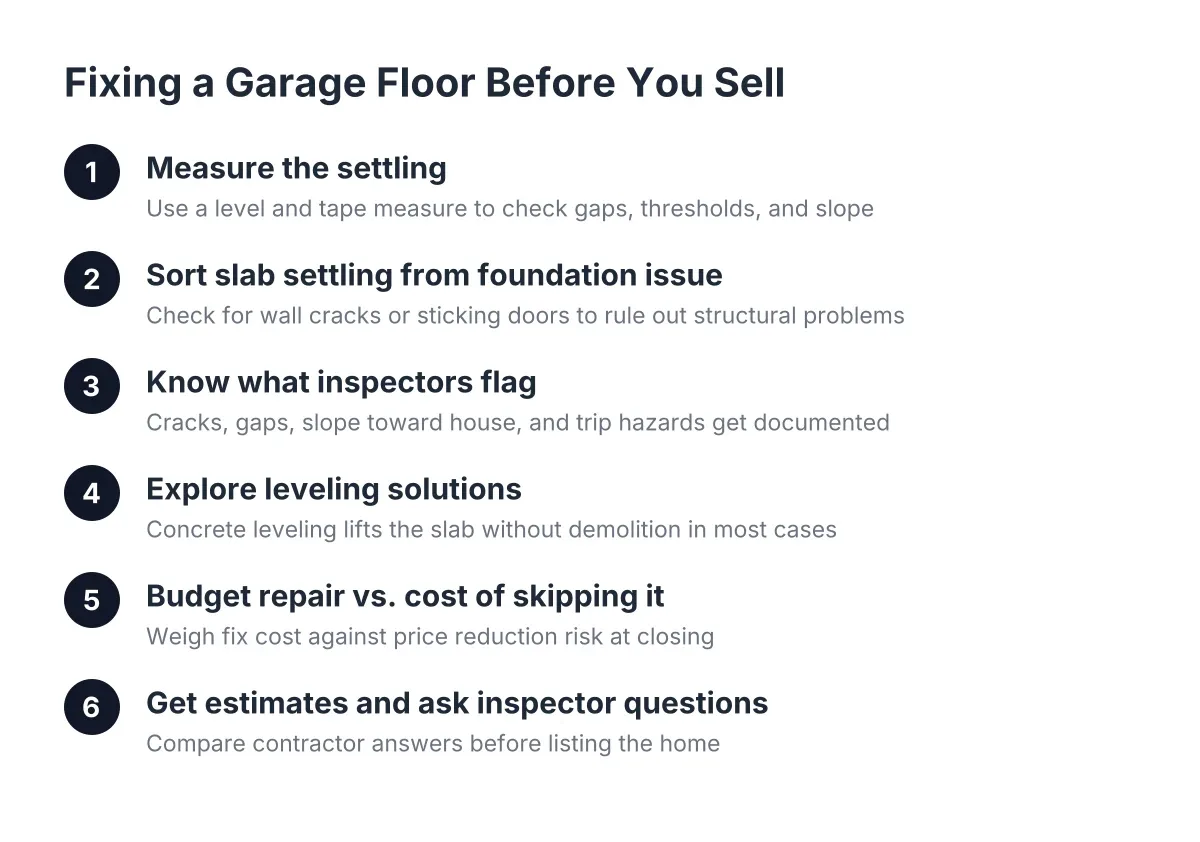
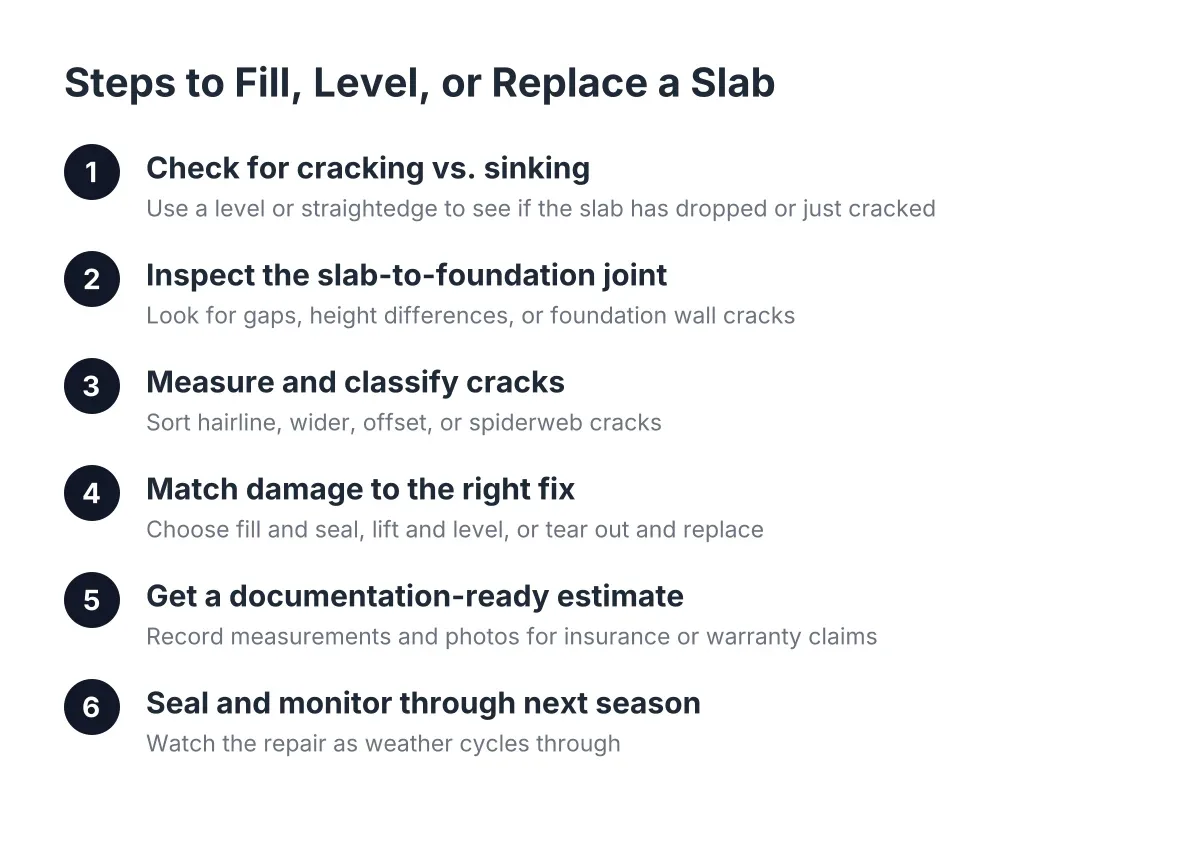
Concrete leveling is the process of raising sunken concrete back to its original position instead of tearing it out and repouring it. It works when the slab itself is still solid but the ground under it has dropped. For a garage, that usually means lifting the slab from below or adding a leveling layer on top. It costs less and takes far less time than replacement, which is why it's the first option worth asking about. If you want numbers before you call anyone, see our guide to garage floor leveling costs.
Mudjacking
Mudjacking means pumping a thick slurry of cement, soil, and water through small holes to lift a sunken slab from underneath. It's the older of the two main lifting methods, and it uses heavy material that fills large gaps well. The trade-off is bigger drill holes and more weight added to soil that may already be soft. A contractor who quotes mudjacking should explain why it fits your slab's condition and the load it carries.
Polyurethane Foam Injection
Polyurethane foam injection is a leveling method that pumps expanding foam under a slab through dime-sized holes to lift it back into place. The foam expands, fills the empty space, hardens fast, and weighs much less than a cement slurry. Garages often get foam because you can usually park on the floor again the same day. If a quote lists "poly" or "foam," this is what it means.
Self-Leveling Concrete
Self-leveling concrete is a runny cement mix poured over an existing floor that spreads out and settles flat on its own. It fixes dips, low spots, and rough surfaces from the top instead of lifting the slab from below. It works when the slab hasn't sunk as a whole but the surface is wavy or worn. Ask about it if your floor is uneven but not tilted, since it solves a different problem than lifting does.
Slab Jacking
Slab jacking is the general term for any method that lifts a sunken concrete slab by pumping material underneath it. Mudjacking and polyurethane foam injection are both types of slab jacking. Some contractors use the terms loosely, so if a quote says "slab jacking," ask which material they plan to pump. The answer changes the hole size, the cure time, and the price.
Why Garage Floors Sink: Garage Floor Leveling Glossary Terms
Understanding the cause helps you judge whether a fix will last. These terms explain what's happening under your slab.
Settling
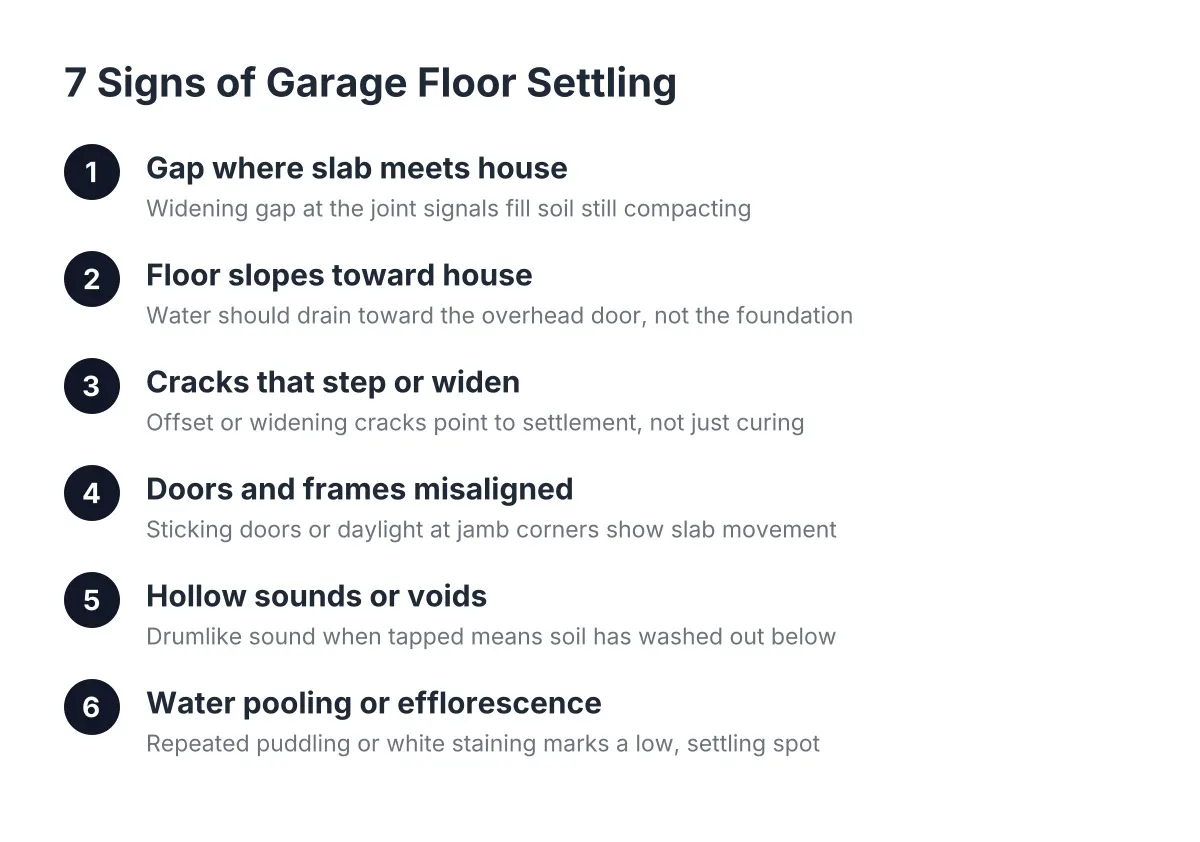
Settling means the soil under a slab compresses or washes away over time, letting the concrete sink with it. It's the most common reason garage floors drop, especially where fill dirt around a foundation wasn't packed tight when the house was built. A slab that settles evenly may just sit low; one that settles on one side tilts and cracks. Good contractors talk about why your floor settled, not just how they'll lift it.
Void
A void is an empty pocket of space between the bottom of a concrete slab and the soil below it. Voids form when water washes soil away or loose fill compresses. A slab spanning a void can sound hollow when you tap it, and it may crack under the weight of a parked car. Filling the void is part of any honest leveling job, because lifting a slab without filling the gap invites it to sink again.
Expansive Clay Soil
Expansive clay soil is ground that swells when wet and shrinks when dry, moving anything sitting on top of it. Central Iowa has plenty of it, which is a big reason Des Moines garage floors crack and settle. Wet springs push the soil up; dry summers pull it back down; your slab rides that cycle year after year. A local contractor who mentions clay soil is telling you they understand what's actually moving your floor.
Frost Heave
Frost heave is the upward push on concrete that happens when water in the soil freezes and expands. Iowa winters deliver repeated freeze-thaw cycles, so a slab can rise in January and drop in April. Garage floors with poor drainage nearby suffer the most, because wet soil freezes harder. If a section of your floor rises in winter, frost heave is the likely suspect, and fixing drainage may matter as much as leveling.
Cracks, Joints, and Surface Problems
Not every flaw in your floor means the slab is sinking. This section covers the surface-level terms.
Control Joint
A control joint is a straight groove cut or formed into concrete on purpose to control where it cracks. Concrete shrinks as it cures, and it will crack somewhere; the joint tells it where. Cracks running along control joints are normal. Cracks wandering across the middle of a panel, or joints where one side sits higher than the other, are the ones worth showing a contractor.
Crack Filling
Crack filling means sealing cracks in concrete with a flexible material so water can't get through them. It matters more than it sounds, because water passing through a crack washes out the soil below and starts the settling cycle. On a garage floor, crack filling often gets paired with leveling so the fix lasts. A quote that includes crack repair after lifting is a sign the contractor is thinking about the long run.
Spalling
Spalling is flaking, chipping, or pitting on the surface of concrete, usually caused by freeze-thaw damage or road salt dripping off cars. Spalling is a surface problem, not a sinking problem, so leveling won't fix it. Resurfacing can. If your floor is flat but ugly, ask about resurfacing; if it's sunken and spalled, you may need both, which affects the scope of the quote.
Tripping Hazard
A tripping hazard is any spot where one piece of concrete sits higher than the piece next to it, creating an edge that catches your foot. In a garage, it usually shows up where the floor meets the driveway apron or along a crack that has shifted. Even a small lip is enough to trip on in the dark with your arms full of groceries. Contractors flag these because they're the clearest sign one slab section has settled more than another.
Reading a Quote: Process and Practical Terms
These are the words that show up when a contractor walks your floor and writes up the job. They tell you what garage floor leveling will actually look like at your house, from drill holes to drive-on time. Our garage and interior floor leveling page walks through the process in more detail.
Injection Ports (Drill Holes)
Injection ports are the small holes drilled through a slab so lifting material can be pumped underneath it. Foam injection uses holes about the size of a dime; mudjacking holes run closer to the size of a soda can. The crew patches the holes when the lift is done, though the patches stay slightly visible. Ask how many holes the job needs and where they'll go, since that tells you how much of the floor is affected.
Cure Time
Cure time is how long you must wait before using a repaired floor at full strength. Polyurethane foam hardens within minutes to hours, so you can often park on it the same day. Mudjacking slurry and self-leveling concrete need longer, sometimes a day or more, before they carry a car's weight. If your garage is your only parking spot, cure time may decide which method fits your life.
Grade / Slope
Grade, or slope, is the direction and steepness a floor tilts, which controls where water goes. A garage floor should slope gently toward the door so melting snow drains out instead of pooling under your car. When a slab settles backward, water runs toward the house instead, and that's a problem worth fixing fast. A contractor who checks grade with a level before quoting is doing the job right.
Resurfacing
Resurfacing means applying a thin new layer of concrete or overlay material over an existing slab to renew its surface. It hides spalling, stains, and minor roughness, but it does not lift a sunken slab or fill voids underneath. Think of it as new skin, not new bones. Some garage projects combine leveling first and resurfacing second, and a clear quote will price those as separate line items.
Slab Replacement
Slab replacement means breaking out the old concrete, hauling it away, and pouring a new floor from scratch. It's the right call when a slab is crumbling, badly cracked into many pieces, or too damaged to lift. It also costs more and puts your garage out of service for days while the new concrete cures. An honest contractor will tell you when leveling can save your slab and when replacement is the only real fix.
Using These Terms
That's what this garage floor leveling glossary gives you: the vocabulary to read a quote line by line and know exactly what you're paying for. Now you can ask whether a bid includes crack filling, how big the drill holes will be, and how soon you can park inside again. Any contractor worth hiring will welcome those questions.
If you need concrete leveling, Des Moines Concrete Leveling Pros can help.
Prefer to talk it through? Call +15155828701 — a quick call is usually the fastest way to get a straight answer for your situation.