7 Signs Your Garage Floor Is Settling and Needs Leveling in Des Moines
If your garage floor looks lower than it used to, you are not imagining it. The signs of garage floor settling usually show up slowly: a gap where the slab meets the house, a crack that keeps widening, a slope you notice when water pools after rain. In newer Des Moines-area subdivisions, this pattern is common because many garages sit on backfill soil that keeps compacting for years after the house is built. The house rests on deep footings; the garage slab often does not. So the house stays put while the slab sinks away from it.
That gap matters for two reasons. First, it tells you whether you need concrete leveling or a bigger foundation repair. Second, if you are documenting damage for an insurance adjuster or a builder warranty claim, knowing what caused the movement changes how you describe it. Here are seven signs to check, roughly in the order a leveling contractor would check them.
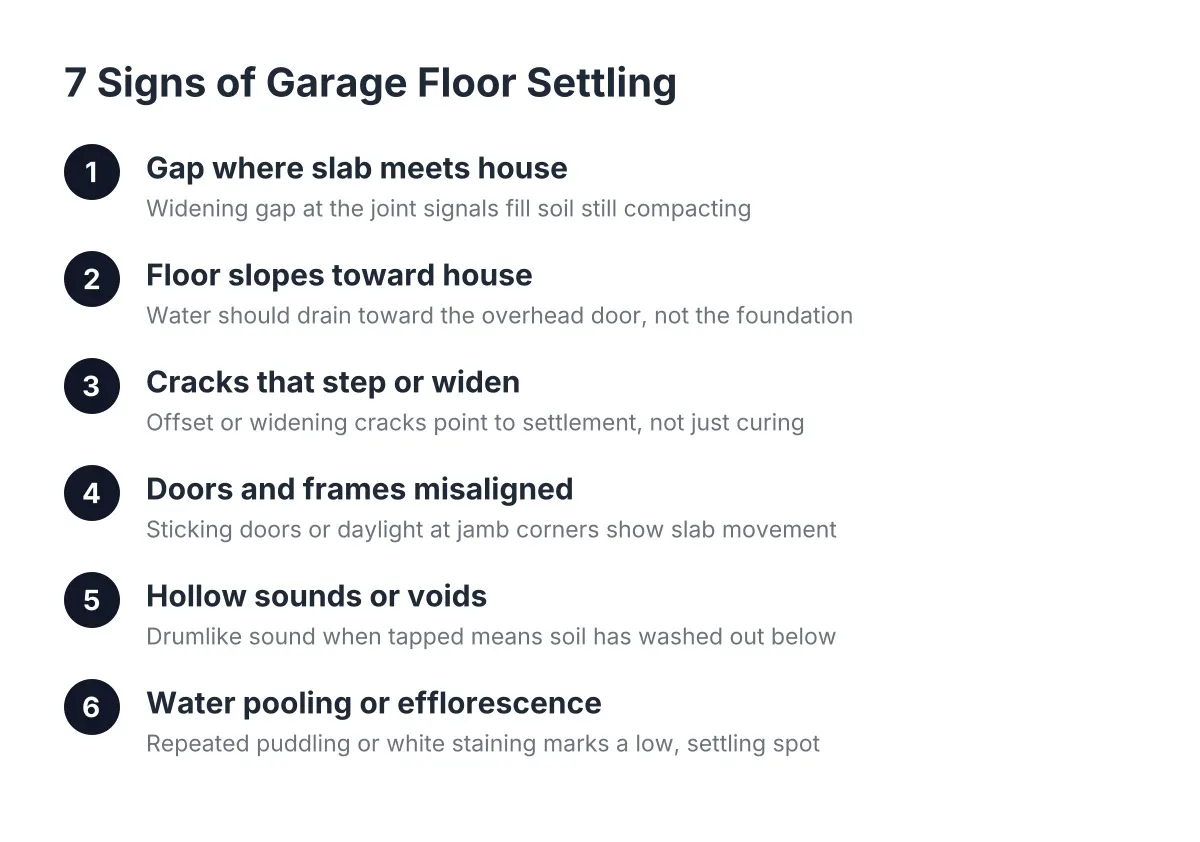
1. A Growing Gap Where the Garage Slab Meets the House
This is the classic sign in central Iowa subdivisions built on fill soil. The garage slab is separating from the house foundation because the slab is sinking and the foundation is not. Look at the joint along the back wall of the garage, where the slab meets the stem wall or the step into the house.
A hairline gap is normal shrinkage. A gap you can fit a pencil into, or one that has widened since last year, means the fill under the slab is still compacting. Take dated photos of the gap now, even if you are not ready to fix it. If you file a sunken slab insurance claim or a builder warranty claim later, a photo timeline showing new movement is worth more than any description.
2. The Floor Slopes Toward the House Instead of Away
Every garage floor should slope gently toward the overhead door so melting snow and rain run out. A settling slab often tips the other way. Water that drains back toward the foundation soaks the soil at the base of the house, and wet clay soil moves. Ignore it long enough and a leveling job can turn into a foundation problem.
Test it with a marble or a level. If water from a snowy car drains toward the back wall, the slab has moved. This is one of the clearest signs your garage floor needs leveling soon rather than someday, because the slope itself is making the settlement worse each freeze-thaw season.
3. Cracks That Step, Widen, or Sit Higher on One Side
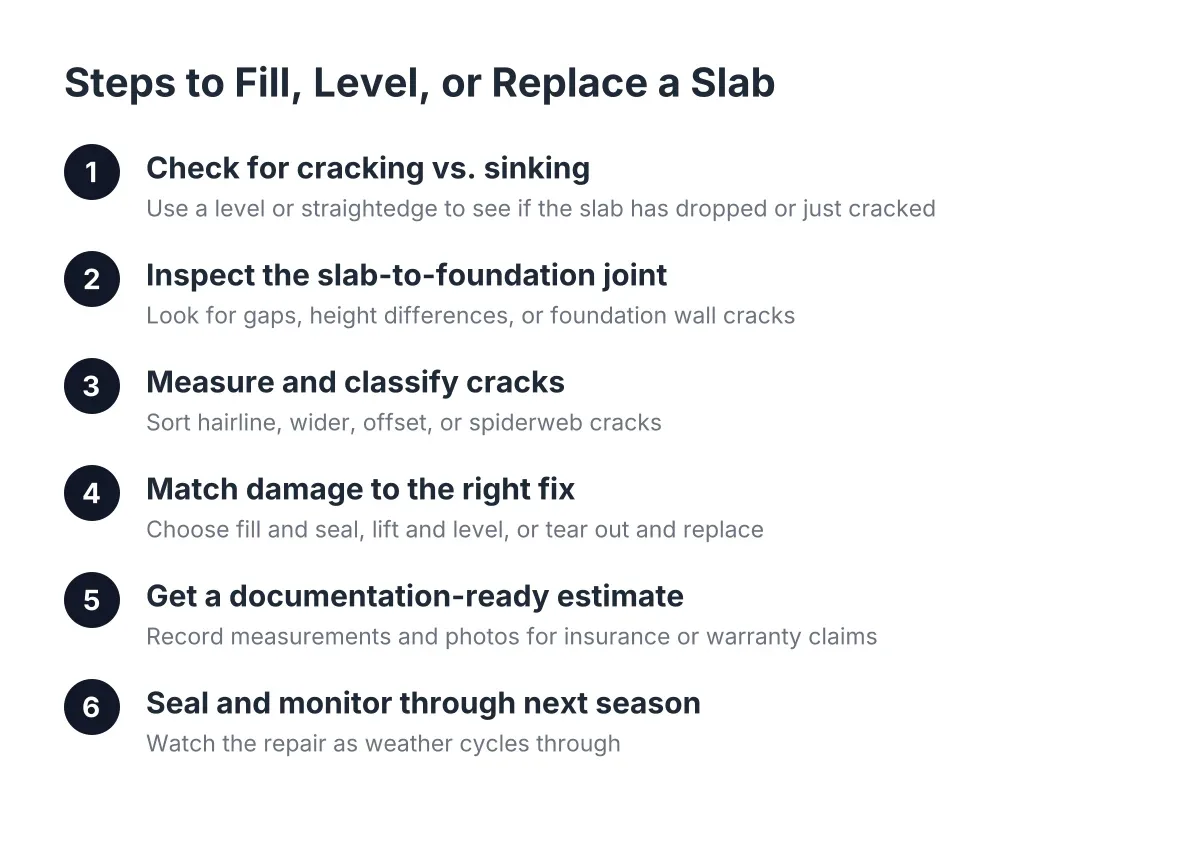
Not every crack means settling. Concrete shrinks as it cures, and thin, tight cracks with both sides flush are usually cosmetic. Crack filling handles those. The cracks that point to settlement look different:
- One side sits higher than the other, so your toe catches on the edge
- The crack widens over months instead of staying the same
- Cracks run diagonally from a corner or radiate from the same low spot
- New cracks appear after a heavy rain or a hard freeze-thaw cycle
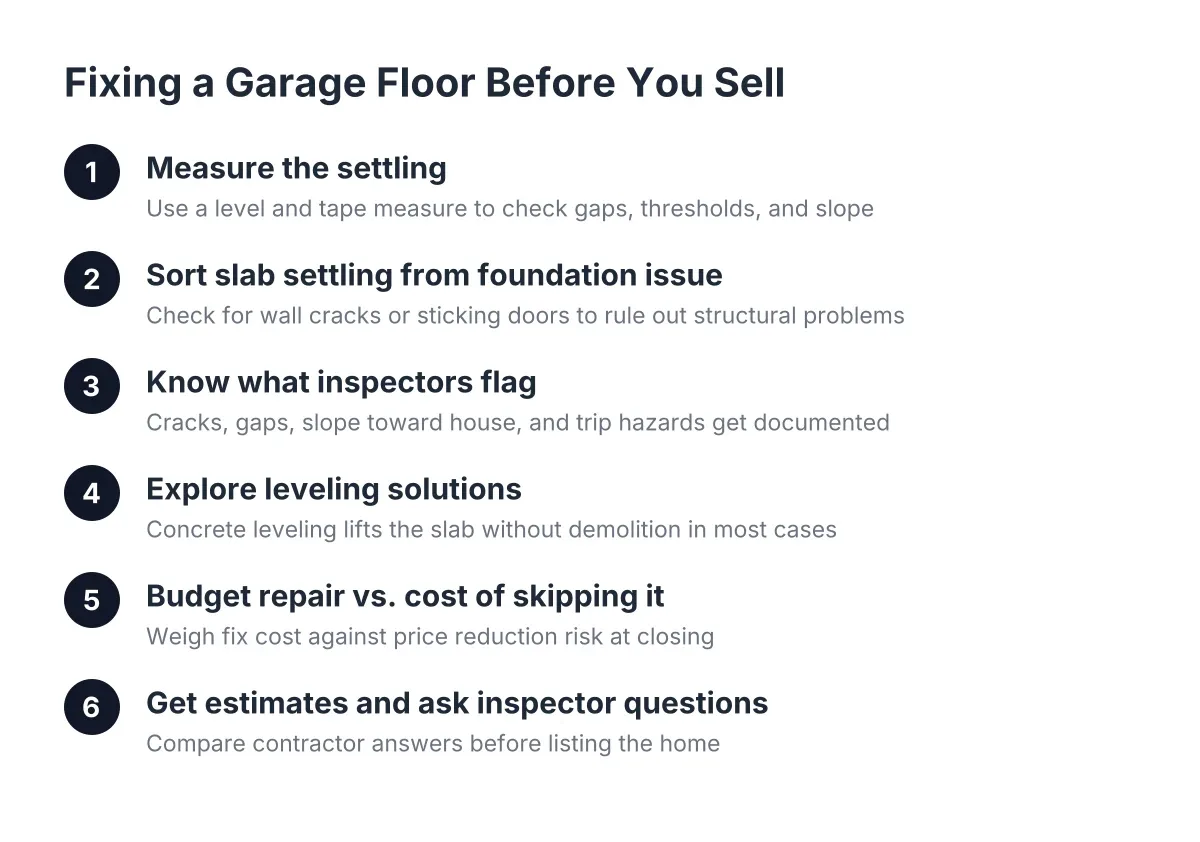
For a landlord doing a walkthrough before lease turnover, that raised edge is the one to act on. An offset crack in a garage a tenant walks through daily is a tripping hazard, and a documented tenant complaint about it raises your liability exposure. Garage concrete crack repair alone will not fix it if the slab underneath is still dropping; the crack will reopen.
4. Doors and Frames Along the Garage No Longer Line Up
Movement in the slab often shows up in the framing before you notice the concrete itself. The service door to the backyard starts sticking. The trim at the bottom of the wall pulls away from the floor. Additionally, the overhead door leaves a wedge of daylight at one corner because the slab under one jamb dropped.
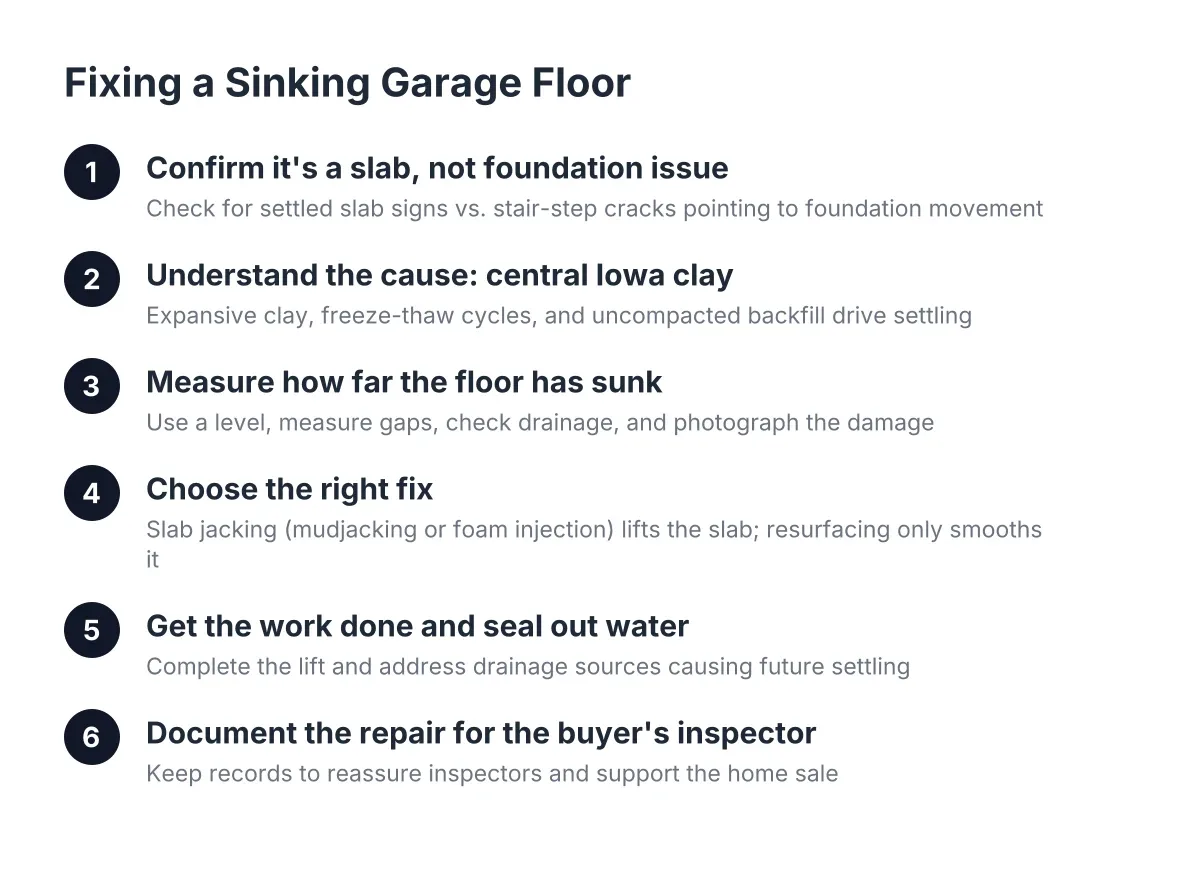
However, be careful with this sign. Sticking doors combined with cracks in the foundation walls or drywall inside the house can point to foundation movement, not just slab settlement. A garage slab sinking on its own is a leveling job. A house frame deforming along with it is a structural question, and that is worth a professional inspection before anyone pumps anything under the slab.
5. Hollow Sounds or Visible Voids Under the Slab
Tap the low areas of the slab with a broom handle. Solid concrete over packed soil sounds dull. Concrete bridging a void sounds hollow, like knocking on a drum. In Des Moines, voids form when downspout water or a plumbing leak washes fill soil out from under the slab, or when poorly compacted backfill finally settles.
A hollow slab is on borrowed time. It may still look level while the support underneath is gone, and the next heavy load, say a truck parked over the void, cracks it. This is exactly what slab jacking is built for: the crew drills small holes, pumps material into the void to fill it and lift the slab, then patches the holes to blend with the surface, which matches how Wikipedia describes the concrete leveling process.
6. Water Pooling, Staining, or Efflorescence in the Same Low Spot
Water is both a symptom and a cause. A puddle that forms in the same spot every time you wash the car marks a low area, which usually marks settlement. White chalky staining, called efflorescence, shows water is moving up through the concrete from wet soil below.
Next, check outside. Follow the downspouts near the garage. In many settling cases, a downspout dumps roof water right at the slab edge, and central Iowa's expansive clay swells when wet and shrinks when dry. That cycle moves slabs. Rerouting a downspout is cheap; leveling a slab is affordable; letting the cycle continue for five more years is neither.
7. The Slab Has Dropped Below the Driveway or the Apron
Stand at the overhead door and look at the joint between the garage slab and the driveway apron. If the garage floor now sits below the apron, or the apron sits below the driveway, you have a step-down that catches snow shovels, trips people, and traps water against the door seal. Sunken concrete at this joint also lets meltwater run under the slab, which feeds the erosion that caused the sinking in the first place.
This joint is where garage settlement and driveway settlement meet, and it often makes sense to level both slabs in the same visit since the equipment is already on site.
Which of These Signs Mean Leveling, and Which Mean Something Bigger?
Most of the signs that indicate your garage floor is settling point to a leveling job: gaps at the house, backward slope, offset cracks, hollow spots, and low joints at the apron. Concrete leveling lifts the existing slab back into place by pumping material underneath it. Signs 4 and, in some cases, 1 deserve a closer look before you commit, because slab movement paired with foundation cracks can mean the house itself is settling.
Here is the practical split:
- Leveling job: the slab moved but the house did not. Foundation walls look sound, interior doors work, and the movement is limited to the garage floor and driveway.
- Bigger issue: cracks in the foundation walls near the garage, drywall cracks inside, or floors sloping inside the house too. Get a structural opinion first; leveling a slab does not fix a moving foundation.
For garage floor leveling itself, you generally have three options, and the honest answer is that each fits a different slab. Mudjacking pumps a sand-cement slurry under the slab; it is heavier material and suits larger voids. Polyurethane foam injection uses smaller holes and cures fast, so you can park sooner. Self-leveling concrete works when the slab surface is rough or wavy but the base underneath is stable; note that manufacturer instructions typically require the concrete surface to be mechanically profiled before the leveler goes down, according to Lowe's installation guidance, so it is a prep-heavy option, not a quick pour.
Full concrete resurfacing is a fourth path when the surface is spalled or badly cracked but the slab sits at the right height. Before hiring one of the concrete resurfacing companies in the metro, though, confirm the slab is stable; resurfacing over a still-sinking slab wastes the money, and concrete resurfacing costs come on top of the leveling work either way, so fix the settlement first.
What Settling Garage Floors Cost to Fix, and the Insurance Question
Leveling is usually far cheaper than replacement. According to HomeAdvisor, mudjacking runs 25% to 50% less than replacing a concrete slab entirely, and Angi and HomeAdvisor data put the national average concrete leveling cost at $1,174, with a typical range of $630 to $1,723. For a landlord spreading repairs across several rentals, that range often lands inside a single month's rent per unit, which makes the liability math simple.
On insurance: most homeowner policies treat normal settling as excluded maintenance, but damage tied to a specific covered event, like a plumbing leak washing out the soil under the slab, can be a different conversation. Suppose a Des Moines homeowner notices new sinking after a burst supply line under the garage; in that scenario, the adjuster needs a written estimate that separates the leak-caused void from ordinary settlement. Ask any contractor you call for an itemized written estimate that names the likely cause, describes the repair method, and includes photos. That document is what an adjuster or a builder warranty administrator can actually work with, and it protects you from paying twice if the first fix does not hold.
Whatever your policy says, do not let the claim timeline delay the diagnosis. Settlement compounds through Iowa's freeze-thaw cycles, and a slab that needs a simple lift this fall can need crack repair, void filling, and drainage work by spring.
If you need concrete leveling, Des Moines Concrete Leveling Pros can help.
Prefer to talk it through? Call +15155828701 — a quick call is usually the fastest way to get a straight answer for your situation.