Driveway Leveling Terms Explained: A Plain-English Glossary
If you are getting quotes to fix a sunken driveway in Des Moines, the paperwork can read like a foreign language. This driveway leveling glossary translates the terms you will hear into plain English, so you can read a quote line by line and know what you are paying for. Use it to understand what each contractor is proposing, spot the difference between lifting a slab and replacing one, and ask questions that get straight answers.
- Concrete leveling: raising sunken concrete back to flat
- Concrete lifting: the physical raising part of the job
- Mudjacking: pumping a cement slurry under the slab
- Slab jacking: the umbrella term for lifting slabs
- Polyurethane foam injection: lifting with expanding foam
- Self-leveling concrete: a pourable overlay that flattens itself
- Settling: soil sinking and taking your concrete with it
- Expansive clay soil: central Iowa dirt that swells and shrinks
- Frost heave: winter freezing that pushes slabs up
- Void: an empty gap under the slab
- Pinning or trip point: where two slab edges no longer match
- Injection holes: the small drilled holes used to lift
- Cure time: how long before you can use the slab
- Crack filling: sealing cracks to keep water out
- Resurfacing: a new thin layer over worn concrete
- Joint caulking: sealing the seams between slabs
- Mobilization fee: the base charge to bring the crew out
- Slab replacement: tearing out and pouring new concrete
How the Work Gets Done
These are the terms you will see most often in driveway leveling and glossary references because they name the actual repair methods. Two contractors can quote the same driveway and propose different processes, so knowing the difference matters.
Concrete Leveling and Driveway Repair Glossary
Concrete leveling is the process of raising sunken concrete back to its original, even position without tearing it out. Instead of demolishing your driveway and pouring new concrete, a crew lifts the existing slab from underneath. It costs less than replacement and keeps the concrete you already own. If your slab is in decent shape but sitting low, leveling is usually the first option worth pricing. Our guide on what driveway leveling costs breaks down the factors that move the number.
Concrete Lifting
Concrete lifting means physically raising a sunken slab by pumping material into the space beneath it. Contractors often use lifting and leveling as near synonyms, and for most driveways they are. The small distinction: lifting is the raising itself, while leveling is the goal of getting everything flat and matched. If a quote says lifting, expect the same kind of work as a leveling quote.
Mudjacking
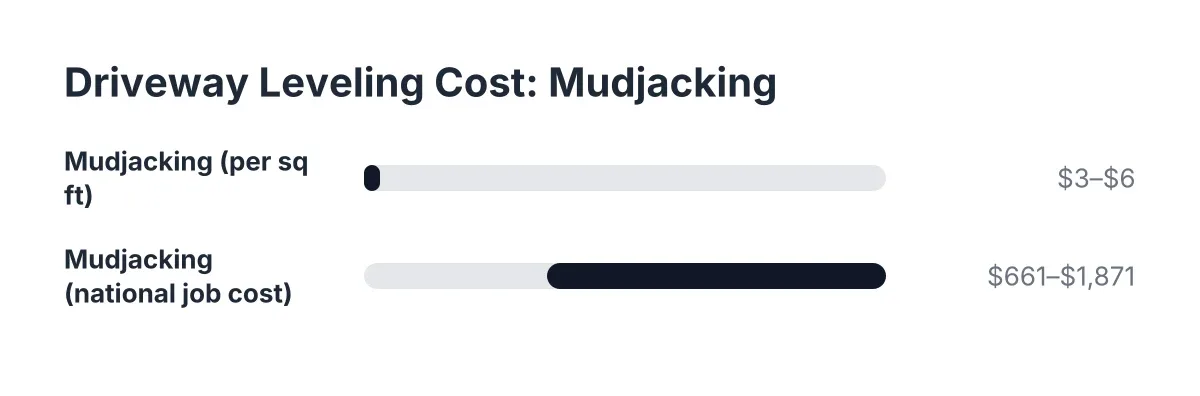
Mudjacking is a leveling method that pumps a thick slurry of cement, soil, and water under a sunken slab to push it back up. It is the older, proven approach and works well for heavy slabs like driveways. The slurry is dense, so it fills large gaps and supports weight without breaking the bank. The trade-off is bigger drill holes than foam and more weight added to the soil below. A contractor who offers mudjacking and foam can explain which fits your slab's condition and load.
Slab Jacking
Slab jacking is the umbrella term for any method that raises a concrete slab by injecting material underneath it. Mudjacking and foam injection are both types of slab jacking. If a quote says slab jacking without more detail, ask which material the crew plans to pump. The answer changes hole size, cure time, and often the price.
Polyurethane Foam Injection
Polyurethane foam injection is a leveling method that pumps expanding foam under a slab through small drilled holes. The foam expands, fills gaps, and lifts the concrete with precision. It cures fast, so you can often drive on the slab the same day. It is lighter than mudjacking slurry, which helps on soil that has already shown it cannot carry much weight. Foam usually costs more per job than mudjacking, so ask why a contractor recommends one over the other.
Self-Leveling Concrete
Self-leveling concrete is a pourable cement mix that flows out and flattens itself into a smooth surface. It fixes shallow dips and rough spots on top of a slab, not slabs that have sunk as a whole unit. Think of it as a surface fix, while mudjacking and foam are structural fixes. If a driveway has settled two inches at one corner, self-leveling concrete alone will not solve it.
Why Driveways Sink: Driveway Leveling Glossary of Root Causes
Knowing the cause helps you judge whether a fix will last.
Settling
Settling is what happens when the soil under a slab compresses or washes away, letting the concrete sink. It is the root cause behind most sunken concrete and uneven concrete in central Iowa. Poorly compacted fill dirt, water running under the slab, and heavy vehicle loads all speed it up. A good contractor will talk about why your driveway settled, not just how to lift it, because an unaddressed cause means the slab can settle again.
Expansive Clay Soil
Expansive clay soil is dirt that swells when wet and shrinks when dry, moving anything sitting on top of it. Much of the Des Moines metro sits on this kind of clay. A wet spring swells the soil; a dry August shrinks it; your driveway rides that cycle year after year. This is why local driveway leveling work often outlasts a simple patch: the repair accounts for soil that will keep moving.
Frost Heave
Frost heave is the upward push a slab gets when water in the soil beneath it freezes and expands. Iowa winters deliver plenty of it. A heaved slab can settle back down in spring, or it can crack and stay uneven. If your driveway looks worse every March, frost heave is a likely suspect, and keeping water out of the joints and cracks is part of the fix.
Void
A void is an empty pocket under a slab where soil has washed out or compressed away. Concrete is strong in compression but weak when unsupported, so a slab spanning a void will eventually crack and drop. Filling voids is a core part of both mudjacking and foam injection. If a contractor mentions void filling on a quote, they are stabilizing the slab, not just raising it.
Pinning or Trip Point
A trip point is the raised edge where two slab sections no longer sit at the same height. It is the classic tripping hazard: one panel of the walkway or driveway drops, and the neighboring edge sticks up. Cities and insurers pay attention to these on sidewalks, and homeowners notice them fast on driveways. Leveling brings the low slab back up so the edges match again.
Reading a Quote and the Fine Print
Injection Holes
Injection holes are the small holes a crew drills through the slab to pump lifting material underneath. Mudjacking holes run about the size of a soda can; foam holes are closer to the size of a penny. After the lift, the crew patches the holes with fresh cement. Ask how many holes the job needs and how the patches will look, since the patched spots stay a slightly different shade.
Cure Time
Cure time is how long you must wait before using the slab after a repair. Polyurethane foam cures within minutes to hours, so same-day driving is common. Mudjacking slurry needs longer, often a day or more, before it can take a car's weight. Self-leveling overlays and new concrete need the longest. Cure time affects your week more than your wallet, so confirm it before the crew shows up.
Crack Filling
Crack filling means sealing cracks in the concrete with a flexible material to keep water and ice out. It matters because water sneaking through a crack washes out the soil below and feeds the freeze-thaw cycle that widens the crack. Crack filling paired with leveling protects the lift you just paid for. On its own, it is maintenance; skipping it invites the same problem back.
Resurfacing
Resurfacing is applying a thin new layer of concrete or overlay across the top of a worn slab. It fixes looks: surface scaling, stains, and shallow pitting. It does not fix a slab that has sunk. Some driveways need both, a lift first and a resurface after, and a quote should list them as separate line items.
Joint Caulking
Joint caulking is sealing the seams between slab sections with a flexible caulk so water cannot run underneath. Those joints are the easiest path for rain and snowmelt to reach the soil below your driveway. Sealed joints slow future settling and frost heave. Many contractors include caulking with a leveling job; if yours does not, ask why.
Mobilization Fee
A mobilization fee is the base charge a contractor bills just to bring the crew and equipment to your property. It is why a tiny job can cost more per square foot than a big one. Some quotes fold it into the total; others list it separately. Either way, it explains why bundling your driveway with a sidewalk or garage floor in one visit often makes financial sense.
Slab Replacement
Slab replacement means tearing out the old concrete and pouring new in its place. It is the right call when a slab is crumbling, cracked into many small pieces, or too broken to lift as a unit. It costs more than leveling and takes days of cure time before you can park on it. An honest contractor will tell you when your slab is past saving and leveling would waste your money.
Using These Terms
You now have what this driveway leveling glossary was built to give you: the vocabulary to read a quote line by line and know what each item means. When a contractor says slab jacking, you can ask whether they mean mudjacking or foam, and why. Sharper questions get you straighter answers, and straighter answers get you the right fix the first time.
If you need concrete leveling, Des Moines Concrete Leveling Pros can help.
Prefer to talk it through? Call +15155828701 — a quick call is usually the fastest way to get a straight answer for your situation.