How to Fix Driveway Settling From Expansive Clay: A Des Moines Homeowner’s Guide
If your driveway has dropped an inch at the garage or tilted toward the house, you are likely dealing with driveway settling from expansive clay, the soil most of central Iowa sits on. This clay swells when it soaks up water and shrinks when it dries out. Your slab rides on top of that movement, and over time it sinks, cracks, and pulls away from the garage floor. The good news: most settled driveways can be lifted back into place for a fraction of replacement cost, often in a single day. This guide walks you through the fix step by step, including what to document if you plan to file an insurance claim or need paperwork before listing your home.
Step 1: Confirm Expansive Clay Is Behind Your Driveway Settling
First, figure out why the slab moved, because the cause decides the fix. Expansive clay causes settling in a specific pattern. The soil absorbs water during wet springs, softens, and compresses under the weight of your cars. During dry summers or hard freezes, the clay shrinks and pulls away from the slab, leaving voids underneath. Repeat that cycle for a few years and the slab drops.
Look for these signs that point to soil movement rather than a bad pour:
- A gap between the driveway and the garage floor, or between the slab and your front steps
- Cracks that opened gradually and got wider after heavy rain or a freeze-thaw cycle
- One side of the driveway sitting lower than the other, usually the side closest to a downspout
- Sections that rock or make a hollow sound when a car rolls over them
However, not every problem is a leveling problem. Cracking combined with sinking across the whole slab can mean the base underneath has failed and needs replacement. A concrete leveling specialist should investigate the cause, including downspout placement and drainage, before recommending a repair. If a contractor quotes a lift without asking why the slab settled, get a second opinion.
Step 2: Document the Damage Before Anyone Touches It
Next, photograph everything. This matters whether you are filing an insurance claim, preparing a seller's disclosure, or just protecting yourself. Take wide shots showing the full driveway and close-ups of each crack and gap. Lay a tape measure across the drop so the photo shows the measurement, for example a 1.5 inch gap at the garage slab.
For insurance purposes, be honest with yourself about the cause. Gradual settling from soil movement is usually treated as normal wear, not a covered peril, under most homeowner policies. Sudden damage tied to a specific event, such as a plumbing leak washing out soil under the slab, is a different conversation. Your adjuster makes that call, not your contractor, so give the adjuster clear photos, dates, and a written repair estimate. Ask the leveling company for an itemized estimate that names the repair method, the square footage, and the observed cause. That kind of paperwork holds up better in a claim file than a one-line quote.
If you are selling within the next few months, this same documentation helps you. A dated repair invoice answers the inspection report before the buyer's agent brings it up.
Step 3: Choose Mudjacking or Polyurethane Foam for the Lift
Both methods work the same basic way. According to Wikipedia, concrete leveling works by drilling holes into the sunken slab, pumping a lifting material beneath it to raise and stabilize the slab, then patching the holes to closely match the original surface. The difference is what gets pumped.
Mudjacking pumps a cement-based slurry through holes about the size of a soda can. It is the lower-cost option and works well for driveways that settled gradually. Polyurethane foam injection uses smaller holes and a lightweight foam that cures in minutes, which matters if you need to park on the driveway the same day. Foam typically costs more per job, but it adds less weight to soil that is already soft.
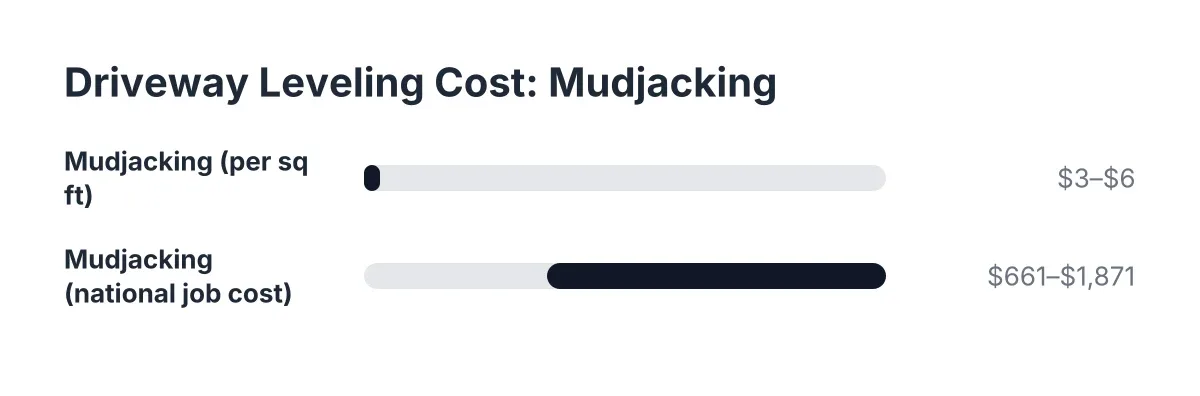
For context on price, HomeAdvisor reports that mudjacking runs $3 to $6 per square foot and costs 25% to 50% less than replacing a concrete slab entirely. According to Angi, national mudjacking costs range from $661 to $1,871, with most homeowners paying about $1,232, and small jobs may carry a minimum charge of around $500. Those are 2026 national figures, not local quotes, but they give you a sanity check when estimates come in.
How Expansive Clay and Driveway Settling Affect Replacement Decisions
Leveling only works if the slab is worth saving. If the concrete is crumbling, cracked into small pieces, or spalling badly across the surface, lifting it just raises broken concrete. As a general rule, a slab cracked into three or four large sections lifts fine; a slab shattered into a dozen pieces usually needs replacement. A specialist should tell you plainly which side of that line your driveway falls on.
Step 4: Skip the DIY Shortcuts That Do Not Fit Driveways
Search results push a lot of products at this problem, and most of them solve a different problem. Self-leveling concrete and concrete leveling compound are made for smoothing interior floors before flooring goes down, not for lifting a sunken exterior slab. They fill low spots on the surface; they do nothing about the void underneath, so the slab keeps sinking. They also require serious prep. Manufacturer instructions typically require the concrete surface to be mechanically profiled before the leveler goes on, according to Lowe's installation guidance, and Sakrete notes you should wear a respirator when mixing the dry powder because it is hazardous to breathe.
Similarly, a concrete grinder rental can knock down a raised edge to remove a tripping hazard on a sidewalk. On a driveway that dropped an inch or more from soil movement, grinding thins the slab without fixing the settling. Crack filling is worth doing, but only after the slab is lifted, so the repaired crack does not reopen when the slab moves again.
Step 5: Know What Happens on Repair Day
A driveway lift is faster than most homeowners expect. Here is an illustrative scenario: say a homeowner in Beaverdale has a two-car driveway where the slab nearest the garage dropped 2 inches, and the listing agent flagged it before an open house. A typical crew would arrive in the morning, drill a pattern of holes in the sunken section, pump material underneath while watching the slab rise, and patch the holes to blend with the surface. In that scenario the work wraps up in a few hours. With foam, cars can usually return the same day; with mudjacking, the slurry needs longer to cure, often a day or so before heavy loads.
Driveway leveling like this is the highest-ticket job most concrete leveling companies handle, so ask for the timeline and cure time in writing. If you are prepping for a sale, that written scope plus the invoice becomes part of your disclosure file, and Angi reports concrete leveling projects can recoup 70% to 90% of their cost in added home value.
Step 6: Fix the Water Problem So the Clay Stays Put
The lift fixes the slab. Drainage keeps it fixed. Driveway settling from expansive clay is a moisture problem at its core, so if water keeps soaking the soil at the slab edge, the clay will keep swelling and shrinking under your repair.
Work through this checklist after the lift:
- Extend downspouts so they discharge at least several feet away from the driveway edge, not beside it.
- Regrade soil along the driveway so water runs away from the slab instead of pooling against it.
- Seal the joint between the driveway and the garage floor so runoff cannot pour into the gap.
- Fill and seal surface cracks so rain does not funnel straight down to the clay.
In some cases, a yard that pools water needs a professionally installed drainage system before any repair will hold. That is beyond a leveling company's scope, and an honest one will say so.
Step 7: Set Realistic Lifespan Expectations
A properly done lift on a driveway that settled gradually, with drainage corrected, commonly holds for many years. That said, no honest contractor promises the slab will never move again. Central Iowa's clay keeps cycling through wet and dry seasons, and unseen factors under the slab can cause new settling even after a correct repair. What you control is the water: keep downspouts extended, keep cracks sealed, and walk the driveway each spring looking for new gaps.
If new driveway settling from expansive soil shows up years later, catching it early means a smaller, cheaper touch-up lift instead of another full repair. Keep your original estimate and invoice; they document the baseline condition, which helps with any future claim, disclosure, or warranty conversation.
If you need concrete leveling, Des Moines Concrete Leveling Pros can help.
Prefer to talk it through? Call +15155828701 — a quick call is usually the fastest way to get a straight answer for your situation.