Sidewalk and Walkway Leveling Terms Explained: A Plain-English Glossary
If you're getting quotes to fix a sunken sidewalk in Des Moines, you'll run into words like mudjacking, slab jacking, and void filling fast. This sidewalk and walkway leveling glossary breaks down the terms in plain English so you can read a quote line by line, ask better questions, and spot the difference between a fair fix and an oversell. Each entry starts with a short, standalone definition, then tells you why the term matters to your project. No sales pitch, just the words explained.
- Concrete leveling: raising sunken slabs back into place
- Concrete lifting: same fix, different name
- Slab jacking: the umbrella term for pumping material under a slab
- Mudjacking: leveling with a cement slurry
- Polyurethane foam injection: leveling with expanding foam
- Self-leveling concrete: a pourable topping for indoor floors
- Settling: soil sinking under your concrete
- Void: an empty gap under a slab
- Expansive clay soil: central Iowa dirt that swells and shrinks
- Frost heave: winter freezing pushing slabs up
- Tripping hazard: an uneven edge that can catch a foot
- Slab: one poured section of concrete
- Control joint: a planned groove where cracks are supposed to go
- Injection port: the small hole drilled for lifting material
- Crack filling: sealing cracks to keep water out
- Resurfacing: a new thin layer over worn concrete
- Cure time: how long before you can walk or drive on it
- Replacement vs. leveling: tear-out and repour versus lifting what's there
The Fixes: What Providers Actually Do
These are the repair methods you'll see named on quotes and websites, often used loosely or interchangeably. Knowing which is which is half the point of this sidewalk and walkway leveling glossary.
Concrete Leveling and Sidewalk Walkway Leveling Methods
Concrete leveling is the process of raising a sunken concrete slab back to its original height instead of tearing it out and pouring new. A crew pumps material under the slab through small drilled holes, and the slab rises as the space below fills. It works on sidewalks, driveways, patios, steps, and garage floors, as long as the slab itself is still in one solid piece. If a slab is shattered into small chunks, leveling usually isn't the right call, and an honest provider will say so.
Concrete Lifting
Concrete lifting means the same thing as concrete leveling: raising sunken concrete back into position from below. Some companies say lifting, some say leveling, and some say both on the same page. Don't read a price or quality difference into the word choice. What matters is the material they pump underneath and the condition of your slab.
Slab Jacking and Sidewalk Walkway Leveling Variations
Slab jacking is the general term for lifting a concrete slab by pumping material underneath it through drilled holes. Mudjacking and polyurethane foam injection are both types of slab jacking. If a quote says "slab jacking" without naming the material, ask which one they plan to use. The answer affects hole size, cure time, and how long the fix should hold.
Mudjacking
Mudjacking is a leveling method that pumps a thick slurry of water, soil, and cement under a sunken slab to raise it. It's the older, proven approach, and the slurry is heavy, which suits some soils and slab types. The drilled holes are larger than foam holes, roughly the size of a soda can, and get patched when the job is done. Mudjacking often costs less up front, so ask your provider why they'd pick it, or skip it, for your walkway.
Polyurethane Foam Injection
Polyurethane foam injection is a leveling method that pumps expanding foam through small holes to lift a sunken slab. The foam expands under the concrete, fills empty space, and raises the slab with precise control. Holes are small, about the size of a dime, and the foam sets fast, so you can usually walk on the slab the same day. It's lighter than mudjacking slurry, which can matter on soft or already stressed soil.
Self-Leveling Concrete
Self-leveling concrete is a pourable cement mix that flows out flat on its own to smooth an uneven floor surface. It's a topping, not a lift; it fixes low spots on top of a slab rather than raising the slab itself. You'll see it used most on interior floors, like a garage or basement, before new flooring goes in. If your sidewalk has sunk two inches, self-leveling concrete is the wrong tool, and leveling from below is the right one.
Crack Filling
Crack filling means sealing cracks in concrete with a flexible or rigid filler to keep water and debris out. It matters more than it sounds, because water that gets through a crack washes out the soil below and starts the next round of settling. Many providers pair crack repair with leveling so the fix lasts. On its own, crack filling is a maintenance step, not a lift.
Resurfacing
Resurfacing is applying a thin new layer of concrete or overlay on top of an existing slab to renew its surface. It fixes cosmetic problems like flaking, pitting, and surface stains, but it does not raise a sunken slab. If a section of your walkway sits an inch low, resurfacing alone will just give you a prettier tripping hazard. Level first, then resurface if you want a fresh look.
Why Your Sidewalk Sank: Soil and Weather Terms
Concrete rarely fails on its own. In central Iowa, the ground under it does most of the damage, and these terms explain how.
Settling
Settling is the gradual sinking of soil under a concrete slab, which lets the slab drop with it. It happens when soil compacts, washes away, or was poorly packed when the concrete was poured. Settling is the root cause behind most sunken concrete calls in Des Moines. Leveling fixes the slab; good drainage helps stop the settling from starting over.
Void
A void is an empty pocket of space under a concrete slab where soil used to be. Water erosion, decaying construction debris, and burrowing animals all create voids. A slab over a void may look fine until enough weight cracks it, so a provider who mentions void filling is addressing the cause, not just the symptom. Both mudjacking slurry and polyurethane foam fill voids as they lift.
Expansive Clay Soil
Expansive clay soil is soil that swells when wet and shrinks when dry, moving anything sitting on top of it. Much of central Iowa sits on clay like this, which is why sidewalks and driveways here settle and shift more than homeowners expect. Wet springs swell the clay, dry summers shrink it, and the concrete rides that cycle year after year. It's the main reason sunken concrete is so common in the Des Moines metro.
Frost Heave
Frost heave is upward movement of soil and concrete caused by water in the ground freezing and expanding. Iowa's freeze-thaw winters push slabs up in cold months, then let them drop as the ground thaws. Over years, that cycle leaves walkway sections sitting at different heights. Good drainage and sealed cracks reduce how much water gets under the slab to freeze in the first place.
Tripping Hazard
A tripping hazard is any raised or sunken edge in a walking surface that can catch someone's foot, usually a height difference between two slabs. Uneven sidewalk joints are the classic example, and they're often the reason homeowners call for sidewalk and walkway leveling in the first place. Some cities can hold property owners responsible for hazardous sidewalks, so check your local rules. Leveling brings the offset edges back flush.
Parts, Process, and Paperwork
These terms show up on quotes and during the job itself.
Slab
A slab is a single poured section of concrete, like one square of sidewalk or one panel of a driveway. Providers quote by the slab or by square footage, so knowing how many slabs have sunk helps you understand the estimate. One low slab is a smaller job than a whole run of them. Slab condition also decides whether leveling or replacement makes sense.
Control Joint
A control joint is a straight groove cut or formed into concrete to control where it cracks. Concrete shrinks as it cures, so the joint gives that stress a planned place to go. Cracks that follow the joints are normal; cracks that wander across the middle of a slab suggest settling or a void underneath. That difference tells a provider a lot before they ever drill a hole.
Injection Port
An injection port is the small hole drilled through a slab so leveling material can be pumped underneath. Foam jobs use dime-sized holes; mudjacking holes are larger. After the lift, the crew patches the holes with fresh cement. Ask how many holes to expect and how visible the patches will be, especially on a front walkway you see every day.
Cure Time
Cure time is how long a repair material needs to harden before the concrete can take normal use again. Polyurethane foam sets within minutes to hours, so a leveled walkway is often walkable the same day. Mudjacking slurry needs longer, typically a day or so before heavy loads. If you need the driveway back fast, cure time should be part of the mudjacking-versus-foam conversation.
Replacement vs. Leveling
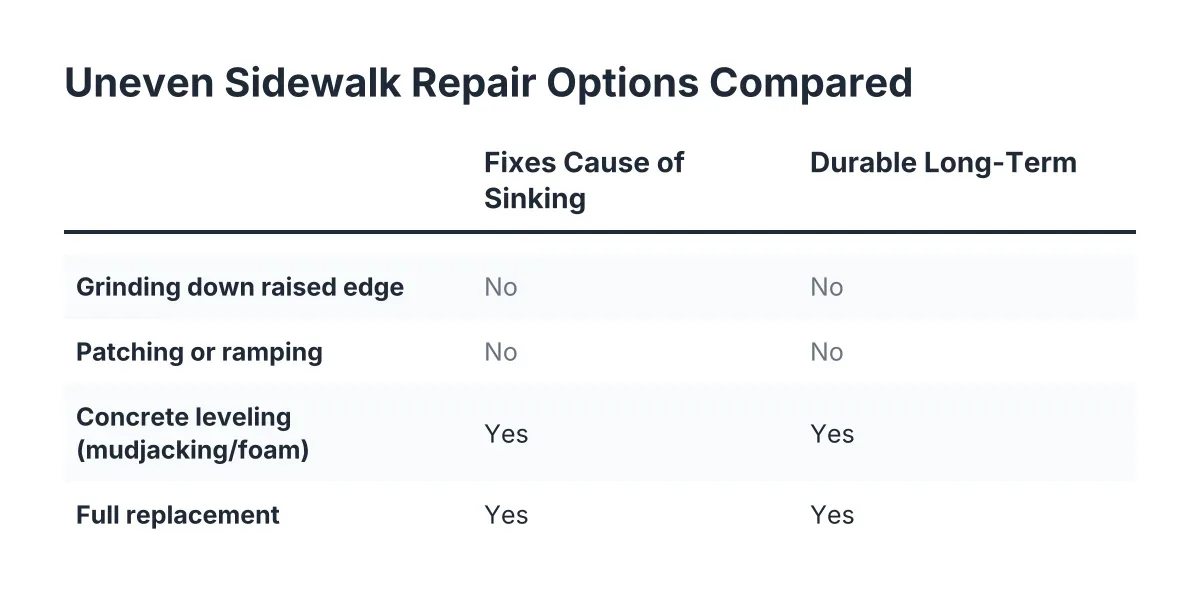
Replacement versus leveling is the choice between tearing out sunken concrete to pour new versus lifting the existing slab back into place. Leveling usually costs a fraction of replacement and is done in hours, not days, but it only works when the slab is structurally sound. Badly crumbled or undersized concrete needs replacement. For typical costs and what drives them, see this sidewalk and walkway leveling cost guide, and for how the work goes locally, see our sidewalk and walkway leveling service page.
Using These Terms
You now have what this sidewalk and walkway leveling glossary is built to give you: enough plain-English footing to read a quote line by line and ask why a provider picked foam over mudjacking, or leveling over replacement. If an answer doesn't match what you've read here, ask a follow-up. A good contractor will explain it in words this simple.
If you need concrete leveling, Des Moines Concrete Leveling Pros can help.
Prefer to talk it through? Call +15155828701 — a quick call is usually the fastest way to get a straight answer for your situation.