Mudjacking vs. Polyurethane Foam Injection: Which Fits Your Patio?
A sunken patio is one of those problems that grows on you. First it's a low corner where water pools after rain. Then it's a cracked slab your realtor flags before listing, or a tripping hazard your insurance adjuster wants documented. If you're comparing mudjacking vs polyurethane foam injection to fix it, you're asking the right question. Both methods lift sunken concrete back into place for far less than tearing out the patio and pouring new. The trick is knowing which one fits your slab, your timeline, and your budget.
This guide compares the two methods side by side, with a focus on what Des Moines homeowners actually care about: getting the patio safe and level, making it look good for a sale or a summer of backyard cookouts, and not paying for the same fix twice.
Why Level a Patio Instead of Replacing It
Concrete leveling restores a sunken slab without demolition. Crews drill holes in the settled section, pump a lifting material underneath, raise the slab back to grade, and patch the holes to blend with the original surface, according to Wikipedia. Your patio is usable again the same day or the next, depending on the method.
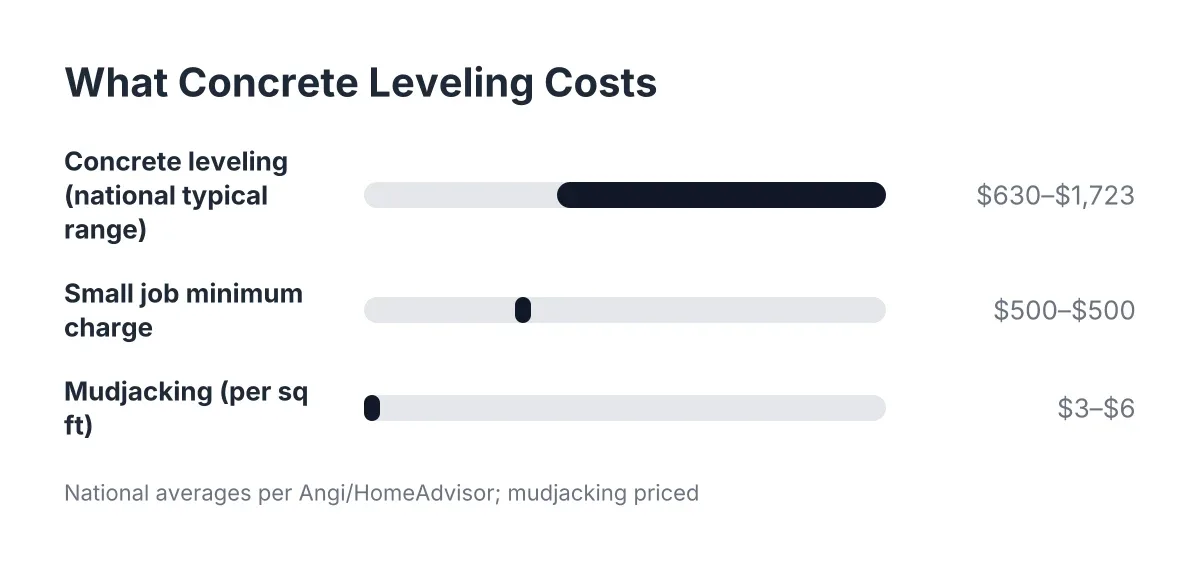
Replacement, by contrast, means jackhammers, a dumpster in the driveway, days of cure time, and a new slab that won't match the color of your walkway or steps. Cost is the other big gap. Mudjacking runs $3 to $6 per square foot and costs 25% to 50% less than replacing a slab entirely, according to HomeAdvisor.
For a seller, that math matters twice. Leveling projects can recoup 70% to 90% of their cost in added home value, according to Angi. A level, crack-repaired patio photographs well, passes inspection without a disclosure headache, and doesn't eat your listing timeline the way a full tear-out would.
How Mudjacking and Polyurethane Foam Injection Work
Both methods do the same basic job: fill the void under your sunken concrete and push the slab back up. The difference is the material and how it behaves once it's under there.
Mudjacking, the Traditional Slab Jacking Method
Mudjacking, also called slabjacking, pumps a slurry of sand, soil, and often Portland cement through drilled holes under high pressure. The slurry fills the void, lifts the slab, and hardens into a dense supporting base.
It's the older method, and it still works well for a lot of patios. The holes are larger, about the size of a soda can, and the slurry needs time to cure before the slab can take heavy load. The material itself is heavy once it dries, which matters on soft or already-compacted soil.
Polyurethane Foam Injection
Foam injection pumps a two-part polyurethane through much smaller ports, closer to the size of a penny. The foam expands under the slab, fills the void, and lifts the concrete back to level. It cures fast, often within minutes to an hour, so you can walk on the patio the same day.
The foam is lightweight, so it adds little load to weak soil underneath. It's also closed-cell, meaning it doesn't wash out when water moves under the slab. That resistance to erosion matters here in central Iowa, where expansive clay soils swell and shrink through every freeze-thaw cycle and heavy spring rain can carry loose fill right out from under a patio.
Mudjacking vs. Polyurethane Foam Injection: Side-by-Side
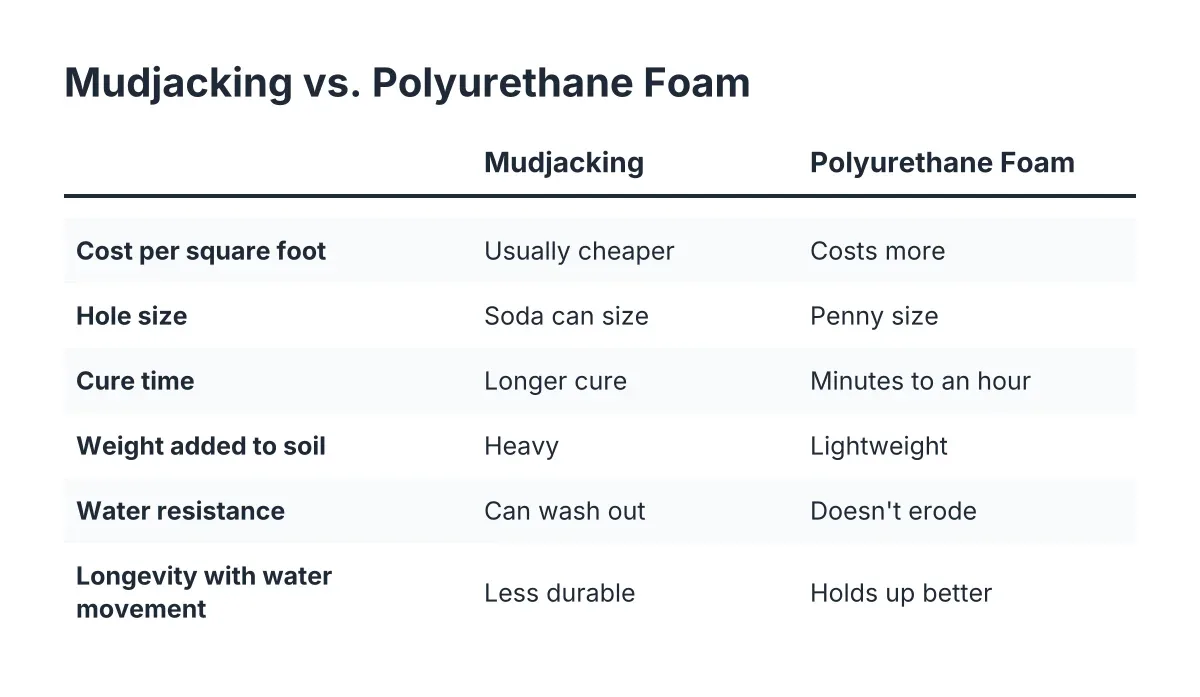
Here's how the two methods compare on the factors that decide most patio jobs:
- Cost. Mudjacking is usually the cheaper option per square foot. Foam costs more in material but can close the gap on small jobs where setup is the main expense.
- Hole size. Mudjacking holes are larger and more visible after patching. Foam ports are smaller and easier to hide, which matters on a patio buyers will see up close.
- Cure time. Foam sets within hours. Mudjacking slurry needs longer before the slab handles full weight, like a loaded grill station or a hot tub base.
- Weight on the soil. Cured mudjacking slurry is heavy. On soil that already failed once, that added weight can contribute to re-settling. Foam weighs a fraction as much.
- Water resistance. Foam doesn't erode when exposed to water. Sand-based slurry can wash out over time if the drainage problem that sank your patio isn't fixed.
- Longevity. Both can last for years when the underlying soil issue is addressed. Foam tends to hold up better where water keeps moving under the slab.
Neither method is "better" in every case. That's why a specialist looks at slab condition, soil, load, and drainage before recommending one. A company that only offers one method will recommend that method every time.
When Mudjacking Fits a Des Moines Patio
Mudjacking makes sense when the budget is tight, the slab is thick and sound, and the soil underneath is stable. Angi puts the national average mudjacking cost at $661 to $1,871, with most homeowners paying around $1,232. For a mid-size backyard patio, that often lands well under the cost of foam, and far under replacement.
It's a good fit when:
- The patio slab is intact with only minor cracks that crack filling can handle.
- The soil under the patio drains well and hasn't been washing out.
- You can give the slurry time to cure before putting weight back on the slab.
- The lift needed is modest and appearance of the patch holes isn't a dealbreaker.
Keep in mind that small jobs often carry a minimum charge of around $500 even under 100 square feet, according to Angi. If you're only fixing one settled corner, ask how the minimum applies before you compare quotes.
When Polyurethane Foam Injection Fits Better
Foam injection is the stronger choice when speed, weight, or water is the issue. Say a homeowner in Beaverdale is listing in six weeks and the inspection report flags an uneven concrete patio as a tripping hazard. In that scenario, foam lets the crew lift the slab in a morning, and the patio is photo-ready for the listing that weekend. The smaller ports also patch cleaner, which buyers notice.
Foam also wins when the soil under the patio is soft or has already compressed under the slab's weight. Adding hundreds of pounds of cured slurry to soil that failed once is asking it to fail again. Lightweight foam sidesteps that problem. Between mudjacking and polyurethane foam, the lightweight option makes sense when the foundation is weak.
Finally, if downspouts or grading sent water under your patio in the first place, foam's resistance to washout buys you durability that a sand-based slurry can't match. Fix the drainage too; no lifting material survives forever under a slab that stays wet.
What About Insurance and Pre-Sale Documentation?
Concrete settling under a patio is usually treated as gradual earth movement, and most homeowner policies exclude it. Coverage sometimes comes into play when a specific covered event caused the damage, such as a plumbing line burst that washed out soil under the slab. Only your adjuster and your policy can answer that for your situation.
However, you can make the claims process easier on yourself. Get a written estimate that describes the problem in plain terms: how far the slab has settled, the likely cause, the repair method, and the cost. Photos of the sunken concrete, the cracks, and any drainage issues help too. If your adjuster asked for an inspection report or a mudjacking quote, a local estimate that spells out cause and repair carries more weight than a generic one-line price.
If you're prepping for a sale instead, the same paperwork serves double duty. A written repair record answers buyer and inspector questions before they become negotiating points.
What Concrete Leveling Can't Fix
Be honest with yourself about the slab's condition before choosing either method. Neither mudjacking nor foam injection fixes a patio that's shattered into small pieces, badly spalled across the surface, or poured too thin to lift. In those cases, replacement or resurfacing is the right call, and a trustworthy contractor will say so.
Surface problems have their own fixes. Concrete resurfacing renews a worn but level surface. Crack repair and crack filling handle cosmetic cracks after the lift. Self-leveling concrete can smooth interior floors, though it needs proper surface prep; manufacturer instructions typically require the concrete to be mechanically profiled first, per Lowe's installation guidance. None of those substitute for lifting a sunken slab.
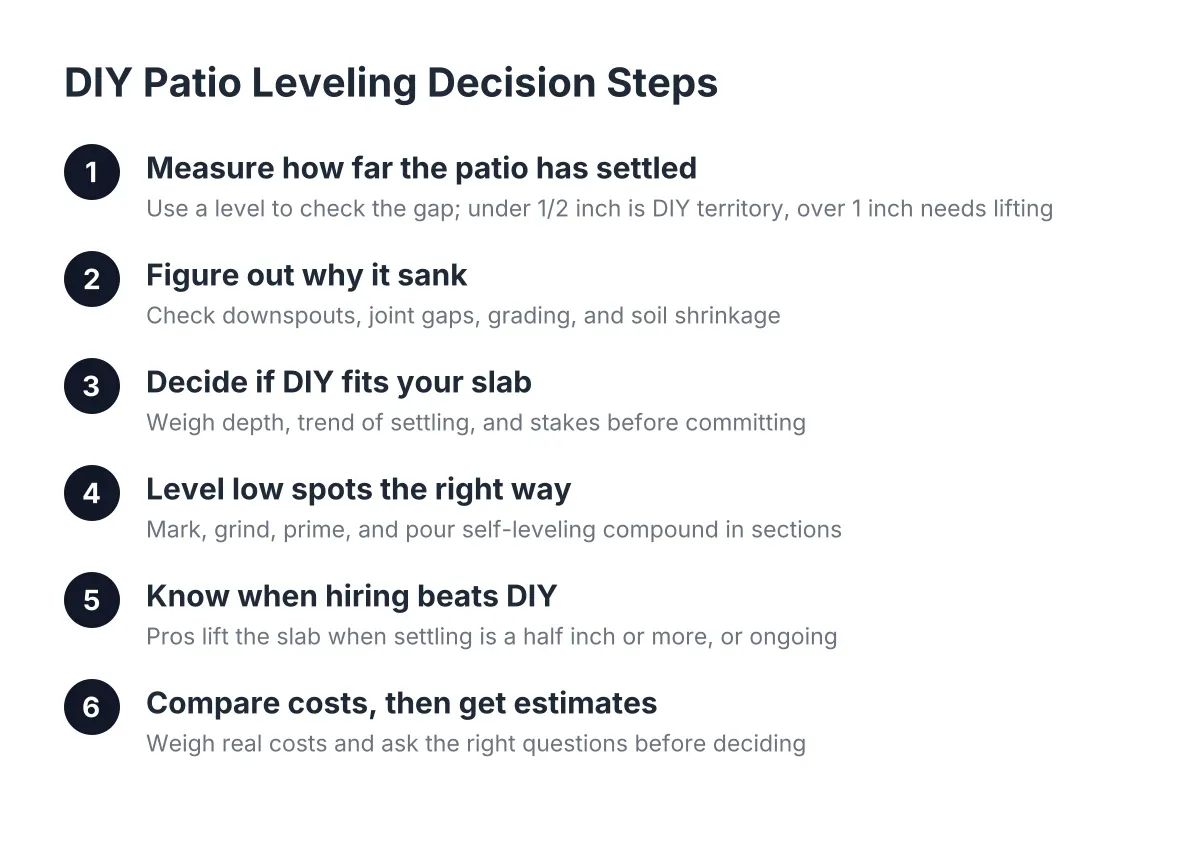
One more note for DIY-minded homeowners: patio leveling with rented foam kits rarely goes well. Lifting a slab evenly takes controlled injection at multiple points, and an over-lifted or cracked slab costs more to fix than the original problem. Paver patios are a different story; releveling pavers is a legitimate DIY job, since you can pull individual pavers, rebuild the paver base, screed fresh leveling sand for pavers, and reset them by hand. Poured concrete gives you no such second chance.
How to Choose Between the Two
Start with three questions:
- How fast do you need the patio back? Listing photos next week, or a graduation party Saturday? Foam cures in hours. If timing is loose, mudjacking's longer cure is no problem.
- What's happening under the slab? Soft soil or active water movement points to lightweight, washout-resistant foam. Stable, well-drained soil under a sound slab makes mudjacking a solid, cheaper choice.
- How much does appearance matter? Smaller foam ports patch cleaner. If the patio is out back and function is all you need, mudjacking's larger patches are a fair trade for the savings.
Then get an estimate from a contractor who offers both methods and will tell you plainly which fits your slab. In 2026, plenty of franchise operations sell a single method as the answer to everything. A specialist who works Des Moines soil every week, and who can explain why your patio settled in the first place, is the one who'll fix it right the first time.
If you need concrete leveling, Des Moines Concrete Leveling Pros can help.
Prefer to talk it through? Call +15155828701 — a quick call is usually the fastest way to get a straight answer for your situation.