DIY Garage Floor Leveling vs. Hiring a Pro: A Des Moines Homeowner’s Guide
If your garage floor has sunk, cracked, or pulled away from the house, you have two paths: fix it yourself with a leveling compound, or hire a crew to lift the slab back into place. Garage floor leveling is one of the few concrete repairs where DIY is genuinely possible, but it is also one of the easiest to get wrong. This guide walks you through both paths step by step, so you know which one fits your slab, your timeline, and your paperwork if an insurance claim or home sale is in the picture.
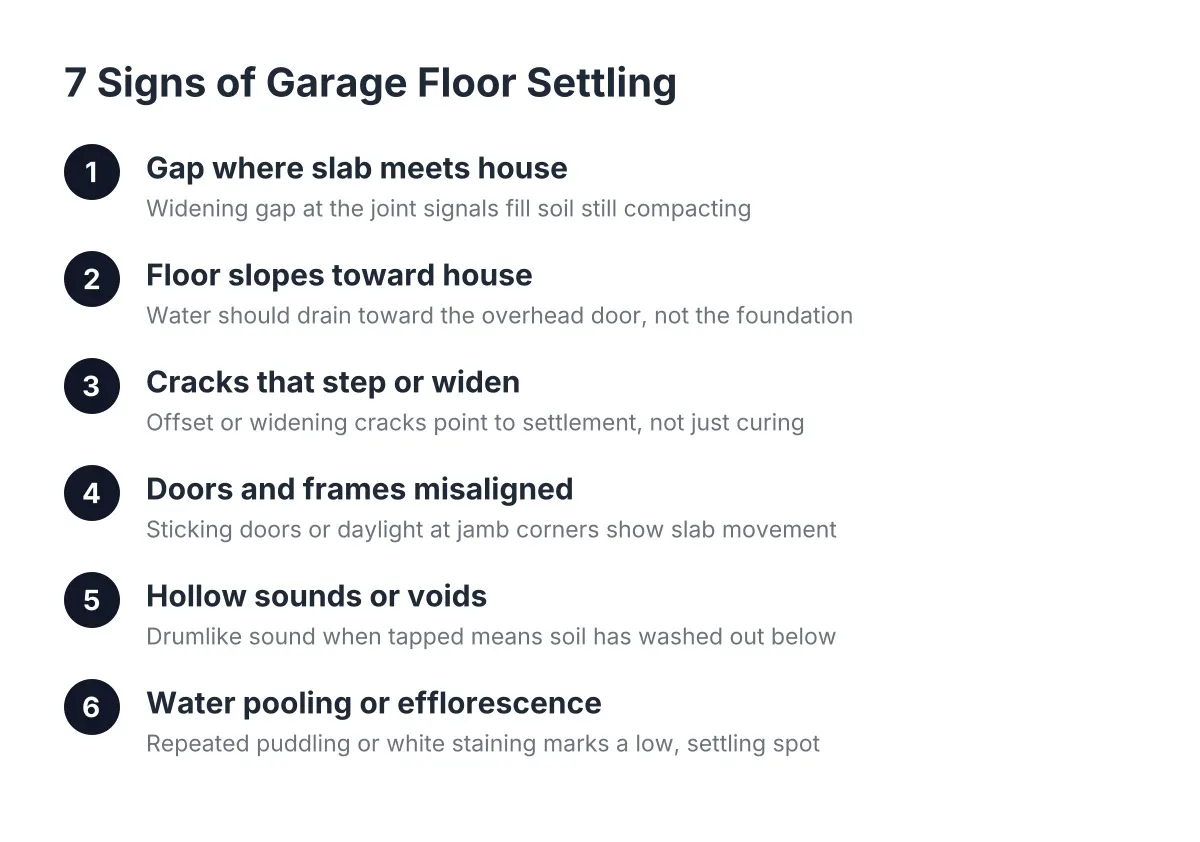
One pattern matters here more than any other. In newer Des Moines-area subdivisions, garage slabs often sit on fill soil that was placed during construction. Over a few wet-and-freeze Iowa seasons, that fill compresses, and the garage slab settles while the house foundation stays put. The result is a slab that slopes toward one corner and a widening gap where the garage floor meets the foundation wall. That pattern tells you a lot about which fix you need, so we will start there.
Step 1: Diagnose the Problem Before You Buy Anything
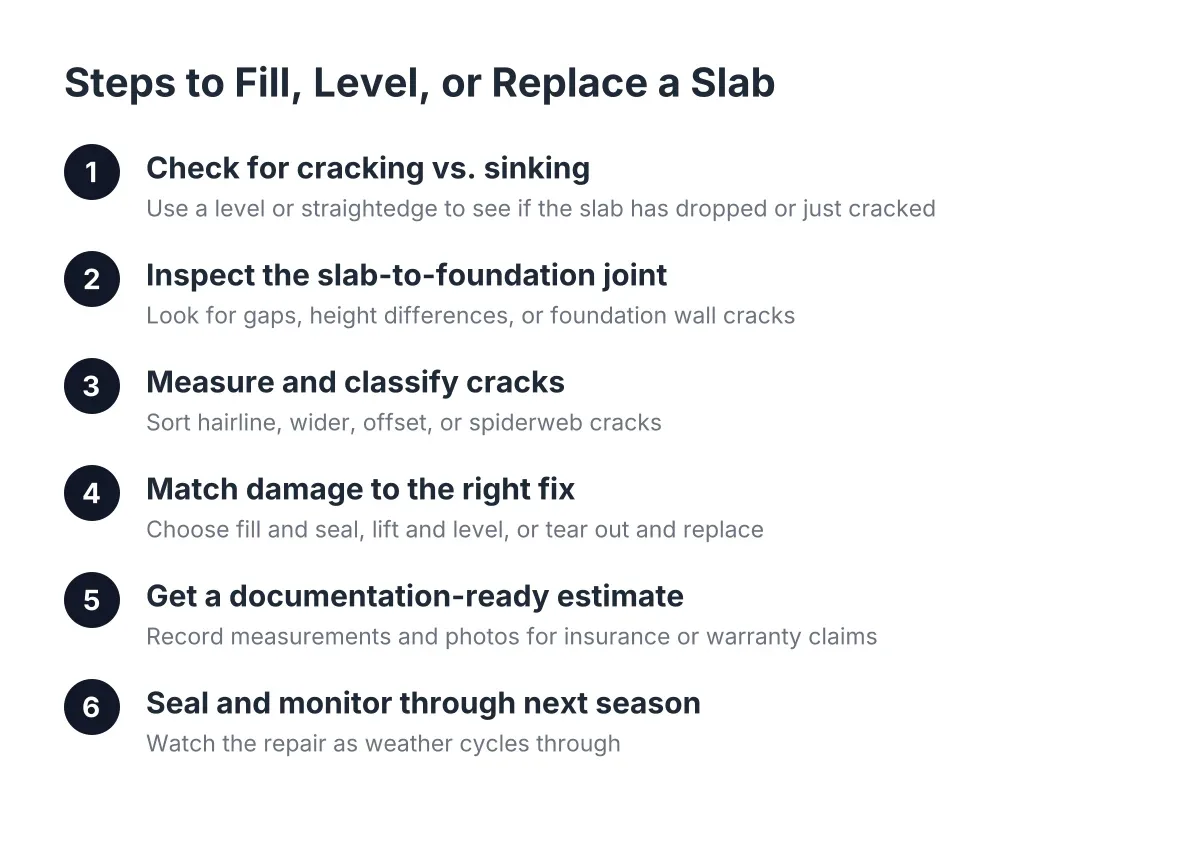
First, figure out whether you have a surface problem or a settling problem. The fix is completely different for each, and this is where most DIY attempts go sideways.
Grab a 4-foot level or a long straightedge and check the floor in a grid. You are looking for two different things:
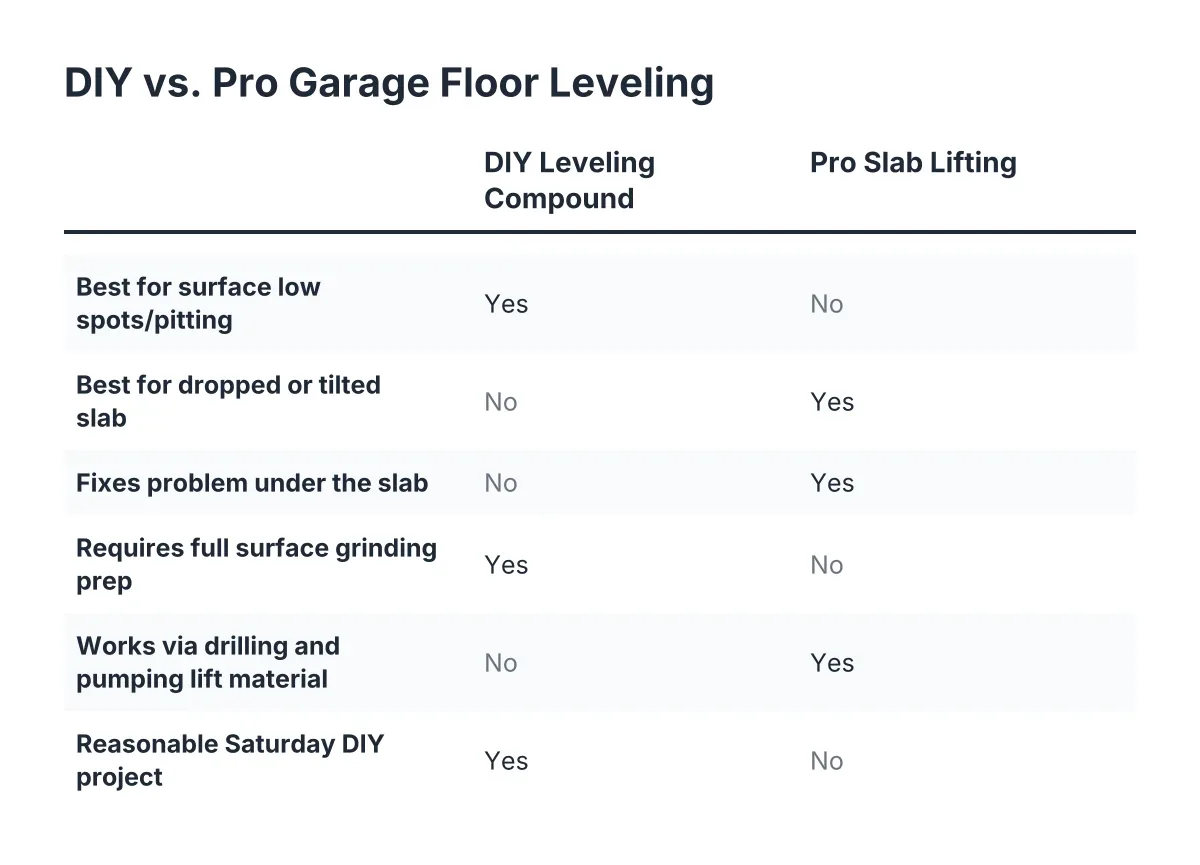
- Low spots and rough patches. The slab is still sitting where it was poured, but the surface is pitted, worn, or has shallow dips. This is a surface problem. Self-leveling concrete or a leveling compound can handle it.
- A whole slab that has dropped or tilted. The floor slopes toward one side, a crack runs across the slab with one side lower than the other, or there is a gap between the garage floor and the house foundation. This is a settling problem. No bag of leveling compound fixes it, because the problem is under the slab, not on top of it.
Next, check the joint where the garage slab meets the foundation. In central Iowa's expansive clay and fill soils, a garage slab separating from the house is the classic sign of settled fill under the garage. Measure the gap and photograph it. If the gap has widened after heavy rain or a hard freeze-thaw stretch, note the dates. That timeline matters for Step 2.
Also check the garage door. A slab that has settled unevenly often leaves a visible gap under one end of the closed door. That gap lets in water, mice, and winter air, and it is one of the first things a home inspector flags.
Step 2: Document Everything, Especially for Insurance or a Sale
Before anyone touches the floor, build a paper trail. This step costs nothing and protects you twice: once if you file a claim, and again if you are listing the home and need to answer an inspection report.
If you plan to ask your insurer about coverage, be realistic going in. Most homeowner policies treat gradual settling as normal wear, not a covered loss. However, if the sinking followed a specific event, like a plumbing leak washing out soil under the slab, the answer can change. Either way, your adjuster will want documentation, so gather it now:
- Photos of the slab from several angles, with a level or tape measure in frame to show the drop.
- Close-ups of cracks and the gap where the slab meets the foundation.
- Dates when you first noticed the sinking, and any weather events around them.
- A written estimate from a concrete leveling company that describes the cause in plain terms (settled fill soil, washout, freeze-thaw movement).
A detailed written estimate does double duty. Your adjuster can evaluate it, and if the claim is denied, you hand the same document to your realtor or a buyer to show the issue was assessed and repaired properly. Ask the estimator to note the suspected cause, not just the price.
Step 3: Choose Your Method Using the Slab, Not the Price Tag
Now match the fix to the diagnosis from Step 1. Here is the honest breakdown.
When DIY Self-Leveling Concrete Makes Sense for a Garage Floor
Self-leveling concrete on a garage floor works when the slab is stable and you only need to smooth shallow low spots, fill pitting, or flatten minor dips before a coating goes on. If the slab itself has not dropped, the joint with the foundation is tight, and your level shows dips under about half an inch, DIY is a reasonable Saturday project.
Keep the scope honest, though. You do not need to pour the whole floor; use your level to mark only the low spots that need filling. That alone can cut your material cost in half compared to flooding the entire garage with leveling compound.
A few things DIY guides skip:
- Surface prep is most of the job. Manufacturer instructions for self-leveling compound typically require the concrete surface to be mechanically profiled before the leveler goes down, according to Lowe's Self-Leveler Plus installation guide. That means grinding, not just sweeping. High spots and old coating ridges must be ground down first so they do not poke through the new layer.
- Primer is not optional. On porous concrete, primer also reduces the air bubbles that rise from the slab into the leveling compound, according to Ardex. Skip it and you get pinholes across your new surface.
- Wear a respirator while mixing. The dry powder is hazardous to breathe, according to Sakrete.
- Empty the garage completely. The whole floor has to be accessible for grinding and pouring, so everything comes out, including the shelving you have not moved in six years.
After the pour cures, re-check the floor with your level or a laser. If spots are still out of tolerance, you can grind down highs or skim-coat lows. Expect that second pass; even pros plan for it.
When Settling Means Professional Garage Floor Leveling
If the slab has dropped, call a leveling specialist. Professional concrete leveling works by drilling small holes in the sunken slab, pumping a lifting material underneath to raise and stabilize it, then patching the holes to blend with the original surface, as Wikipedia describes the process. In Des Moines, that lifting material is either a cement slurry (mudjacking) or polyurethane foam, and a straight-shooting contractor will explain which fits your slab's condition, the load it carries, and how fast you need to park on it.
Here is why pouring leveling compound on a settled slab backfires. The compound adds weight to a slab sitting on soft fill soil, which can speed up the sinking. Worse, a failed DIY layer can damage the slab surface enough that professional leveling gets harder later, and in bad cases the only option left is full replacement. A repair that could have been a one-day lift becomes a tear-out.
Cost-wise, lifting beats replacing. Mudjacking runs about $3 to $6 per square foot and costs 25% to 50% less than replacing the slab entirely, according to HomeAdvisor. The national average concrete leveling cost is $1,174, with a typical range of $630 to $1,723, according to Angi and HomeAdvisor data. Small jobs often carry a minimum charge of around $500 even under 100 square feet, according to Angi, so if your garage slab needs lifting, it usually makes sense to have cracks filled and any sunken walkway sections leveled in the same visit.
One practical note for garages: leveling equipment typically stages in one spot, usually the driveway, for the whole job. A garage slab right off the driveway is about the easiest access a crew can get, which works in your favor on price compared to a backyard patio.
Step 4: Prep for the Crew and Verify the Lift
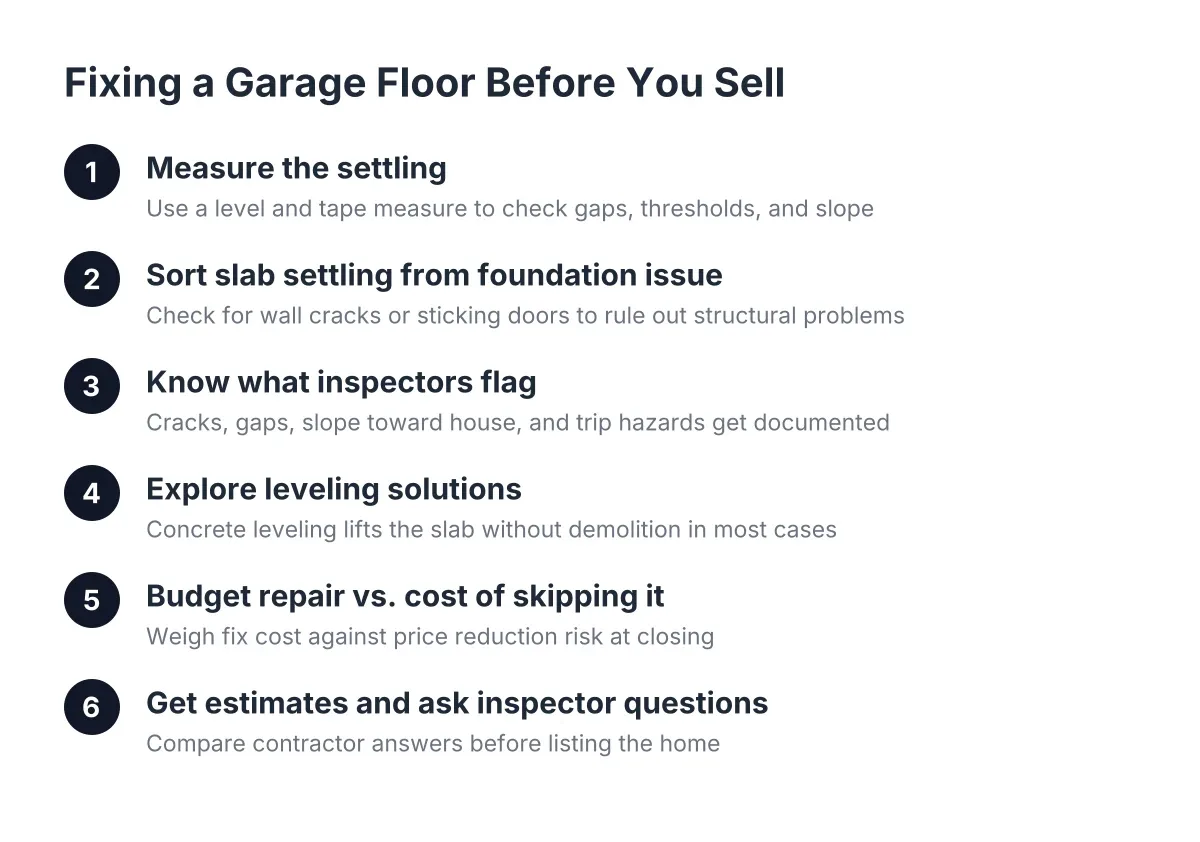
Suppose a homeowner in Waukee is listing in six weeks, and the inspector flagged a garage slab that dropped an inch at the overhead door and separated from the foundation. In that scenario, a typical sequence looks like this:
- Clear the garage. Cars out, and anything sitting on the slab moved off the areas being lifted.
- Walk the slab with the estimator. Confirm which cracks get crack filling, where the drill holes will go, and whether the slab will be lifted back to its original slope. Garage floors should drain toward the door, so ask how the crew confirms that pitch after the lift.
- Ask about the foundation gap. Lifting closes the vertical offset, but the joint between slab and foundation should be sealed afterward so water cannot keep washing soil out from underneath.
- Verify before the crew leaves. Put your level on the slab, check the gap under the closed garage door, and look at the patched drill holes. Get the final invoice itemized; for a sale or a claim file, "garage floor leveling, crack repair, and joint sealing" reads far better than a lump sum.
Get more than one estimate before committing. Two or three quotes let you compare not just price but diagnosis, and a contractor whose explanation matches what you measured in Step 1 is the one to trust.
Step 5: Fix the Water Problem So You Only Pay Once
Leveling puts the slab back where it belongs; it does not change why it moved. For the insurance-minded homeowner worried about paying twice, this step is the one that protects the repair.
After the lift, walk the outside of the garage during the next rain. Downspouts should discharge several feet from the slab, grading should slope away from the garage, and the driveway joint in front of the door should be sealed so runoff cannot slip underneath. In central Iowa, freeze-thaw cycles turn every unsealed crack into a wedge, so keep crack filling on your annual fall checklist.
One honest limitation: if the settling came with foundation wall cracks, doors sticking inside the house, or movement in the footings themselves, that is beyond what garage leveling or any slab work can fix. A structural engineer should look at it first, because lifting the garage slab will not stop a foundation problem, and no reputable leveling company will pretend otherwise.
The Bottom Line for Des Moines Garages
DIY works for a stable slab with surface dips; a settled slab on compressed fill soil needs professional lifting. The gap between your garage floor and the house foundation is the tell. If it is widening, skip the leveling compound aisle, document the slab, and get written estimates from a local garage leveling specialist who will say plainly whether mudjacking or foam fits your floor. Done in that order, you fix it once, your claim file or inspection response is airtight, and your garage floor drains the way it did the day it was poured.
If you need concrete leveling, Des Moines Concrete Leveling Pros can help.
Prefer to talk it through? Call +15155828701 — a quick call is usually the fastest way to get a straight answer for your situation.