Expansive Clay Soil in Iowa: Why Slabs Keep Settling and How to Stop It
If your inspector flagged a sunken walkway or a settling driveway, the concrete itself is usually not the problem. The real culprit is the expansive clay soil Iowa homes sit on, especially in newer Des Moines subdivisions built on graded fill. That clay swells when wet, shrinks when dry, and washes out when water gets under a slab. Fix the concrete without understanding the soil, and the same slab can sink again before your buyer's walk-through.
This guide walks you through the fix in order: figure out why the slab sank, level it the right way, and cut off the water that caused it. Follow the steps and you have a repair that holds up through inspection and beyond, without paying for a full replacement right before closing.
Step 1: Understand Why Expansive Clay Soil in Iowa Sinks Concrete
Expansive clay soil in Iowa causes concrete settling because it changes volume with moisture. When the clay soaks up water it swells; when it dries in a drought summer it shrinks and pulls away from the slab. Add central Iowa's freeze-thaw cycles, and the ground under your driveway is moving every season.
Three soil problems drive most sunken concrete around Des Moines:
- Poor compaction of fill soil. Many newer subdivisions were graded with fill dirt. If that fill was not compacted well, it keeps settling for 5 to 10 years after the house is built, and the slabs poured on top sink with it.
- Washout and erosion. Water from downspouts, overflowing gutters, or open cracks carries soil out from under the slab a little at a time. Eventually the concrete has nothing holding it up.
- Shrink-swell cycles. Wet springs swell the clay and heave slabs; dry summers shrink it and drop them. Each cycle leaves gaps that let more water in.
Once a slab cracks and settles, the problem feeds itself. The gap lets in more water, the water washes out more soil, and the slab drops further. That is why a small trip lip at your front walk in April can be a full inch by the time your listing photos are taken in September.
Step 2: Find the Water Source Feeding the Problem
Before anyone levels anything, walk the property after a rain and find where water reaches the sunken slab. This takes 15 minutes and it is the single most important step for making the repair last. Concrete settling and soil movement almost always trace back to water that had nowhere else to go.
Look for these specific signs:
- A downspout dumping within a few feet of the sunken section
- Gutters overflowing onto the driveway or walkway edge
- Open cracks or expansion joints where water can pour straight under the slab
- A yard that slopes toward the concrete instead of away from it
- Low spots that hold puddles against the slab edge for hours after rain
For example, say a seller in Waukee has a front walk that dropped an inch right where the porch downspout empties. Leveling that walk without moving the downspout means the next heavy rain starts washing out the new support material too. Finding the water source first is what separates a repair that lasts from one that gets flagged again.
Step 3: Sort Normal Settling From a Real Support Problem
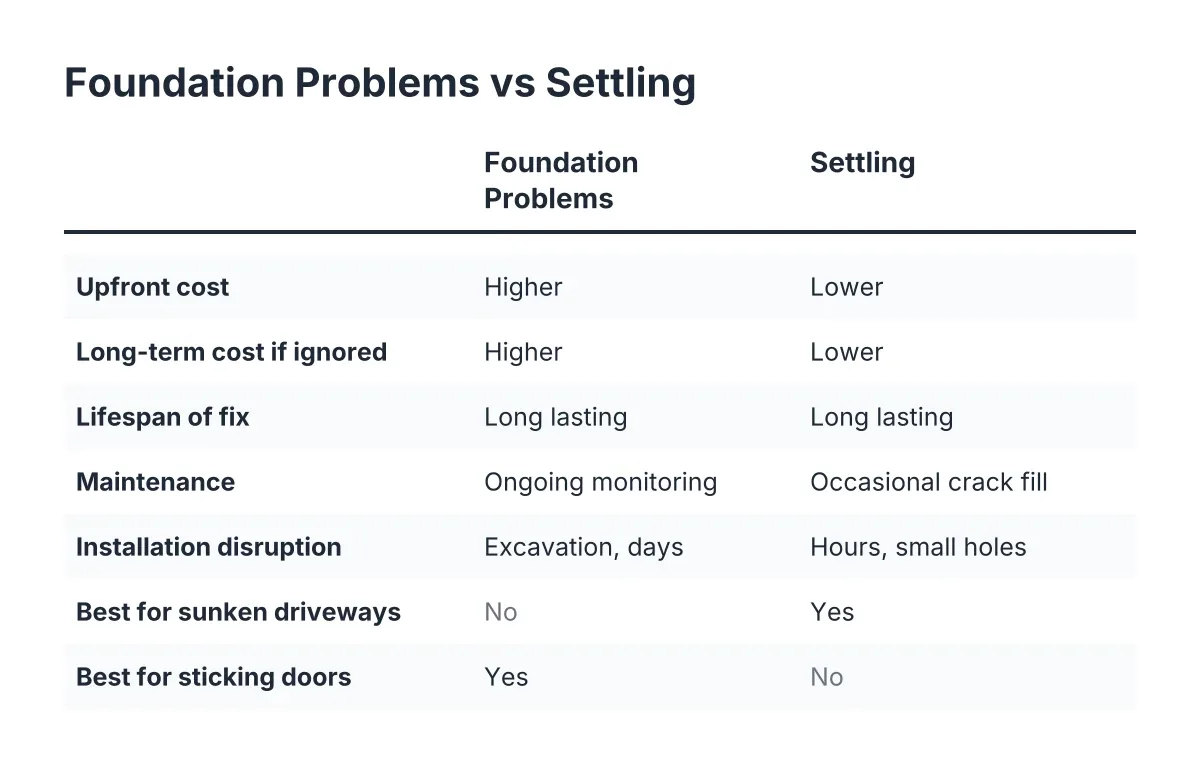
Some minor settlement is normal, even expected, in the first few years after a pour. Hairline cracks and normal foundation settling cracks that stay stable are not a crisis, and a good inspector knows the difference. The problem is differential settlement, where one part of a slab drops while the rest stays put, creating a trip lip, a tilted section, or a widening crack.
Here is the practical test: is the movement done, or is it ongoing? A slab that dropped a half inch years ago and has not moved since is a stable candidate for leveling. A slab with a crack that keeps widening, or a lip that grows each spring, has an active soil problem underneath. That one needs both leveling and the drainage fixes in Step 5, or it will sink again.
One honest limitation: concrete leveling lifts slabs, not houses. If your inspection report mentions foundation wall movement, bowing basement walls, or doors and windows sticking throughout the house, get a structural evaluation before spending money on flatwork. Foundation settling repair costs run on a different scale than slab leveling, and you want the right diagnosis before closing.
Step 4: Level the Slab Instead of Replacing It
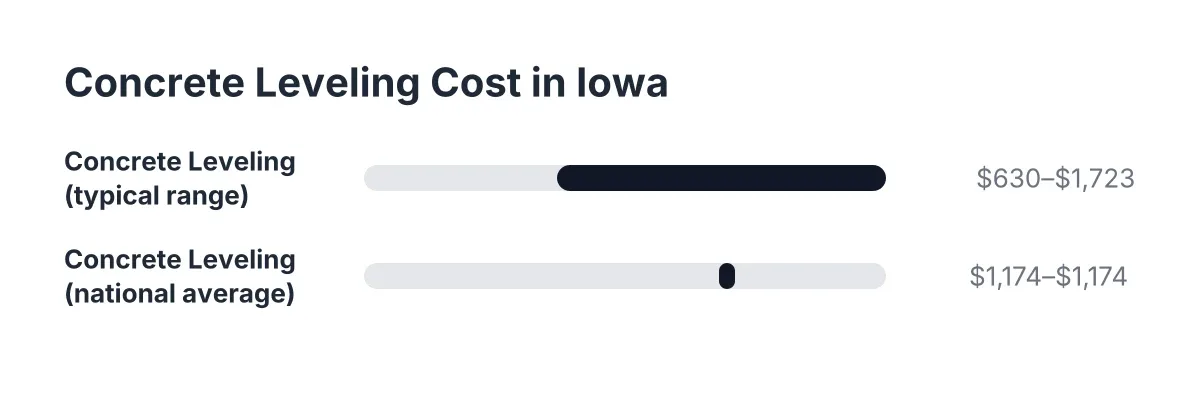
For a pre-listing timeline, leveling beats replacement on both speed and cost. According to HomeAdvisor, mudjacking runs 25% to 50% less than replacing a concrete slab entirely, and Angi and HomeAdvisor data put the national average concrete leveling cost at $1,174, with a typical range of $630 to $1,723. Just as important for a seller: a leveled slab is usable the same day or the next, while a replacement pour needs weeks to cure and leaves a bright new patch that does not match the rest of the driveway.
The process is straightforward. According to Wikipedia, concrete leveling works by drilling holes into the sunken slab, pumping a lifting material beneath it to raise and stabilize the slab, then patching the holes to match the original surface. Around Des Moines, that lifting material is either a mud slurry (mudjacking) or polyurethane foam. Mudjacking suits heavier slabs and larger voids at a lower material cost. Foam uses smaller holes, cures in minutes, and adds less weight on soft fill soil, which matters on the poorly compacted subdivisions common in the metro.
Pair the lift with crack repair. Filling the cracks and sealing the joints closes the entry points that let water reach the soil in the first place. If the surface itself is spalled or ugly after leveling, resurfacing can handle the cosmetic side; self-leveling concrete is an option for interior floors like a garage, though it is a surface fix, not a structural lift.
Two budget notes worth knowing before you call anyone. Small jobs may carry a minimum charge of about $500 even under 100 square feet, according to Angi. On the return side, Angi reports concrete leveling projects can recoup 70% to 90% of their cost in added home value, which is a strong number for money spent weeks before listing.
Step 5: Redirect Water Away From Iowa's Expansive Clay and Soil
Leveling fixes the slab; drainage fixes the reason it sank. Because clay with expansive properties across Iowa reacts to every wet-dry swing, the goal is to keep the moisture level under your concrete as steady as possible. These fixes are cheap, and most sellers can do them in a weekend:
- Extend downspouts at least 6 to 10 feet past any slab. A downspout aimed at concrete is the most common cause of sunken walkways we hear about from inspection reports.
- Clean the gutters so they stop overflowing onto the driveway edge during spring storms.
- Regrade low spots so soil slopes away from slabs and the foundation, not toward them.
- Seal joints and cracks after leveling so rain sheets off the surface instead of soaking under it.
- Check sprinkler heads that spray the slab edge; constant soaking softens clay the same way rain does.
Skip this step and even a perfect lift is temporary. The same washout that dropped the slab the first time will hollow out the new support. This is also why full replacement disappoints so many homeowners: a brand-new slab poured over the same untreated soil and drainage problem settles the same way the old one did.
Step 6: Document the Repair for Your Inspection and Buyers
For a pre-listing seller, the paper trail matters as much as the concrete. After the work is done, keep the invoice describing what was leveled, what material was used, and which cracks were filled. If the buyer's inspector sees a formerly flagged walkway that is now flat, sealed, and documented, it reads as a maintained home, not a hidden problem.
Will leveling satisfy an inspection? Inspectors flag sunken concrete mainly for two reasons: trip hazards and water directed toward the foundation. Leveling removes the trip hazard, and the drainage work in Step 5 addresses the water. That covers what most reports actually cite. Disclose the repair honestly; a documented, explained fix rarely scares buyers, while an unexplained crack does.
What This Looks Like on a Real Timeline
Suppose a seller in Ankeny gets her inspection report back six weeks before closing. It flags a walkway section sunk three-quarters of an inch at the porch and a driveway slab tipping toward the garage. In that scenario, a typical sequence runs: walk the property after rain and find the short downspout feeding the walkway, schedule leveling for both slabs, have the cracks filled the same visit, then extend the downspout and reseal the joints that weekend. Total time on site is usually a few hours, and the concrete is walkable the same day.
That is the whole play. Iowa's clay is not going to stop swelling and shrinking, but a leveled slab, sealed cracks, and water pushed away from the concrete take the soil out of the fight. Fix the cause with the symptom, and the repair you make before listing is still holding when the new owners move in.
If you need concrete leveling, Des Moines Concrete Leveling Pros can help.
Prefer to talk it through? Call +15155828701 — a quick call is usually the fastest way to get a straight answer for your situation.