Foundation Problems vs. Settling: Which Is Right for You?
If your Des Moines home has cracked concrete or a floor that slopes, you are likely trying to sort out foundation problems vs settling before you spend a dime on repairs. Here is the short answer: settling is the common, usually less serious cause behind sunken slabs, driveways, and sidewalks, and concrete leveling fixes it at a fraction of the cost. Foundation problems are the structural cause, and they call for a foundation contractor before any slab work makes sense. Knowing which one you have decides who you call, what you pay, and how long the fix lasts. This guide walks you through both so you can spend your money on the right repair the first time.
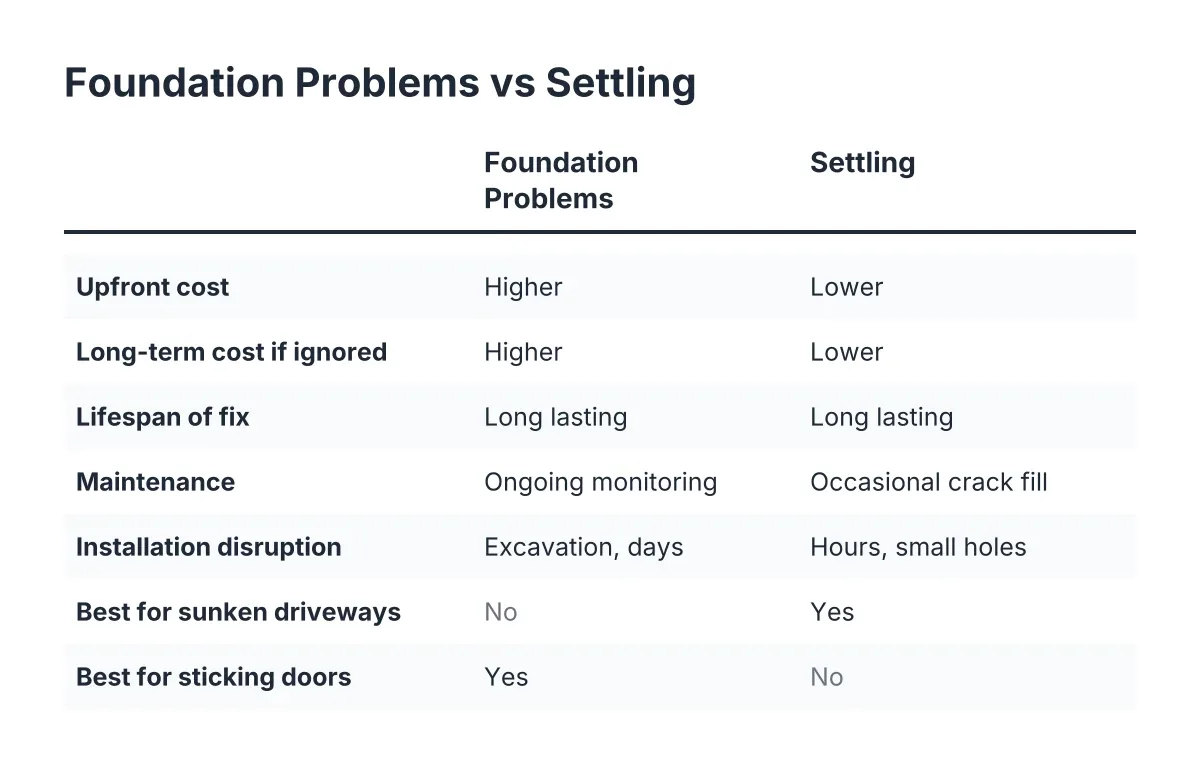
| Criterion | Foundation Problems | Settling |
|---|---|---|
| Upfront cost | Higher; structural repairs cost more than slab work in most homes | Lower; concrete leveling is typically one of the cheaper concrete fixes |
| Long-term cost | Higher if ignored; damage spreads to walls, doors, and framing | Lower; a leveled slab with sealed cracks usually stays put |
| Lifespan of the fix | Long lasting when done right, since it addresses the structure itself | Long lasting in most cases, though soil can shift again over time |
| Maintenance | Ongoing monitoring of walls, doors, and drainage | Occasional crack filling and keeping water away from the slab |
| Best for | Cracked basement walls, doors that stick, sloping floors inside the house | Sunken driveways, uneven sidewalks, settled patios, garage floors, and steps |
Foundation Problems: Strengths and Trade-offs
Foundation problems mean the structure holding up your house is moving or failing. That can show up as stair-step cracks in basement walls, doors and windows that stick or will not latch, gaps between walls and ceilings, or floors that slope toward one side of the house. In central Iowa, expansive clay soils swell when wet and shrink when dry, and that push and pull can stress a foundation over years.
The strength of calling it a foundation problem, when it truly is one, is that you fix the root cause. Repairing the structure stops the damage from spreading to framing, drywall, and plumbing. A real foundation repair, done by a foundation contractor, protects the biggest investment most people own. That is worth the higher price when the signs point that way.
The trade-off is cost and disruption. Foundation work costs more than slab work in most homes, and it can involve excavation around the house. The bigger risk is misdiagnosis. Plenty of homeowners get told they have foundation problems when what they actually have is a settled slab that a concrete leveling crew could lift in an afternoon. That mistake can cost thousands. We are a concrete leveling specialist, not a foundation company, so when a job is truly structural, we say so and step aside.
Settling: Strengths and Trade-offs
Settling means the soil under a concrete slab has compacted, washed out, or shifted, and the slab sank with it. It is the everyday cause behind uneven concrete: a driveway section that dropped an inch at the garage, a sidewalk panel that became a tripping hazard, a patio that now tilts toward the house, or a sunken front step. Freeze-thaw cycles and heavy central Iowa rains speed it up, especially where downspouts dump water next to a slab.
The good news is that settling is fixable without tearing anything out. Concrete leveling, sometimes called mudjacking or slab jacking, pumps material under the sunken slab and lifts it back into place. Polyurethane foam injection does the same job with foam instead of a slurry. Either way, you keep your existing concrete, the work usually finishes in hours, and it costs far less than pouring new slabs or doing structural repair. If you want a sense of the numbers, our guide on how much concrete settling repair costs breaks down what drives the price.
The trade-off is that leveling fixes the slab, not the soil habits that sank it. If a downspout keeps soaking the same corner, the soil can wash out again. Badly crumbled slabs may need crack repair, resurfacing, or replacement instead of lifting. And leveling a slab does nothing for a failing foundation wall, so an honest diagnosis has to come first.
Foundation Problems vs Settling: The Deciding Factors
Cost drivers
Settling repairs cost less, usually by a wide margin. Concrete leveling prices scale with the size of the slab, how far it sank, and how easy it is to reach. Foundation repair prices scale with the structure: how much of the foundation moved, how deep crews have to dig, and what the fix requires. The relationship between concrete settling and soil conditions drives both; central Iowa's clay expands and shrinks with moisture, so drainage problems raise the bill on either repair.
Lifespan of the fix
Both repairs last a long time when the water problem gets fixed too. A leveled slab typically stays level for years if downspouts, grading, and joints keep water from washing out the soil again. A proper foundation repair addresses the structure itself, so it holds as long as the underlying cause, usually moisture in the soil, stays managed. Skip the drainage fixes and either repair can face the same movement again.
Installation and disruption
Settling repair wins on speed and mess. Concrete leveling means a few small holes drilled in the slab, material pumped underneath, and holes patched, usually within hours. Mudjacking needs a short cure time before heavy loads; foam cures faster. Foundation repair often means excavation along the house, equipment in the yard, and days of work. If your problem is a sunken driveway or sidewalk, the lighter fix is the right fix.
Maintenance
Settled concrete asks for less of you afterward. After leveling, maintenance means crack filling as needed and keeping water moving away from the slab. After foundation repair, you should keep watching walls, doors, and floors for new movement and keep gutters and grading in shape. Both fixes reward the same habit: control the water, and the soil under your concrete stays put.
Situational fit
Match the repair to where the damage lives. Damage outside the house, in driveways, sidewalks, patios, steps, and garage floors, points to settling and concrete leveling. Damage inside the structure, in basement walls, load-bearing floors, and door frames, points to foundation problems and a structural contractor. When both show up, get the foundation looked at first; leveling a slab next to a moving foundation just delays the real answer.
Which Should You Choose?
Choose Foundation Problems if:
- You see stair-step or horizontal cracks in basement or foundation walls
- Doors and windows stick, or gaps have opened between walls and ceilings
- Floors inside the house slope or bounce
- Cracks keep widening season after season
- You need a foundation contractor, not a slab specialist, and any honest leveling company will tell you so
Choose Settling if:
- A driveway, sidewalk, patio, step, or garage floor has sunk or become uneven
- The concrete itself is mostly sound, just lower than it should be
- A slab edge has become a tripping hazard
- Water pools where concrete used to drain away
- You want the slab lifted and level in hours, not replaced over days
Most cracked and sunken concrete around Des Moines homes traces back to settling, not the foundation. If the damage is in a slab outside the house and the house itself shows no warning signs, start with a concrete leveling estimate. It is the cheaper diagnosis, and a specialist can tell you fast if the problem runs deeper.
Common Questions
How can I tell foundation problems from simple settling?
Look at where the damage is. Cracks and sinking in outdoor slabs like driveways and sidewalks usually mean settling. Cracks in basement walls, sticking doors, and sloping floors inside the house point to foundation problems. When you are weighing foundation problems vs settling and the signs overlap, get the foundation checked first before spending money on slab work.
Will a settled slab keep sinking if I ignore it?
It can. The soil gap under a sunken slab tends to grow as water flows in and washes out more soil, and freeze-thaw cycles here in central Iowa widen cracks each winter. A slab that sank an inch this year can sink more next spring. Earlier repairs are usually smaller and cheaper repairs.
Can concrete leveling fix a foundation problem?
No. Concrete leveling lifts sunken slabs like driveways, sidewalks, patios, and garage floors. It does not repair foundation walls or footings. A trustworthy leveling company will tell you when your problem is structural and point you toward a foundation contractor instead of selling you the wrong fix.
Is mudjacking or foam better for a settled slab?
It depends on the slab. Mudjacking uses a heavier slurry and handles many standard driveway and sidewalk lifts well at a lower material cost. Polyurethane foam is lighter, cures faster, and suits slabs where cure time or added weight matters. A good estimator will look at your slab's condition, the load it carries, and your timeline before recommending one.
If you need concrete leveling, Des Moines Concrete Leveling Pros can help.
Prefer to talk it through? Call +15155828701 — a quick call is usually the fastest way to get a straight answer for your situation.