When to Resurface Cracked Concrete Instead of Lifting or Replacing It
If your driveway or walkway looks rough, you have probably searched for concrete resurfacing near me and found a wall of contractor listings that do not explain the one thing you actually need to know: whether resurfacing is even the right fix. Resurfacing renews the look of worn, pitted, or spalled concrete. It does not lift a sunken slab, and it does not stop settling. Homeowners in Des Moines mix these up all the time, and the wrong choice means paying twice. This guide walks you through the decision step by step so you buy the right service the first time.
Step 1: Figure Out Whether Your Slab Is Worn, Sunken, or Both
Start by answering one question: is the surface ugly, or is the slab out of position? Resurfacing fixes ugly. Concrete leveling fixes out of position. Many Des Moines slabs need both, but you have to know which problem you have before you can hire the right help.
Walk the slab and look for these signs:
- Surface damage (resurfacing territory): flaking, pitting, spalling from freeze-thaw and de-icing salt, hairline cracks, a dusty or worn top layer.
- Settling damage (leveling territory): one section sitting lower than its neighbor, a slab pulling away from the garage or stoop, a tripping hazard where two panels meet, water pooling toward the house.
- Structural failure (replacement territory): the slab is broken into multiple heaved pieces, cracks are wide and offset in height, or the concrete crumbles when you step on the edges.
Lay a straight board or a level across the slab. If it rocks or shows a gap of a half inch or more between panels, you have settling, not just wear. In central Iowa, our expansive clay soils swell when wet and shrink when dry, so settling is common even on newer homes built on fill soil in growth areas like Ankeny, Clive, and Johnston.
Why This Order Matters Before You Search for Concrete Resurfacing Near Me
Resurfacing puts a thin cosmetic layer over the existing slab. If the slab is still sinking underneath, that new surface cracks right along with it, often within a season or two. Therefore, any leveling work has to happen first. A resurfaced slab that keeps settling is money spent twice.
Step 2: Rule Out Settling Before You Spend a Dollar on Cosmetics
Next, deal with any sinking before you touch the surface. Concrete leveling works by drilling holes into the sunken slab, pumping a lifting material beneath it to raise and stabilize the slab, then patching the holes to closely match the original surface, according to Wikipedia. In Des Moines, that lifting material is usually either a mud slurry (mudjacking) or polyurethane foam, and each fits different slab conditions, loads, and cure times.
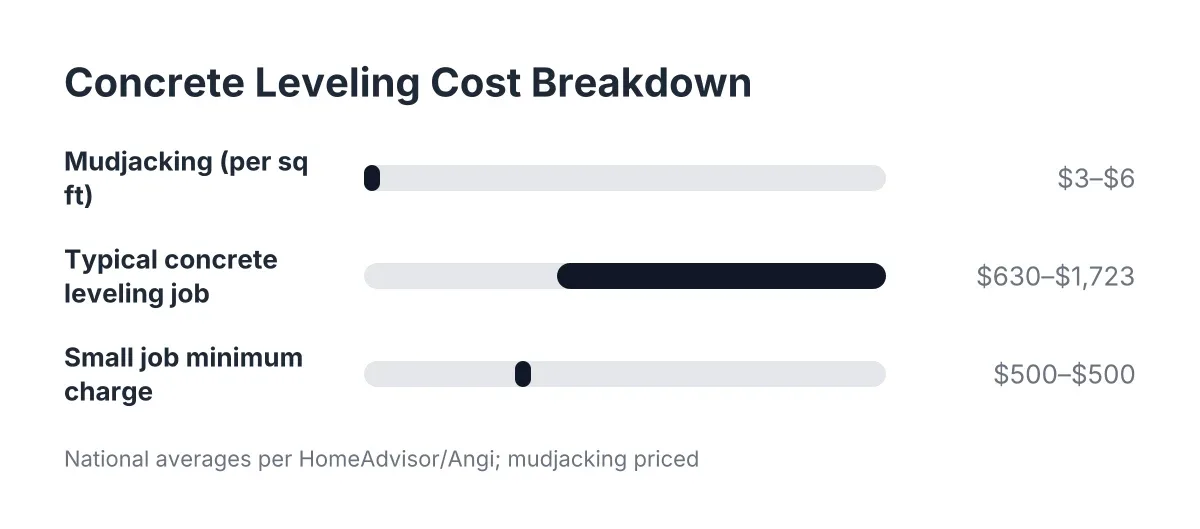
Leveling is far cheaper than tearing out and repouring. Mudjacking runs $3 to $6 per square foot and costs 25% to 50% less than replacing a concrete slab entirely, according to HomeAdvisor. The national average concrete leveling cost is $1,174, with a typical range of $630 to $1,723, according to Angi and HomeAdvisor data. Small jobs may carry a minimum charge of around $500 even under 100 square feet, according to Angi.
For example, say a homeowner in an Ankeny subdivision built six years ago notices the driveway apron has dropped an inch where it meets the garage, and the surface is also pitted from three winters of salt. In that scenario, the right sequence is leveling first to close the gap and restore drainage, then resurfacing the pitted top. Reversing the order would bury a settling problem under a fresh coat that fails.
One honest caveat: if the slab is heavily cracked and broken rather than simply sunken, replacement usually beats lifting. Lifting a shattered slab just raises the pieces. A leveling specialist should tell you that plainly during the estimate rather than sell you a lift that will not hold.
Step 3: Match the Surface Damage to the Right Resurfacing Fix
Once the slab is stable and level, sort the surface damage by size. This determines the product and the method.
- Hairline cracks under a quarter inch: a liquid cement crack filler or a product like DAP concrete crack filler handles these. Clean the crack, fill it, and let it cure. This is crack filling, not resurfacing, and it is the easiest DIY task on this list.
- Cracks and pits around a half inch or larger: standard concrete resurfacer mixed to a trowel-thick consistency is the most cost-effective repair. You work it into the damaged spots by hand before any full-surface coat.
- Widespread flaking, spalling, or a worn top layer: a full resurfacing coat, such as Quikrete concrete resurfacer spread with a squeegee, renews the entire surface. Self-leveling concrete resurfacer also fills shallow low spots across a slab as it spreads.
- Interior low spots on a garage or basement floor: self-leveling concrete works here, but prep matters. Manufacturer instructions typically require the concrete surface to be mechanically profiled before the leveler goes down, according to Lowe's. Using a primer on porous concrete also reduces air bubbles rising into the leveling compound, according to Ardex.
However, do not skip safety on the DIY jobs. Wear a respirator when mixing self-leveling compound, because the dry powder is hazardous to breathe, according to Sakrete.
What a Good Concrete Resurfacing Job Near You Should Include
When you compare quotes for resurfacing in the Des Moines metro, the scope should cover pressure washing or mechanical prep, crack repair, the resurfacing coat itself, and edge and joint detailing. Finishing work is what drives cost up, especially matching texture and color to adjacent slabs so the repair does not stand out. A quote that only covers "a coat of resurfacer" with no prep is a quote for a coating that peels.
Done right, a resurfaced slab can last for years without cracking, flaking, or delaminating, and it extends the life of a slab for a fraction of replacement cost. Skipped prep is the main reason resurfacing fails early.
Step 4: Decide What to DIY and When to Call a Pro
Small cosmetic jobs are fair game for a capable homeowner. Filling hairline cracks, patching a pitted spot, or resurfacing a small stoop with primer and self-leveling compound is a low-skill, low-cost project.
By contrast, structural work belongs with a professional. Lifting slabs, repairing deep or offset cracks, and full-driveway resurfacing are risky to attempt yourself and often cost more in the long run when they fail. Call a pro now if you see:
- A slab pulling away from the house or garage by more than half an inch
- New sinking after heavy rain or a freeze-thaw cycle
- A tripping hazard on a walkway or steps
- Cracks that keep widening season after season
- Water draining toward your foundation
If you are filing an insurance or builder warranty claim, get the professional inspection first. Most policies treat normal settling differently from sudden storm damage, and an adjuster will want a written estimate that describes the cause and the fix in plain terms. Ask for an itemized estimate that separates leveling from resurfacing from crack repair; that documentation makes a claim conversation far easier, whatever the adjuster decides. Note that whether a claim gets approved depends on your policy, and that is a question for your insurer, not your concrete contractor.
Step 5: Vet Local Providers Before You Hire
Finally, screen the companies your search for concrete resurfacing near me turned up. In the Des Moines metro, ask each one three questions:
- Will you check for settling before quoting resurfacing? A provider who quotes a cosmetic coat without checking whether the slab is still moving is selling you a short-lived fix.
- Which method fits my slab, and why? For lifting, that means a plain explanation of mudjacking versus foam based on slab condition, load, and cure time. For resurfacing, it means naming the prep steps, not just the product.
- Will the estimate be itemized and documentation-friendly? You want line items for leveling, crack filling, and resurfacing, with the cause of the damage described. This matters for insurance paperwork and for comparing quotes fairly.
A fair quote explains the sequence: level first, repair cracks second, resurface last. It also tells you when your slab is not a candidate, such as concrete too broken to lift or too far gone to coat.
There is a real payoff to doing this in the right order. Concrete leveling projects can recoup 70% to 90% of their cost in added home value, according to Angi. A slab that is level, drained, and freshly surfaced reads as sound to a buyer, an appraiser, or an insurance adjuster.
Get the Sequence Right and Pay Once
The short version: resurfacing renews the surface, leveling fixes the position, and replacement is the last resort for slabs that are truly broken. Sort your damage into those buckets, stabilize the slab first, and match the surface fix to the crack size. Central Iowa's clay soils and freeze-thaw winters mean plenty of Des Moines slabs need leveling before they need cosmetics, and knowing the difference is what keeps you from paying twice.
If your driveway, walkway, patio, or garage floor in the Des Moines area is sinking, cracked, or worn, Des Moines Concrete Leveling Pros can look at it, tell you plainly whether it needs leveling, resurfacing, or both, and put it in a written, itemized estimate you can hand to an adjuster or keep for your records. Reach out to schedule an assessment.
If you need concrete leveling, Des Moines Concrete Leveling Pros can help.
Related guide: concrete resurfacing — Complete Guide
Prefer to talk it through? Call +15155828701 — a quick call is usually the fastest way to get a straight answer for your situation.