Concrete Resurfacing Terms Explained: A Plain-English Glossary
If you own a home in Des Moines and you're getting quotes for a sunken driveway or a cracked walkway, the paperwork can read like a foreign language. This concrete resurfacing glossary breaks down the terms you'll hear from contractors, one plain definition at a time. Use it to read a quote line by line, ask better questions, and spot when a provider is proposing more work than your slab actually needs. No sales pitch here, just the words explained.
- Concrete Resurfacing: a new top layer over old concrete
- Concrete Leveling: raising sunken slabs back to grade
- Concrete Lifting: another name for raising slabs
- Mudjacking: pumping a slurry under a slab to lift it
- Slab Jacking: the umbrella term for lifting slabs
- Polyurethane Foam Injection: lifting slabs with expanding foam
- Self-Leveling Concrete: a pourable mix that flattens itself
- Overlay: the thin new layer in a resurfacing job
- Settling: soil sinking and taking your concrete with it
- Expansive Clay Soil: soil that swells wet and shrinks dry
- Freeze-Thaw Cycle: winter's expand-and-crack routine
- Spalling: flaking or pitting on the concrete surface
- Crack Filling: sealing cracks against water
- Tripping Hazard: a raised slab edge underfoot
- Cure Time: how long before you can use the slab
- Void: an empty gap under the slab
- Slab Replacement: tearing out and repouring
- Control Joint: the planned lines cut into concrete
The Big Fixes: Resurfacing, Leveling, and Lifting
These are the core services you'll see quoted, and they solve different problems. A concrete resurfacing glossary has to start here because homeowners mix these up all the time, and picking the wrong fix wastes money.
Concrete Resurfacing: Definitions in a Resurfacing Glossary
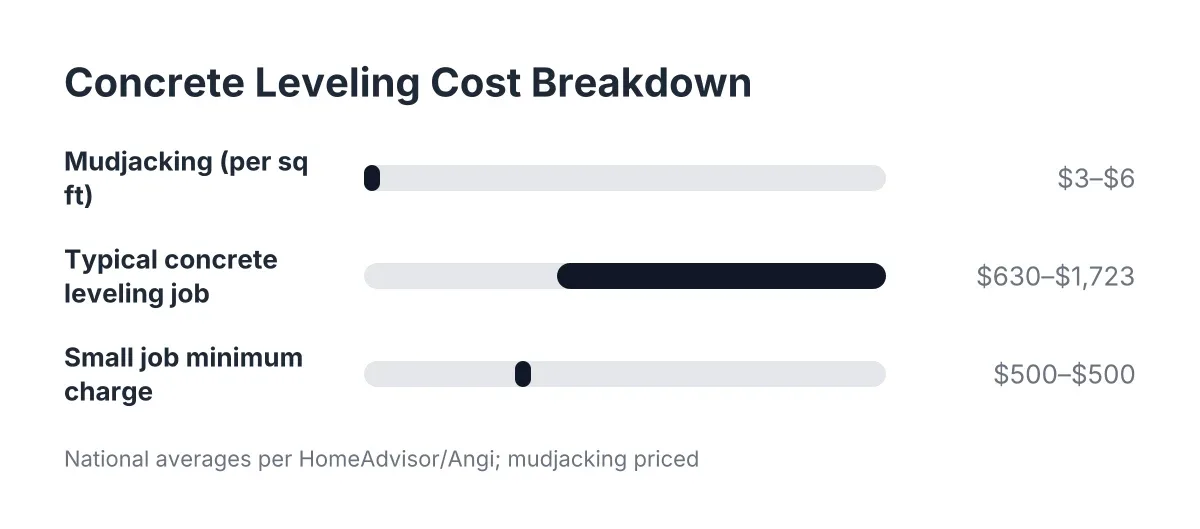
Concrete resurfacing means applying a thin new layer of cement-based material over an existing slab to give it a fresh, uniform surface. It fixes cosmetic problems like surface flaking, stains, or shallow pitting, but it does not lift a sunken slab or stop settling. Think of it as new skin, not new bones. If your slab is uneven or sinking, resurfacing alone won't solve it. Costs vary with slab size and surface condition, which we break down in our guide to concrete resurfacing cost.
Concrete Leveling
Concrete leveling is the process of raising a sunken concrete slab back to its original, even position. Instead of tearing out the slab and pouring new concrete, the contractor lifts the existing slab from underneath. It fixes tripping hazards, drainage problems, and that stair-step look where one slab sits lower than its neighbor. For most sunken driveways, sidewalks, and patios in Des Moines, leveling costs a fraction of replacement.
Concrete Lifting
Concrete lifting is another name for concrete leveling: raising a settled slab back up to where it belongs. Contractors use "lifting" and "leveling" interchangeably, so don't worry if one quote says lifting and another says leveling. Both refer to the same family of repairs. What matters is the method underneath, which is usually mudjacking or polyurethane foam injection.
Mudjacking
Mudjacking is a leveling method where a contractor drills small holes in a sunken slab and pumps a wet mixture of soil, sand, and cement underneath to push it back up. The mixture, called slurry, fills the empty space below the slab and lifts it as pressure builds. Mudjacking has been around for decades and often costs less than foam. The trade-offs: the drill holes are larger, the material is heavier, and cure time is longer before the slab can take full weight.
Slab Jacking
Slab jacking is the umbrella term for any method of lifting a sunken concrete slab by injecting material beneath it. Mudjacking and polyurethane foam injection are both types of slab jacking. If a contractor says slab jacking, ask which material they plan to use, since that affects hole size, weight added to the soil, and how soon you can park on the slab.
Polyurethane Foam Injection
Polyurethane foam injection is a leveling method where a contractor pumps expanding foam through small holes in the slab, and the foam lifts the concrete as it hardens. The holes are smaller than mudjacking holes, the foam is lightweight, and the slab is usually ready for traffic within hours. It typically costs more than mudjacking. A good contractor will explain which method fits your slab based on its condition, the load it carries, and your budget.
Self-Leveling Concrete
Self-leveling concrete is a pourable cement mixture that spreads out and flattens itself to create a smooth, even surface. It's used indoors on floors that are wavy or dipped, like a garage floor before new flooring goes down. It smooths the surface you walk on, but it does not lift a sunken slab or fix the soil underneath. If your garage floor has both dips and settling, you may need leveling first, then a self-leveling layer on top.
Overlay
An overlay is the thin new layer of material spread over an old slab during a resurfacing job. Overlays range from a plain gray coat to stamped or colored finishes that mimic stone or brick. An overlay only performs as well as the slab beneath it. If the base slab is still settling, the overlay will crack right along with it, so fix any sinking first.
Why Concrete Fails: Soil, Water, and Weather
Most sunken concrete in central Iowa traces back to what's under the slab, not the slab itself. These terms explain the cause behind the repair.
Settling
Settling means the soil under a concrete slab has compressed or washed away, letting the slab sink. It shows up as one corner of a driveway dropping, a sidewalk panel sitting lower than the next, or steps pulling away from the porch. Settling gets worse over time because water pools in the low spot and softens the soil further. Catching it early usually means a smaller, cheaper repair.
Expansive Clay Soil
Expansive clay soil is soil that swells when it gets wet and shrinks when it dries out. Central Iowa sits on a lot of it, which is why so many Des Moines driveways and walkways heave and sink with the seasons. Each swell-and-shrink cycle shifts the ground under your slab a little more. When a local contractor mentions clay soil, they're explaining the root cause, not padding the quote.
Freeze-Thaw Cycle
A freeze-thaw cycle is what happens when water in or under concrete freezes, expands, then melts, over and over through a winter. Each cycle pries cracks wider and pushes soil around under the slab. Iowa winters put concrete through dozens of these cycles a year. It's the reason crack filling before winter matters: sealed cracks keep water out, and dry cracks can't freeze.
Spalling
Spalling is the flaking, chipping, or pitting of a concrete surface, usually caused by freeze-thaw damage or de-icing salt. Spalled concrete looks rough and worn, but the slab underneath may still be sound. Surface-only spalling is a candidate for resurfacing. Deep spalling that exposes gravel or rebar points to a bigger problem, and an honest contractor will tell you which one you have.
Void
A void is an empty gap between the bottom of a concrete slab and the soil beneath it. Voids form when water washes soil out or when clay soil shrinks during a dry spell. A slab spanning a void may look fine until enough weight cracks it. Both mudjacking and foam injection work by filling the void, which is why filling it matters as much as the lift itself.
Repairs, Details, and Quote Language: Glossary Terms in Concrete Resurfacing
These are the smaller line items and phrases that show up on quotes and inspection notes.
Crack Filling
Crack filling means sealing cracks in concrete with a flexible or cement-based material to keep water out. It's often a maintenance step, not a structural fix; the goal is stopping water from reaching the soil below and feeding the freeze-thaw cycle. Contractors sometimes list crack filling alongside leveling because a lifted slab with open cracks will keep taking on water. It's usually one of the cheapest lines on a quote.
Tripping Hazard
A tripping hazard is any raised or uneven edge in a walking surface, like a sidewalk panel sitting higher than the one next to it. Even a small height difference between slabs can catch a toe. Sidewalk leveling removes the hazard by raising the low slab to match its neighbor. If a mail carrier, visitor, or family member has already stumbled on your walkway, this is the term to use when you call.
Cure Time
Cure time is how long a repair material needs to harden before the slab can handle normal use. Mudjacking slurry may need a day or more before you drive on it; polyurethane foam is often ready within hours. Self-leveling concrete and overlays have their own cure times too. Ask about cure time up front so you can plan around a driveway or garage you can't use yet.
Control Joint
A control joint is a planned groove cut or formed into a slab so that when concrete cracks, it cracks along that line instead of randomly. Those straight lines across your driveway are control joints doing their job. A crack inside a control joint is normal; a crack wandering across the middle of a panel signals movement worth checking. Knowing the difference saves you from panicking over lines that were always supposed to be there.
Slab Replacement
Slab replacement means tearing out a concrete slab entirely and pouring a new one in its place. It's the right call when a slab is crumbling, cracked into many pieces, or too damaged to lift or resurface. It also costs the most and takes the longest. If one contractor quotes replacement and another quotes leveling, ask each one why; a specialist should explain plainly whether your slab is a candidate for lifting or truly past saving.
Using These Terms
You now have what this concrete resurfacing glossary set out to give you: the vocabulary to read a quote line by line and know what each item actually does. When a contractor says mudjacking, void, or cure time, you can follow along and ask the next question instead of nodding through it. That alone puts you ahead of most homeowners comparing bids.
If you need concrete leveling, Des Moines Concrete Leveling Pros can help.
Prefer to talk it through? Call +15155828701 — a quick call is usually the fastest way to get a straight answer for your situation.