Concrete Crack Repair Terms Explained: A Plain-English Glossary
If you're getting quotes to fix a cracked driveway or sidewalk in Des Moines, the estimates can read like a foreign language. This concrete crack repair glossary translates the terms you'll actually see, in plain English, so you can read a quote line by line and know what you're paying for. Use it to understand what a contractor is proposing, ask sharper questions, and spot the difference between a crack that's cosmetic and one that's a warning sign. No sales pitch here, just definitions a neighbor would give you.
- Hairline Crack: thin surface crack, usually cosmetic
- Structural Crack: a crack that signals movement underneath
- Settling: soil sinking under a slab
- Spalling: flaking, chipping concrete surface
- Heaving: concrete pushed upward, often by frost
- Expansion Joint: a planned gap that lets concrete move
- Control Joint: a planned line where concrete is meant to crack
- Crack Filling: sealing a crack against water and weeds
- Crack Routing: widening a crack so filler holds better
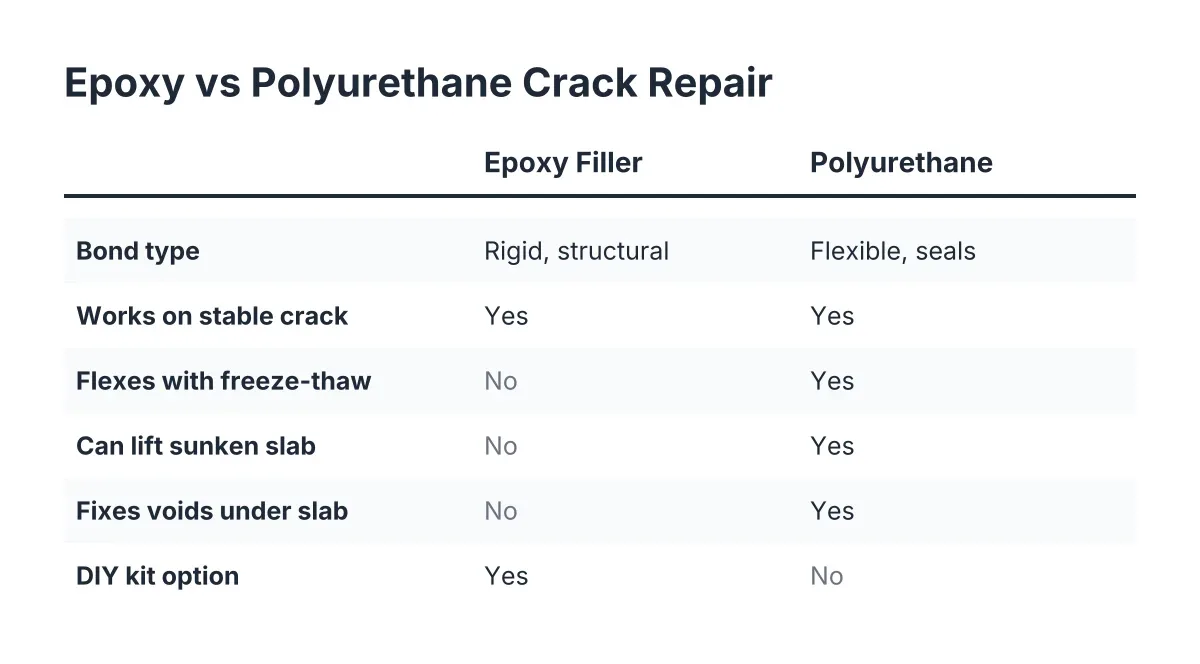
- Epoxy Injection: gluing a crack back together with resin
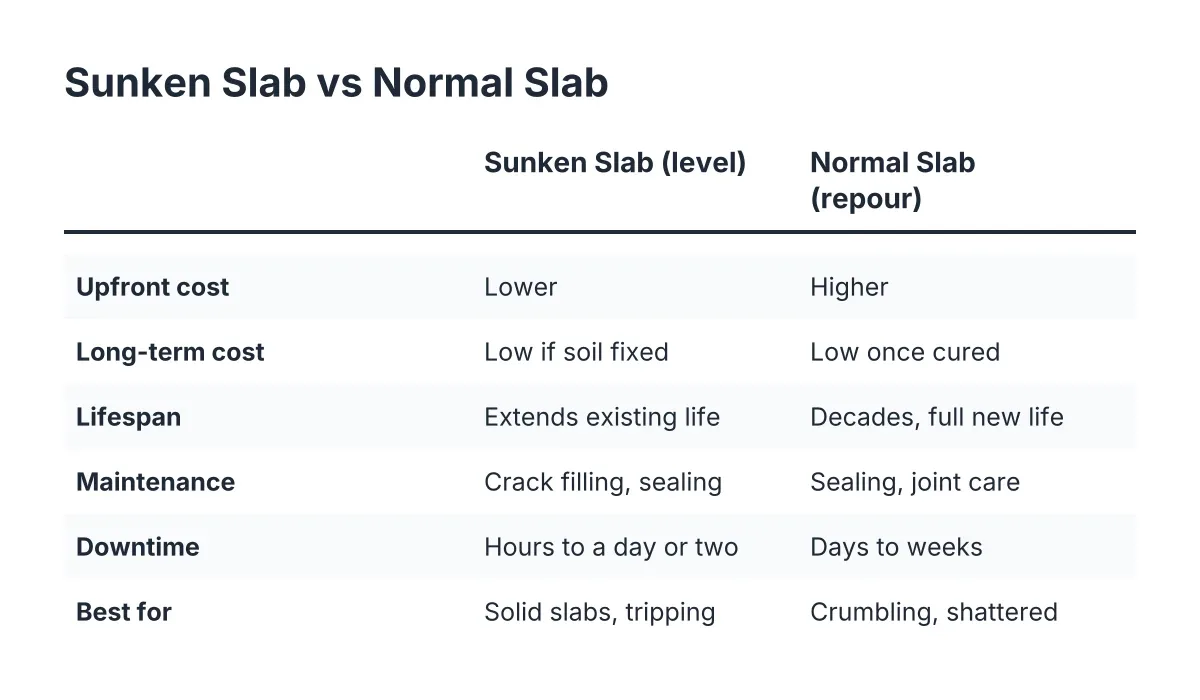
- Mudjacking: pumping a slurry under a slab to lift it
- Polyurethane Foam Injection: lifting a slab with expanding foam
- Slab Jacking: the general term for lifting sunken concrete
- Self-Leveling Concrete: a pourable mix that flattens itself
- Resurfacing: a new thin layer over worn concrete
- Void: an empty pocket under a slab
- Cure Time: how long before you can use the concrete again
- Mobilization Fee: the base cost just to bring a crew out
Types of Cracks and What They Mean
Not every crack means trouble. These terms describe what you're looking at and how worried you should be.
Hairline Crack
A hairline crack is a thin surface crack, usually narrower than a credit card is thick, that doesn't go deep into the slab. Most concrete develops these as it cures and ages, and in central Iowa's freeze and thaw cycles they're common. They're mostly cosmetic, but water can get in, freeze, and widen them over time. Filling them early is cheap insurance against a bigger repair later.
Structural Crack
A structural crack is a crack caused by movement or stress in the slab itself, not just surface wear. Signs include width greater than a quarter inch, one side sitting higher than the other, or a crack that keeps growing. If a contractor calls a crack structural, they're telling you the ground under the slab is the real problem, and filling the crack alone won't fix it. Expect the conversation to shift toward concrete leveling or lifting.
Settling
Settling means the soil under a slab has compressed or washed away, letting the concrete sink. Des Moines sits on expansive clay soils that swell when wet and shrink when dry, which makes settling a common cause of sunken concrete here. A settled slab often cracks because concrete bends poorly. Fixing the crack without lifting the slab treats the symptom, not the cause.
Spalling
Spalling is when the surface of concrete flakes, chips, or pits away, exposing the rougher material underneath. Road salt and freeze cycles are the usual culprits in Iowa. Spalling is a surface problem, not a structural one, so the fix is usually resurfacing rather than crack repair or lifting. If a quote mentions spalling, the contractor is talking about the top of your slab, not what's under it.
Heaving
Heaving means a slab has been pushed upward, usually by frost, tree roots, or swelling clay soil. It's the opposite of settling, and it matters because you can't fix a heaved slab by pumping material under it. A heaved section often has to be removed and replaced, or ground down if the lip is small. An honest contractor will tell you which problem you have before quoting a fix.
Concrete Crack Repair Methods You'll See on a Quote
This is the heart of any concrete crack repair glossary: the actual fixes. Each method suits a different problem, so knowing which one a contractor proposes tells you what they think is wrong.
Crack Filling
Crack filling means sealing a crack with a flexible material so water, ice, and weeds can't get in and make it worse. It's the most common and least expensive fix for cracks that aren't caused by settling. Good crack filling doesn't make a crack invisible; it makes it stable. If you want to know what this work typically runs, our concrete crack repair cost guide breaks down the factors that move the price.
Crack Routing
Crack routing means widening and cleaning out a crack with a grinder or saw before filling it. It sounds backward, but a routed crack gives the filler more surface to grip, so the repair lasts longer. If a quote includes routing, the contractor is doing the job properly rather than smearing sealant over a dirty crack. It adds labor, which is why routed repairs cost more than quick caulk jobs.
Epoxy Injection
Epoxy injection means forcing a strong resin into a crack under pressure so it bonds both sides back together. Unlike flexible fillers, cured epoxy restores some of the slab's strength, which is why it's used on cracks that need to hold together, not just stay dry. It's a precise, slower process, so it costs more than basic crack filling. It also won't help if the slab is still moving, which is why cause comes before cure.
Mudjacking
Mudjacking means pumping a slurry of sand, cement, and water through small holes drilled in a slab to lift it back to level. It's a proven, budget-friendly way to fix sunken driveways, sidewalks, and patios, and it works well on heavier slabs. The holes are patched when the lift is done. Because cracks in sunken concrete usually come from the sinking itself, mudjacking and concrete crack repair often show up on the same quote, and doing them together beats doing either alone. You can read more about how we approach that pairing on our Des Moines crack repair service page.
Polyurethane Foam Injection
Polyurethane foam injection means lifting a sunken slab by injecting expanding foam beneath it through small holes. The foam expands, fills the space, and raises the concrete with precise control. It cures fast, so you can often use the slab the same day, and the injection holes are smaller than mudjacking holes. It typically costs more than mudjacking, so the right choice depends on your slab's condition, the load it carries, and how fast you need it back in service.
Slab Jacking
Slab jacking is the umbrella term for any method of lifting sunken concrete from below, including both mudjacking and foam injection. If a contractor says slab jacking, they're describing the goal, lifting the slab, not one specific material. It's worth asking which method they'd use and why, since cure time and cost differ. A specialist should explain the tradeoff plainly instead of pushing one answer for every job.
Self-Leveling Concrete
Self-leveling concrete is a pourable cement mix that flows out and flattens itself to create a level surface. It's used indoors on floors more than outdoors, and it fixes an uneven surface, not a sunken slab. If your garage floor has dips and low spots but hasn't settled, self-leveling concrete may be the right call. If the whole slab has sunk, lifting it from below is the fix instead.
Resurfacing
Resurfacing means applying a thin new layer of concrete or overlay over an old, worn surface. It hides spalling, minor cracks, and stains, and gives tired concrete a fresh face without full replacement. Resurfacing is cosmetic, so it won't fix settling or stop a moving crack from reopening. A good quote will say whether the slab needs leveling first, because resurfacing over a sinking slab wastes your money.
Slab and Site Terms
These words describe your concrete and the ground under it. They show up in inspections and quotes constantly.
Expansion Joint
An expansion joint is a planned gap between concrete sections, filled with flexible material, that gives the slabs room to move as temperatures change. Without it, concrete expands in summer heat and cracks or heaves. Worn-out expansion joint filler lets water down to the soil below, which speeds up settling. Replacing that filler is cheap compared to lifting a slab later.
Control Joint
A control joint is a shallow groove cut or tooled into concrete to tell it where to crack. Concrete will crack as it shrinks; the joint steers that crack into a straight, hidden line. If cracks run through the middle of your slab panels instead of along the joints, the joints were cut too late, too shallow, or the slab is moving. That pattern is a useful clue for whoever inspects your driveway.
Void
A void is an empty pocket under a slab where soil has washed out or compressed away. A slab over a void may look fine until it cracks or drops, because concrete is strong until it loses support. Contractors sometimes find voids by tapping the slab and listening for a hollow sound. Filling voids is a core part of both mudjacking and foam injection, and it's why lifting quotes vary with how much material the ground swallows.
Cure Time
Cure time means how long a repair material needs before the concrete can handle weight again. Mudjacking slurry typically needs a day or more to firm up, while polyurethane foam cures within hours. Cure time matters most on driveways, since it decides when your car goes back in the garage. Always ask for it in writing so there's no guesswork.
Pricing and Paperwork Terms
Mobilization Fee
A mobilization fee is a base charge that covers getting the crew, equipment, and materials to your property, regardless of job size. It's why a tiny crack repair can seem expensive per foot; the truck costs the same to send either way. Some contractors fold this into a minimum job price instead of listing it separately. Either way, small jobs bundle better, so it can pay to fix the sidewalk and the patio in one visit.
Linear Foot Pricing
Linear foot pricing means the contractor charges by the measured length of crack being repaired, rather than a flat rate. It's the standard way crack filling and routing are priced. Measure your cracks before you call, even roughly, and you'll be able to sanity-check any quote you get. Watch for quotes that mix linear foot pricing for cracks with square foot pricing for lifting; both are normal, but they should be listed as separate line items.
Using These Terms
You now have what this glossary is built to give you: the vocabulary to read a quote on concrete crack repair line by line and know whether a fix matches your actual problem. When a contractor says mudjacking, void, or cure time, you'll know what they mean and what to ask next. That alone puts you ahead of most homeowners comparing bids.
Prefer to talk it through? Call +15155828701 — a quick call is usually the fastest way to get a straight answer for your situation.