Sunken Slab vs. Normal Slab: Which Is Right for You?
If your concrete has settled, you face a choice between fixing the sunken slab you have or pouring a normal slab in its place. The short answer on sunken slab vs normal slab: leveling a sunken slab wins when the concrete itself is still solid and the problem is the soil under it, while a normal slab (a full tear-out and repour) wins when the slab is crumbling, badly cracked, or too far gone to lift. Most Des Moines driveways, sidewalks, and patios settle because central Iowa's expansive clay soil shifts with moisture and freeze-thaw cycles, not because the concrete failed. That means many homeowners can save the slab instead of replacing it. Here is how to tell which side of the line your concrete sits on.
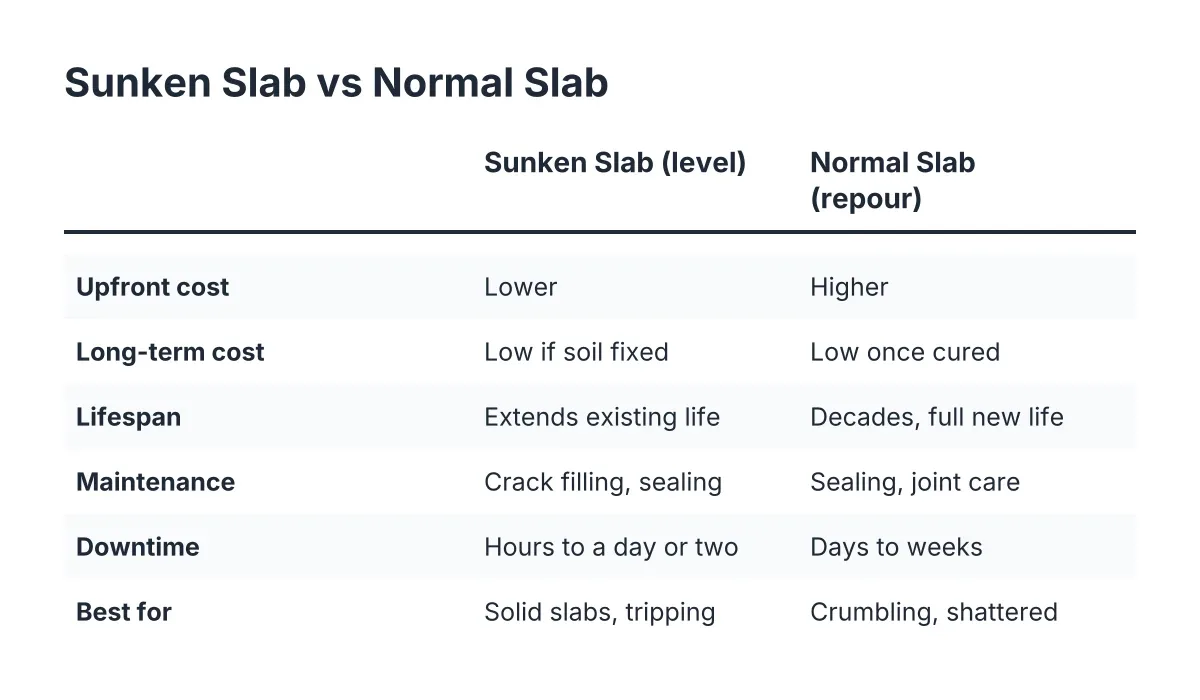
| Criteria | Sunken Slab (level and repair) | Normal Slab (tear out and repour) |
|---|---|---|
| Upfront cost | Lower in most cases; you keep the concrete you paid for | Higher; demolition, hauling, forms, and new concrete |
| Long-term cost | Low if the soil issue is addressed; may need touch-ups over the years | Low once cured, but new concrete can settle again on the same bad soil |
| Lifespan | Extends the life of solid concrete, often by many years | Full lifespan of new concrete, typically decades with good prep |
| Maintenance | Crack filling and joint sealing to keep water out | Sealing and joint care, same as any concrete |
| Downtime | Hours to a day or two, depending on method | Days to weeks for demo, pour, and cure |
| Best for | Solid slabs that sank, tripping hazards, drainage tilts | Crumbling, spalled, or shattered slabs past saving |
Sunken Slab: Strengths and Trade-offs
A sunken slab is concrete that dropped because the ground under it gave way. The slab itself is usually fine; the soil washed out, compacted, or shrank during a dry spell. Concrete leveling fixes this by lifting the slab back to grade. That happens through mudjacking (pumping a cement slurry under the slab) or polyurethane foam injection, and a good contractor will tell you plainly which fits your slab based on its condition, the load it carries, cure time, and cost.
Where leveling shines: speed, price, and mess. You keep the concrete you already own, the crew is often done the same day, and you can usually walk on the slab within hours. For a driveway with one sunken panel, a sidewalk that tilted into a tripping hazard, or a patio that now drains toward the house, lifting the existing slab is the practical fix. It also avoids the color mismatch problem; a new panel poured next to 15-year-old concrete never matches.
Where it disappoints: leveling cannot fix bad concrete. If the slab is spalled, crumbling, or cracked into many small pieces, lifting it just raises broken concrete. Leveling also does not stop future settling if a drainage problem keeps washing soil out from under the slab. Fix the gutter or grading issue too, or you may pay twice.
Normal Slab: Strengths and Trade-offs
A normal slab here means a full replacement: break out the old concrete, haul it away, prep and compact the base, set forms, and pour new. You end up with fresh concrete at the right grade, no old cracks, and a clean surface. Done with proper base prep, a new slab typically lasts decades.
Where replacement shines: badly damaged concrete. When a slab has heaved, shattered, or scaled so much of its surface that resurfacing cannot save it, a repour is the honest answer. Replacement also makes sense when you want to change the slab, such as widening a driveway, changing a patio layout, or fixing a slab that was poured too thin in the first place.
Where it disappoints: cost, time, and risk of repeat settling. You pay for demolition, disposal, and all new material, then wait days for the pour and roughly a week or more before the slab handles vehicle weight. And if the crew pours on the same poorly compacted or washed-out soil that sank the first slab, the new one can settle the same way. New concrete on bad ground is still concrete on bad ground.
Choosing Between a Sunken Slab and Normal Slab
Cost drivers
Leveling a sunken slab costs less than replacement in most homes because you skip demolition, disposal, and new concrete. The main cost drivers for leveling are the size of the slab, how far it dropped, how many injection points the job needs, and whether you choose mudjacking or foam. Replacement costs scale with square footage, thickness, access for equipment, and haul-away. If your slab is solid, the math usually favors lifting it.
Lifespan
Replacement gives you a longer total lifespan, but leveling often adds many good years to concrete that had plenty of life left. A driveway slab that sank at ten years old may still have decades of service in it once it is lifted and the soil issue is handled. If your concrete is already crumbling or near the end of its life, spending money to lift it is throwing good money after bad. Age and condition of the slab, not the amount of settling, should drive this call.
Installation and downtime
Leveling wins on downtime, and it is not close. Mudjacking and foam injection usually finish in hours, and most slabs return to use the same day or the next. A repour means days of demolition and forming, then cure time before you can drive on it. If the sunken panel is your only path to the garage, that difference matters.
Maintenance
Both options need the same basic upkeep: keep water out. After leveling, plan on crack filling and joint sealing so runoff cannot wash soil back out from under the slab. A new slab needs sealing and joint care too. Small cracks in either case are worth handling early; our guide to concrete crack repair costs walks through what affects the price. Routine concrete crack repair is cheap insurance compared to letting water undermine the slab again.
Situational fit
Match the fix to the slab, not the other way around. Solid slab that dropped or tilted: level it. Slab cracked into two or three large pieces: often still liftable, since the pieces can be raised back into place. Slab crumbling, scaling badly, or broken into many small chunks: replace it. Surface ugly but structurally fine: resurfacing may bridge the gap without a full repour. If you are unsure which bucket your concrete falls into, a specialist who does both mudjacking and foam injection can tell you straight, because they have no reason to push one answer.
Which Should You Choose?
Choose Sunken Slab if:
- The concrete is solid and the problem is settling, tilting, or a tripping hazard
- You want the fix done in hours, not weeks
- Budget matters and the slab has years of life left
- You want the repaired section to match the rest of your concrete
- The slab drains toward your house and just needs to be brought back to grade
Choose Normal Slab if:
- The concrete is crumbling, spalled, or shattered into many pieces
- The slab was poured too thin or is at the end of its life
- You want to change the size, shape, or layout of the slab
- Previous leveling attempts failed because the concrete itself is failing
For most Des Moines homeowners with a settled driveway, sidewalk, or patio, leveling the sunken slab is the right first look. Replacement is the fallback for concrete that is truly done.
Common Questions
How do I know if my slab can be leveled instead of replaced?
Look at the concrete itself, not just how far it sank. If the surface is solid and the slab is in one piece or a few large pieces, it can usually be lifted. If it flakes, crumbles at the edges, or has broken into many small chunks, lifting will not help. An in-person look settles it fast.
Is mudjacking or foam better for a sunken slab?
It depends on the slab. Mudjacking uses a cement slurry and suits many driveways and larger slabs. Polyurethane foam is lighter, uses smaller injection holes, and cures fast. Slab condition, load, cure time, and cost decide it, and an honest contractor will explain which fits your job rather than selling one method for everything.
Why did my slab sink in the first place?
In central Iowa, expansive clay soil is the usual culprit. Clay swells when wet and shrinks when dry, and freeze-thaw cycles add more movement every winter. Poor drainage, downspouts dumping next to the slab, and loose backfill around a newer home speed it up. Whatever caused it should be fixed too, or the settling comes back.
Which costs less over time?
When weighing sunken slab vs normal slab options, leveling usually costs less both upfront and over the years, as long as the concrete is sound and the drainage cause gets fixed. Replacement costs more now but resets the clock on the slab's lifespan. The wrong call in either direction is what gets expensive, which is why matching the fix to the slab's actual condition matters more than the price on either estimate. For help decoding repair language on quotes, see our plain-English glossary of crack repair terms.
If you need concrete leveling, Des Moines Concrete Leveling Pros can help.
Prefer to talk it through? Call +15155828701 — a quick call is usually the fastest way to get a straight answer for your situation.