Epoxy Concrete Crack Filler vs. Polyurethane Injection: Which Repair Lasts
If you have a cracked driveway or walkway in Des Moines, you have two main repair paths: epoxy concrete crack filler or polyurethane injection. They are not interchangeable. Epoxy bonds cracked concrete back together like glue. Polyurethane flexes, seals out water, and can even lift a sunken slab. Pick the wrong one and you either overpay for a cosmetic crack or underfix a slab that keeps sinking.
This guide walks you through the decision step by step. It matters for two kinds of readers in particular. If you are filing an insurance claim after a wet spring or a hard freeze-thaw winter, the repair method affects what your estimate says and how an adjuster reads it. If you are listing your home in the next few months, the method affects how fast the fix cures and how the driveway looks in photos.
Step 1: Determine Why Your Concrete Is Cracking
Before you buy any concrete crack filler, find the cause. A crack is a symptom. In central Iowa, the usual suspect is the soil. Our expansive clay swells when it rains and shrinks when it dries. Add freeze-thaw cycles from November through March, and the ground under your slab moves more in one year than concrete can tolerate.
Look at the crack and the slab around it:
- Hairline cracks with no height difference. Both sides of the crack sit level. This is usually shrinkage from the original pour or normal weathering. Cosmetic.
- Cracks with one side higher than the other. The slab has settled. Something moved underneath, and filling the crack alone will not stop it.
- Wide cracks that grow each season. Measure the gap with a coin. If a quarter fit last fall and two fit now, the soil under the slab is still moving.
- Cracks near downspouts or low spots. Water is washing out the soil base. Fix the drainage first or any repair fails.
Take dated photos now, especially if a recent storm or freeze triggered new movement. If you end up filing a claim, an adjuster will want to see when the damage appeared and whether it is sudden damage or long-term settling. Insurance rarely covers gradual settling, but documentation helps you and your contractor have that conversation with facts instead of guesses.
Step 2: Decide If the Crack Is Cosmetic or Structural
A cosmetic crack needs sealing. A structural crack, or a crack caused by a sinking slab, needs more. Here is the plain test: run a straightedge or a level across the crack. If the surface is flat and the crack is stable, it is a candidate for filler alone. If one side dropped, or the slab rocks when you step on it, the problem is under the concrete, not in it.
Also check for tripping hazards. A raised edge of a half inch or more on a walkway is a safety and liability issue, and if you are selling, a home inspector will flag it. Uneven concrete on a listing photo costs you more than the repair does.
One honest limitation: no crack repair, epoxy or polyurethane, stops a slab that is actively settling. If the soil underneath keeps moving, the concrete will crack again next to your repair. When you see ongoing settling, get a professional assessment before spending money on filler.
Step 3: How Epoxy Concrete Crack Filler Works
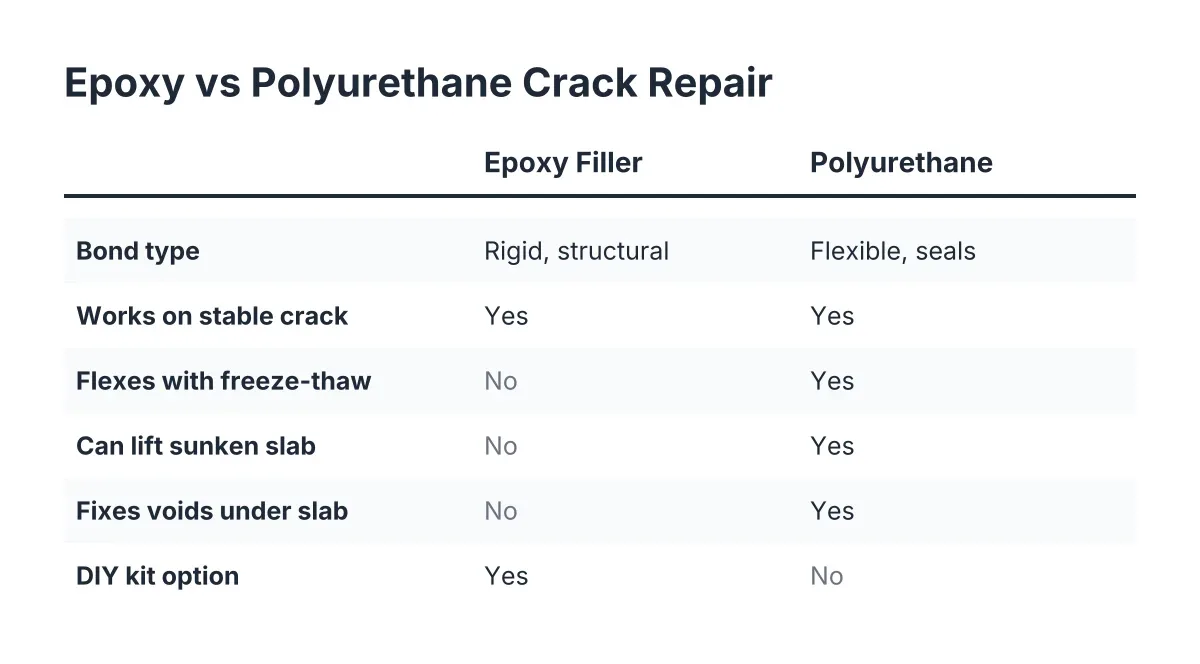
Epoxy is the structural option. A two-part epoxy concrete crack filler mixes a resin and a hardener, flows into the crack, and cures into a bond that is often stronger than the surrounding concrete. Injected epoxy can stop water from moving through a crack and weld the two cracked sections back into one piece.
Epoxy is the right call when:
- The crack is in a stable slab that has finished settling.
- You need a structural bond, such as a cracked garage floor you plan to coat.
- The crack is dry and clean enough for the resin to grip.
Epoxy has real limits, though. It is rigid. Concrete in Des Moines expands and contracts through every freeze-thaw cycle, and a rigid repair in a moving joint will crack beside the original repair line. Epoxy also does nothing about voids under the slab. Gluing the top of a crack shut while the soil keeps washing out underneath is a repair you will pay for twice.
You will see plenty of epoxy concrete crack filler kits at Home Depot, Lowe's, and other hardware stores. For a stable hairline crack in a garage floor, a kit is a reasonable weekend project. For anything wider than a pencil, deeper than you can see, or attached to a slab that has moved, the kit is the wrong tool.
Step 4: Understand When Polyurethane Beats Epoxy
Polyurethane wins when the concrete moves or the soil underneath has failed, which describes most cracked driveways in central Iowa. Polyurethane crack sealants stay flexible after curing, so they stretch and compress with the slab through Iowa's temperature swings instead of cracking beside the repair. That elasticity is why polyurethane products sit at the durable end of the crack sealant range.
Polyurethane also does something epoxy cannot: it lifts. Polyurethane foam injection for concrete leveling works by drilling small holes through the settled slab and pumping expanding polymer underneath. The foam fills the void, hardens, and raises the sunken concrete back toward its original position. Once cured, the material carries serious weight; versions of this foam support slabs under far heavier loads than a family SUV.
So the decision rule looks like this:
- Stable crack, structural bond needed: epoxy.
- Crack in a slab that flexes or moves seasonally: flexible polyurethane sealant.
- Crack plus a sunken or tilted slab: polyurethane foam injection to lift and level, then crack filling on top.
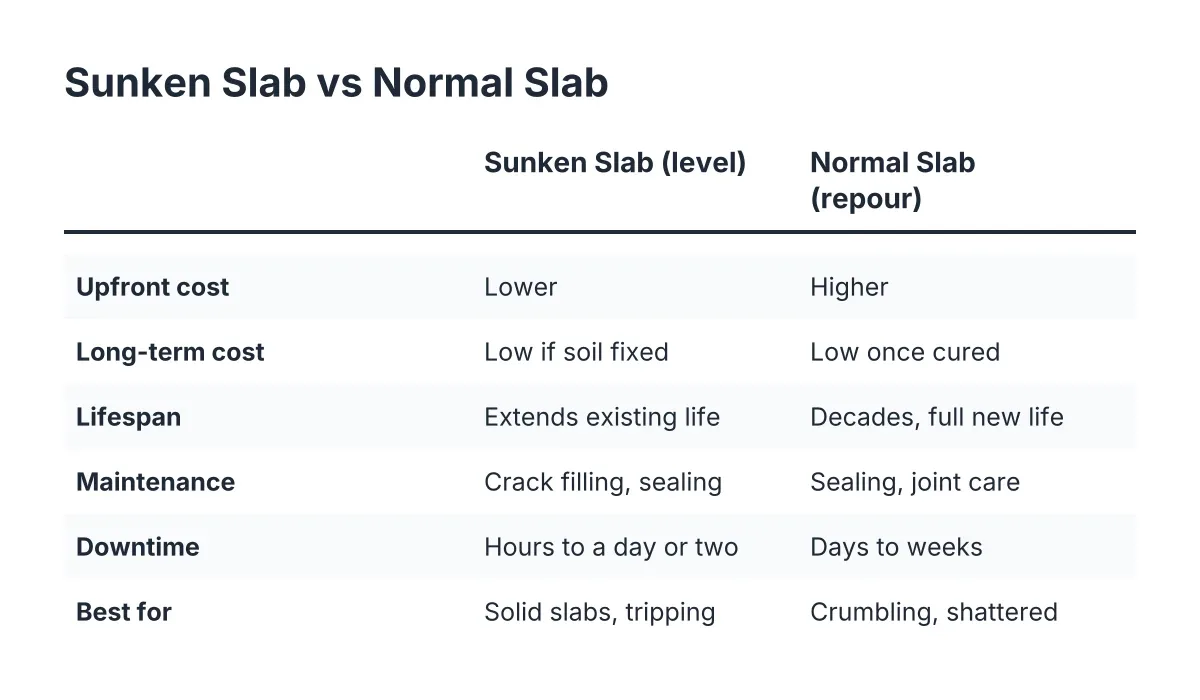
- Large voids or heavier slabs where cost matters: mudjacking, which pumps a cement slurry under the slab, is the traditional alternative and often costs less per job.
For the "which stops cracks permanently" question, the honest answer is that neither material is permanent if the cause is ignored. Polyurethane lasts longer in moving concrete because it moves too. Epoxy lasts longer in stable concrete because it bonds harder. Match the material to the slab, not the marketing.
Step 5: Compare Cost, Cure Time, and What the Job Includes
For 2026 budgets, the numbers favor repair over replacement by a wide margin. According to Angi and HomeAdvisor data, concrete leveling costs a national average of $1,174, with a typical range of $630 to $1,723. HomeAdvisor puts mudjacking at $3 to $6 per square foot, which is 25% to 50% less than replacing the slab entirely. Simple crack filling on a stable slab usually costs a fraction of that; a leveling job with crack repair included lands somewhere in the middle.
A complete concrete crack repair or leveling job from a specialist should include:
- An assessment of why the slab cracked or settled, not just the visible damage.
- A written, itemized estimate. If you are working with an insurance adjuster, ask for the cause of damage, the repair method, and the square footage spelled out on paper.
- The lift or fill itself, plus patching of injection holes to blend with the original surface.
- Sealing of cracks and joints so water stops feeding the problem.
Extras usually cost more: drainage corrections, resurfacing for a uniform look before a sale, and step repair. Cure time differs too. Polyurethane foam hardens fast, often the same day, while mudjacking slurry needs longer before heavy loads return. Epoxy cure times vary by product and temperature.
Suppose a homeowner in Beaverdale is listing in six weeks, and the inspection flagged a cracked, sunken front walkway. In that scenario, foam injection could lift the walkway and the cracks get sealed the same visit, with the surface usable quickly. That timeline is why sellers on a deadline often choose foam over tearing out and repouring, which can take a week or more with cure time. As a bonus for resale math, Angi reports that concrete leveling projects can recoup 70% to 90% of their cost in added home value.
Step 6: Know What You Can DIY and When to Call a Pro
You can handle small, stable cracks yourself. A tube of self-leveling concrete crack filler, the polyurethane sealant type that flows flat into the crack, works well on sidewalk and driveway joints and stays flexible through the seasons. Clean out the crack, let it dry, and follow the product directions. Skip plain caulk; water gets past it, freezes, expands, and makes the crack worse each winter.
However, call a professional when you see any of these:
- One side of the crack sits higher than the other.
- The slab tilts toward the house, sending water at your foundation.
- Cracks reappear next to old repairs.
- The crack is wider than a quarter inch or growing each season.
- You need documentation for an insurance claim or a pre-sale inspection.
If you are mixing any cement-based patching or self-leveling product yourself, wear a respirator; according to Sakrete, the dry powder is hazardous to breathe. And note that self-leveling compound is a floor resurfacing product, not an epoxy crack filler for concrete; per Lowe's installation guidance, it requires mechanical surface prep before application, which puts it outside a quick DIY fix.
Step 7: Choose a Contractor and Get a Claim-Ready Estimate
Ask three questions before you hire anyone. First, do they offer both mudjacking and polyurethane foam, and can they explain in plain terms which fits your slab? A company that only sells one method will recommend that method every time. Second, will the estimate state the cause of the damage in writing? That line matters for adjusters and for seller disclosures. Third, what happens to the crack after the lift; is crack filling included or separate?
A fair quote names the method, the area in square feet, what is included, and what is extra. Be wary of anyone who quotes a driveway over the phone without seeing how the slab sits, or who pushes full replacement before explaining why leveling will not work.
In the Des Moines metro, that conversation should also cover our clay soil and drainage, because a repair that ignores water is temporary. Des Moines Concrete Leveling Pros does both mudjacking and polyurethane foam injection, explains plainly which one fits your slab, and provides written estimates you can hand to an adjuster or attach to a seller disclosure. If your driveway, walkway, or patio is cracked or sinking, reach out for an estimate before another freeze-thaw season makes the fix bigger.
If you need concrete leveling, Des Moines Concrete Leveling Pros can help.
Prefer to talk it through? Call +15155828701 — a quick call is usually the fastest way to get a straight answer for your situation.