Concrete Leveling for Home Inspections Terms Explained: A Plain-English Glossary
If you're buying or selling a home in Des Moines and an inspection report flagged sunken or uneven concrete, the jargon can pile up fast. This concrete leveling for home inspections glossary breaks down the terms you'll see in reports, quotes, and contractor conversations into plain English. Use it to understand what an inspector actually found, compare bids line by line, and ask providers the right questions. Every entry is short, direct, and written for a homeowner, not a contractor.
- Concrete Leveling: raising sunken slabs back to grade
- Concrete Lifting: another name for the same fix
- Slab Jacking: pumping material under a slab to lift it
- Mudjacking: slab jacking with a cement slurry
- Polyurethane Foam Injection: slab jacking with expanding foam
- Self-Leveling Concrete: a pourable overlay that finds its own level
- Settling: soil sinking and taking your concrete with it
- Sunken Concrete: a slab that has dropped below where it started
- Tripping Hazard: a raised edge inspectors flag for safety
- Expansive Clay Soil: central Iowa soil that swells and shrinks
- Freeze-Thaw Cycle: winter's push and pull on slabs
- Void: an empty gap under a slab
- Crack Filling: sealing cracks to keep water out
- Crack Repair: fixing the crack and what caused it
- Resurfacing: a new top layer over worn concrete
- Cure Time: how long before you can use the slab
- Injection Holes: the small drilled ports used for lifting
- Load-Bearing Slab: concrete that carries real weight
Lifting and Leveling Methods
These are the terms you'll see most in any concrete leveling for home inspections glossary, because they describe how the actual fix gets done. Providers often use them interchangeably, which is exactly why they confuse people.
Concrete Leveling Methods for Home Inspections Glossary
Concrete leveling is the process of raising a sunken concrete slab back to its original, even position instead of tearing it out and pouring new. It costs less than replacement and keeps your existing concrete in service. When a quote says "leveling," ask which method the provider plans to use, since that affects cure time and mess. If your inspection report notes uneven concrete, leveling is usually the first fix worth pricing. For a sense of what jobs run, see our guide to what concrete leveling for home inspections costs.
Concrete Lifting
Concrete lifting means the same thing as concrete leveling: raising a settled slab back up from underneath. Some companies say lifting, others say leveling, and a few use both in the same quote. There is no difference in the work itself. If two bids use different words for the same fix, compare the method and scope, not the label.
Slab Jacking
Slab jacking is the general technique of pumping material through small holes in a slab to lift it from below. Both mudjacking and polyurethane foam injection are types of slab jacking. The term matters because it tells you the slab stays in place; nothing gets demolished. If a provider mentions slab jacking, expect drilled holes, pumped material, and a lift measured in fractions of an inch at a time.
Mudjacking
Mudjacking is a leveling method that pumps a slurry of cement, soil, and water under a sunken slab to raise it. It uses larger holes than foam injection and the material is heavier, but it handles big lifts well and often costs less. The slurry needs time to set before the slab takes heavy loads. A provider recommending mudjacking is usually weighing slab condition, the weight it carries, and your budget.
Polyurethane Foam Injection
Polyurethane foam injection is a leveling method that pumps expanding foam through dime-sized holes to lift a sunken slab. The foam expands under the slab, fills gaps, and hardens fast, so cure time is short and the holes are small. It weighs less than a cement slurry, which matters on weak soil. Foam usually costs more per job than mudjacking, so ask why a provider picked one over the other for your slab.
Self-Leveling Concrete
Self-leveling concrete is a pourable cement mix that flows out flat on its own to smooth an uneven surface. It fixes dips and rough spots on top of a slab, but it does not lift a sunken slab or fix the soil below it. You'll see it most for garage floors and interior slabs before flooring goes down. If a slab has settled, self-leveling concrete alone treats the symptom, not the cause.
Why Concrete Sinks in the First Place
Inspectors flag the problem; these terms explain what caused it. In the Des Moines metro, most sunken concrete traces back to soil.
Settling
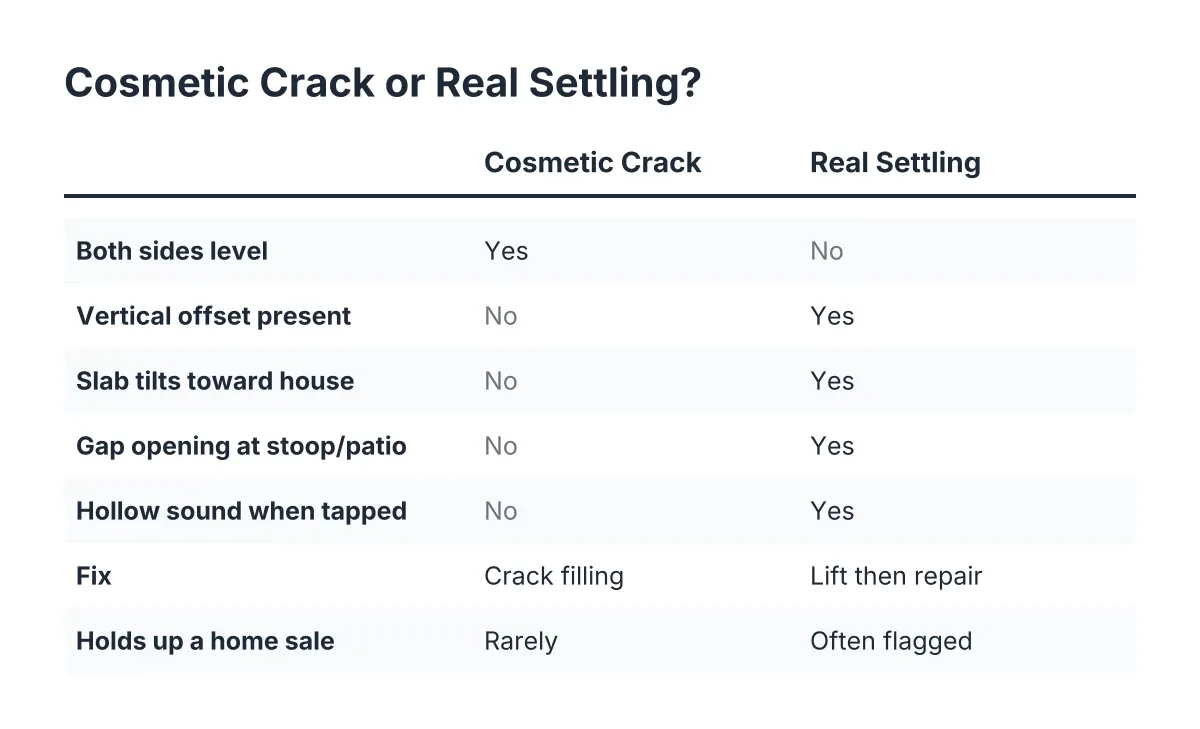
Settling means the soil under a slab has compressed or washed away, letting the concrete sink with it. It shows up as slabs tilting toward the house, gaps under steps, or one sidewalk panel dropping below its neighbor. Some settling is normal in the first years after a pour. Ongoing or uneven settling is what inspection reports flag, because it tends to get worse until the soil problem is addressed.
Sunken Concrete
Sunken concrete is any slab that has dropped below its original height, whether by a half inch or several inches. It pools water, throws off drainage, and creates uneven joints where panels meet. On a driveway, a sunken slab near the garage can send water toward your foundation. The fix is lifting the slab, then dealing with whatever let the soil drop.
Tripping Hazard
A tripping hazard is a raised or offset edge between concrete surfaces, often where one sidewalk panel sits higher than the next. Home inspectors flag these as safety items, and they show up on inspection reports more than any other concrete issue. Even a small offset can catch a toe. Sidewalk leveling usually removes the hazard without replacing the panel.
Expansive Clay Soil
Expansive clay soil is soil that swells when wet and shrinks when dry, moving whatever sits on top of it. Central Iowa has plenty of it, which is a big reason Des Moines driveways and walkways settle unevenly. Wet springs push slabs up; dry summers let them drop. If a provider talks about clay soil, they're explaining why your concrete moved, not selling you an extra.
Freeze-Thaw Cycle
The freeze-thaw cycle is the repeated freezing and melting of water in and under concrete through the winter. Water gets into cracks, freezes, expands, and pries the crack wider; melting water then softens the soil below. Iowa winters run this cycle dozens of times a season. It's why crack filling before winter is cheap insurance for a slab that's otherwise in good shape.
Void
A void is an empty space under a slab where soil used to be, often left by erosion or washed-out fill. A slab over a void may sound hollow when tapped and can crack suddenly under weight. Leveling materials fill voids as they lift, which is part of what you're paying for. If an inspector suspects a void, get it checked before parking a vehicle on that slab.
Repairs, Finishes, and What's on the Quote
These terms cover the smaller fixes and the fine print. Knowing them helps you read a bid without calling the office twice.
Crack Filling
Crack filling is sealing a concrete crack with a flexible material to keep water and debris out. It doesn't make the crack disappear; it stops water from getting underneath and making settling worse. On a stable slab, filling is often all you need. On a slab that's still moving, filling without leveling is a short-term patch.
Crack Repair
Crack repair means fixing both the crack and the movement that caused it, which may include leveling the slab first. It goes further than filling alone. A provider who quotes crack repair after leveling is sequencing the work correctly: lift first, then seal. Ask any bidder whether their crack line item includes leveling or assumes the slab is already stable.
Resurfacing
Resurfacing is applying a thin new layer of concrete or overlay over an existing slab to renew its surface. It fixes flaking, stains, and shallow surface damage, but not sinking or structural cracks. Think of it as new skin, not new bones. Resurfacing pairs well with leveling when a slab is both sunken and worn on top.
Cure Time
Cure time is how long a material needs to harden before the slab can take normal use again. Foam injection cures in minutes to hours; mudjacking slurry needs longer before heavy loads. Cure time matters most for driveways and garage floors you need to park on. A good quote states it plainly, so ask if it doesn't.
Injection Holes
Injection holes are the small holes drilled through a slab so leveling material can be pumped underneath. Foam methods use holes about the size of a dime; mudjacking holes run larger. Providers patch the holes after lifting, and the patches stay visible up close. If a clean look matters, like a front walkway, ask what the patched holes will look like.
Load-Bearing Slab
A load-bearing slab is concrete that carries steady weight, like a garage floor holding vehicles or steps carrying daily foot traffic. Load affects which leveling method fits and how long you wait before using the slab. Heavier loads can favor one material over another. A provider asking what parks or sits on your slab is doing the job right, not padding the estimate.
Home Inspection Glossary: Concrete Leveling Terms
With this concrete leveling for home inspections glossary in hand, you can read a quote line by line and know exactly what each item covers. You can ask why a provider chose foam over mudjacking, whether crack repair includes leveling, and what the cure time means for your driveway. That's the point: fewer surprises, sharper questions, and a fix you actually understand.
If you need concrete leveling, Des Moines Concrete Leveling Pros can help.
Related guide: concrete leveling for home inspections — Complete Guide
Prefer to talk it through? Call +15155828701 — a quick call is usually the fastest way to get a straight answer for your situation.