Mudjacking Terms Explained: A Plain-English Glossary
If you're getting quotes to fix a sunken driveway or uneven sidewalk in Des Moines, the paperwork can read like a foreign language. This mudjacking glossary breaks down the terms you'll hear from contractors, see on estimates, and find in your own research. Use it to read a quote line by line, ask better questions, and spot the difference between a real fix and a sales pitch. Every definition here stands on its own, so skip around as needed.
- Slab jacking: the umbrella term for lifting concrete
- Mudjacking: pumping slurry under a slab to raise it
- Slurry: the mud mix that does the lifting
- Polyurethane foam injection: lifting with expanding foam instead of mud
- Concrete leveling: getting slabs back to flat and even
- Settling: why your concrete sank in the first place
- Voids: empty pockets hiding under your slab
- Expansive clay soil: central Iowa's shrink-and-swell dirt
- Frost heave: winter pushing your concrete up
- Injection holes: the small holes drilled to pump material
- Cure time: how long before you can use the slab
- Pumping pressure: the force that lifts the slab
- Crack repair: sealing cracks so water stays out
- Joint caulking: sealing the gaps between slabs
- Tripping hazard: the uneven edge that matters for safety
- Slab replacement: tearing out and pouring new concrete
- Self-leveling concrete: a pourable fix for indoor floors
- Resurfacing: a new top layer for worn concrete
The Big Picture: What the Work Is Called
Contractors use several names for the same family of repairs. This part of the mudjacking glossary sorts out the terms so two quotes with different labels can be compared fairly.
Slab Jacking
Slab jacking is the general term for raising a sunken concrete slab by pumping material underneath it. Both mudjacking and polyurethane foam injection are types of slab jacking. If one estimate says slab jacking and another says concrete lifting, they usually mean the same job. Ask which material the contractor plans to pump, because that detail drives cost and cure time.
Mudjacking Basics
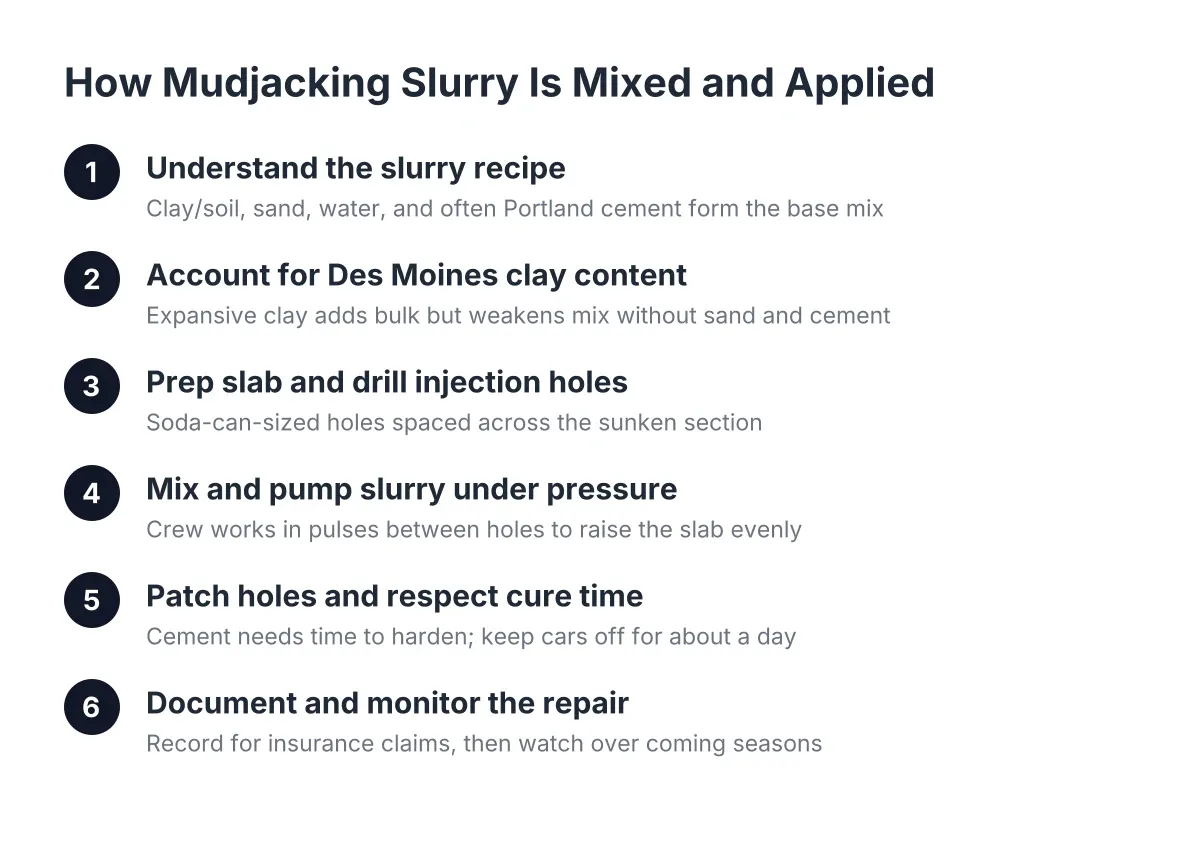
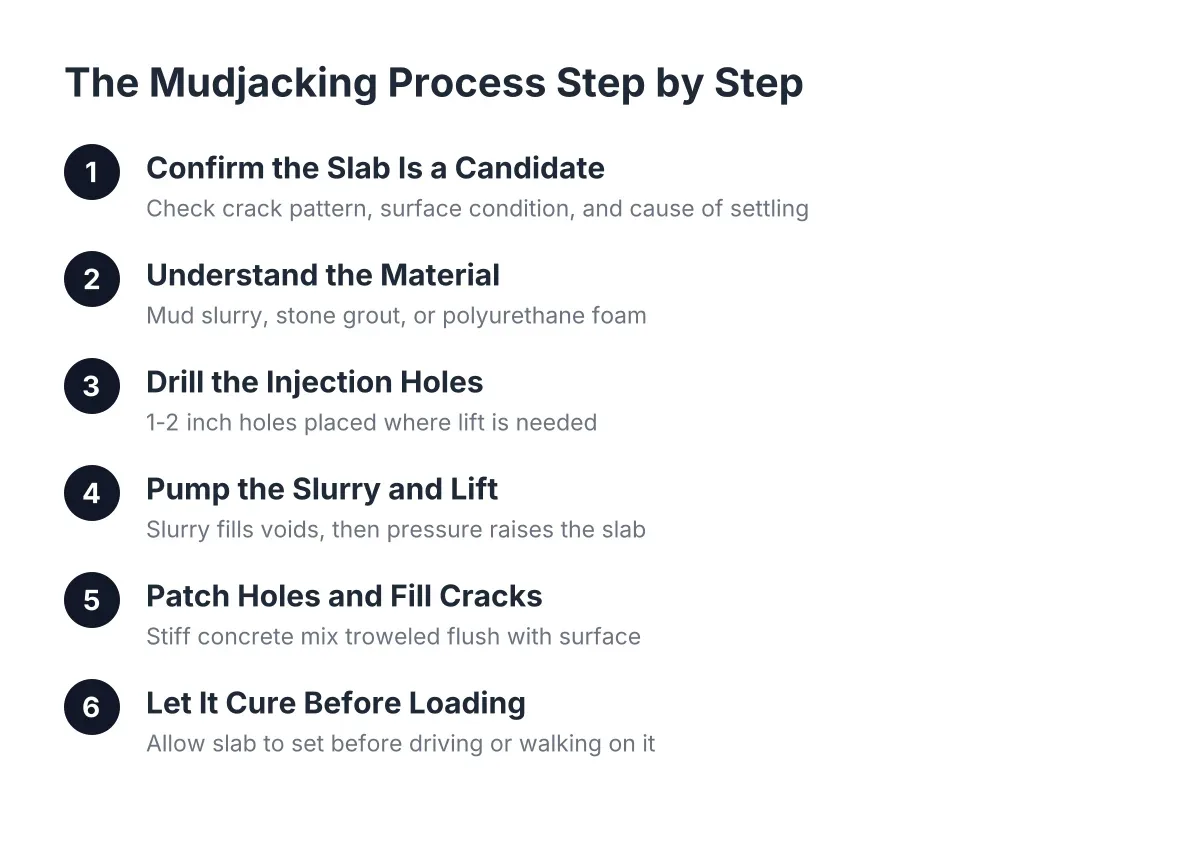
Mudjacking is a repair method that pumps a wet mixture of soil, sand, water, and often cement under a sunken slab to lift it back into place. Crews drill small holes in the concrete, pump the mixture through them, and the pressure raises the slab. It has been used for decades and works well on driveways, sidewalks, patios, and steps. It costs less than foam in most cases but uses larger holes and heavier material. Our Des Moines mudjacking service page explains when it fits and when it doesn't.
Slurry
Slurry is the wet mud-like mixture pumped under a slab during mudjacking. Think of it as pourable fill dirt with some cement mixed in. Once it spreads under the slab and firms up, it becomes the new base holding the concrete at the right height. If a contractor mentions their slurry mix, they're talking about the recipe, and a mix with more cement generally sets up harder.
Polyurethane Foam Injection
Polyurethane foam injection is a lifting method that pumps expanding foam under a slab instead of a mud slurry. The foam expands in seconds, fills empty space, and raises the concrete. It uses smaller holes than mudjacking and the slab is usually ready for traffic the same day. It typically costs more per job. A specialist should explain plainly why foam or mud fits your specific slab, load, and budget.
Concrete Leveling
Concrete leveling means bringing uneven or sunken concrete back to a flat, even surface. It's the outcome; slab jacking, mudjacking, and foam injection are the methods that get you there. When a company calls itself a concrete leveling contractor, expect them to lift existing slabs rather than tear out and repour. That distinction matters, because leveling costs a fraction of replacement when the slab is in decent shape.
Why Concrete Sinks: Soil and Weather Terms
Settling
Settling is the slow sinking of a concrete slab as the soil under it compresses or washes away. It's the root cause behind most sunken driveways, walkways, and garage floors. Some settling in the first few years after a pour is normal. Ongoing or uneven settling means the base under your slab needs attention, not just the concrete on top.
Voids
A void is an empty pocket of space under a concrete slab where soil used to be. Water erosion, poor compaction during construction, and burrowing animals all create voids. A slab over a void may look fine until it cracks or drops suddenly under weight. Filling voids is a core part of any lifting job, and a good estimate should mention it.
Expansive Clay Soil
Expansive clay soil is dirt that swells when wet and shrinks when dry, moving anything sitting on top of it. Central Iowa has plenty of it, which is a big reason Des Moines homeowners see so much sunken and uneven concrete. Wet springs swell the clay, dry summers shrink it, and your slab rides that cycle year after year. A local contractor who mentions clay soil is reading your yard, not a script.
Frost Heave
Frost heave is the upward push on concrete that happens when water in the soil freezes and expands. In Iowa winters, repeated freeze and thaw cycles can lift slab edges, then drop them out of place come spring. It's why a sidewalk that was flat in October can be a tripping hazard by March. Good drainage and sealed joints reduce how much water gets under the slab to freeze.
On the Job: Process and Equipment Terms
Injection Holes
Injection holes are the small openings drilled through a slab so material can be pumped underneath it. Mudjacking holes are typically about the size of a soda can top, while foam holes are closer to dime sized. Crews patch the holes with fresh concrete when the lift is done. Ask how many holes the job needs and how they'll be filled, since patch quality affects how the finished slab looks.
Cure Time
Cure time is how long you must wait before using the slab after a lift. Mudjacking slurry usually needs a day or more to firm up before heavy loads like a parked car. Polyurethane foam cures within minutes to hours. If you need your driveway back fast, cure time may decide which method fits. A clear quote states this waiting period up front.
Pumping Pressure
Pumping pressure is the force used to push slurry or foam under a slab, and it's what actually raises the concrete. Too little pressure and the slab won't lift; too much applied carelessly can crack it. Experienced crews lift slowly and watch the slab rise in small steps. It's a fair question to ask any contractor how they control the lift.
Repairs, Paperwork, and the Alternatives
Crack Repair
Crack repair means filling and sealing cracks in concrete so water can't get through them. It matters because water passing through cracks washes out the soil below, which causes more settling. Crack filling is often paired with leveling so the fix lasts. Repairing a crack does not erase it visually; expect a sealed line, not invisible concrete.
Joint Caulking
Joint caulking is sealing the gaps between concrete slabs with a flexible material that keeps water out. Those joints exist on purpose to let slabs expand and shrink with temperature. Left open, they funnel rain and snowmelt straight into the soil below. Many contractors recommend caulking after a lift to protect the work, and it's a reasonable add-on to see on a quote.
Tripping Hazard
A tripping hazard is an uneven edge where one slab sits higher than the one next to it, usually from settling or frost heave. Even a lip under an inch can catch a toe. Sidewalk tripping hazards are the most common reason homeowners call for leveling, and some cities flag them during inspections. Fixing one is typically a small, quick lifting job.
Slab Replacement
Slab replacement means tearing out the old concrete and pouring new in its place. It's the right call when a slab is crumbling, severely cracked, or too broken to lift in one piece. It costs more than leveling and puts the area out of use while the new pour cures. An honest contractor tells you when your slab is past lifting; see how mudjacking cost compares before assuming replacement is the only option.
Self-Leveling Concrete
Self-leveling concrete is a pourable cement product that spreads out and flattens on its own, used to smooth uneven interior floors. It fixes the surface, not the soil, so it suits garage floors and basement slabs with shallow dips rather than sunken outdoor slabs. If your problem is a slab that dropped, you need lifting underneath, not a new layer on top. A good contractor will steer you to the right one.
Resurfacing
Resurfacing means applying a thin new layer of concrete or overlay over an old, worn surface. It improves looks and covers minor pitting or surface cracks, but it does not lift a sunken slab or fix settling. Resurfacing works best after leveling, once the slab sits where it should. If a quote lists resurfacing alone for a sunken driveway, ask what will stop the sinking.
Using This Mudjacking Glossary
This mudjacking glossary gives you footing: you can now read an estimate line by line and know what slurry, voids, cure time, and injection holes mean for your slab and your wallet. When a contractor walks your driveway, ask which method they'd use and why, how they'll control the lift, and what happens to the cracks and joints afterward. Their answers will tell you plenty.
If you need concrete leveling, Des Moines Concrete Leveling Pros can help.
Prefer to talk it through? Call +15155828701 — a quick call is usually the fastest way to get a straight answer for your situation.